Iceland is one of the few expensive countries where the main attraction is free. The waterfalls, the coastlines, the lava fields and the mountains are not ticketed, and a trip built around them costs a fraction of one built around booked activities.
There is a caveat that most lists skip, so here it is first.
What free actually means in Iceland
No entry fee is not the same as no cost to visit.
The sites themselves are generally not ticketed. But access to them is increasingly monetised at the car park rather than the gate, and a site can be free to enter while charging you to leave your car within walking distance of it. That has become steadily more common at the busier locations.
So budget for parking at popular sites even where the site itself is free, and check on arrival rather than assuming. The practical version of this rule: free means no admission desk, not no spending.
Free in Reykjavik
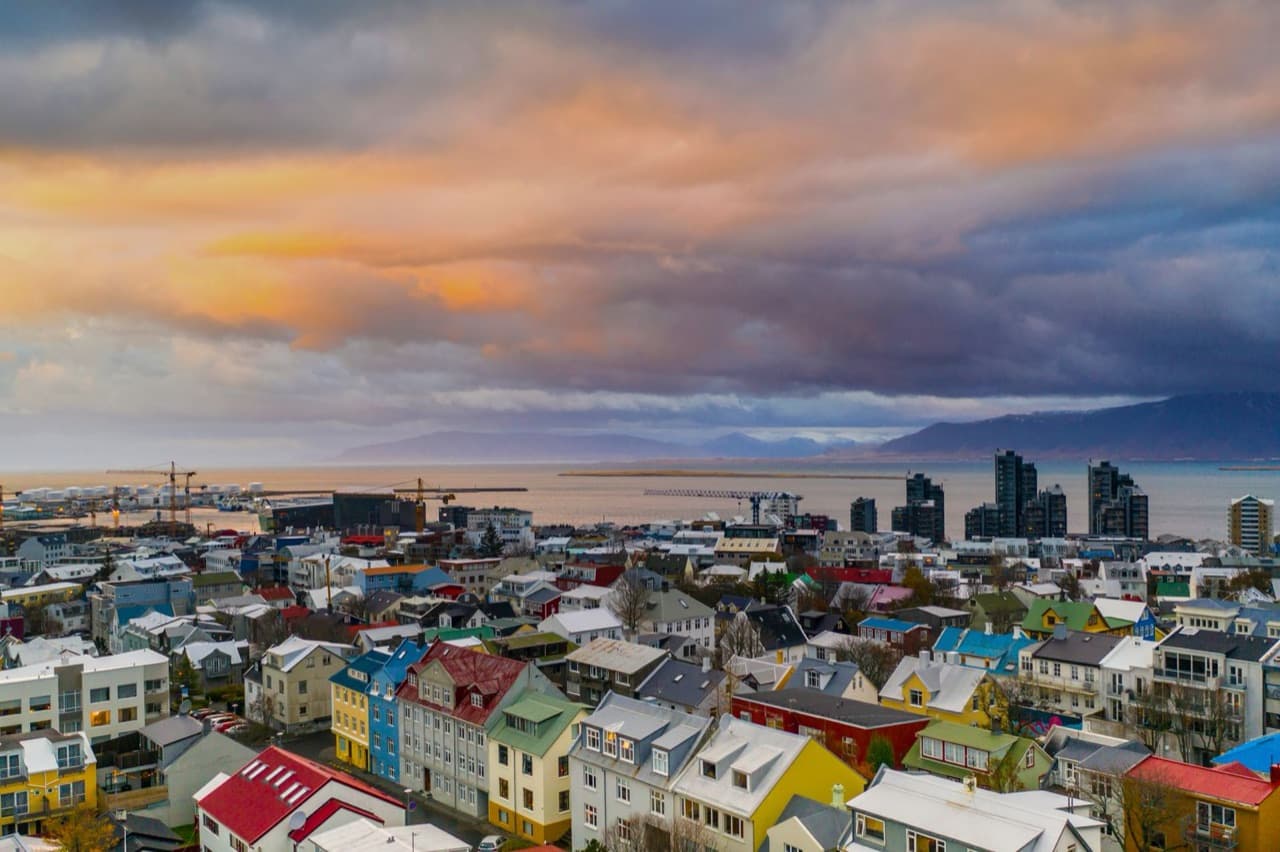
The capital rewards walking more than it rewards ticket-buying. The waterfront and its public sculpture, the street art, the coastal paths and the city's green spaces cost nothing and take up as much of a day as you give them.
The city is also compact enough that a free day here is genuinely a full day rather than a thin one. Reykjavík's no-cost options are set out at free things in Reykjavík.
The geothermal pools are cheap, not free
This is the correction worth making, because the pools appear on plenty of free lists and they are not free.
Reykjavík City operates public swimming pools including Laugardalslaug, Sundhöll Reykjavíkur, Vesturbæjarlaug, Árbæjarlaug, Breiðholtslaug, Dalslaug, Grafarvogslaug and Klébergslaug. They charge admission. Reykjavík City Council approved a new swimming pool fee schedule, replacing the previous one, so look up the current tariff rather than trusting a figure from an older article.
What they are is cheap, and far cheaper than a commercial spa, for something closer to the actual Icelandic version of the experience. These are neighbourhood facilities used by people who live here, not attractions.
Which brings up the etiquette, and it is not optional. Showering without a swimsuit before entering the pool is required at Icelandic public swimming pools. Visitors who skip it, or who treat it as a suggestion, are the single most reliable source of friction at an Icelandic pool. Do it properly and nobody will look at you twice. More on how the pools work is at Iceland's public pools.
Walking and public access
Access on foot across uncultivated land is broad in Iceland by comparison with many countries, and it is a large part of what makes a free itinerary here work.
It carries one firm obligation: stay on the marked paths. Icelandic moss and the thin vegetation on lava take decades to recover from being walked across, and the damage is permanently visible in a way that damage to a meadow is not. This is the one place where a free activity can do real harm, and the rule is simple enough to follow without thinking about it.
Free because of the sky, not the ticket
Two of Iceland's best experiences are free because nobody can charge for them.
The aurora is visible from any sufficiently dark place during the dark months, and looking at it costs nothing. A guided trip buys mobility to reach clear sky and a guide who reads the forecast, which is a real service, but the phenomenon itself is not behind a paywall. If you have a car and a dark road, you have everything you need.
In summer, the midnight sun does something subtler: it extends the hours in which free sightseeing is possible. A long evening is worth money in a country where the paid attractions close.
Drinking water costs nothing
Icelandic tap water is safe to drink straight from the tap. Carry a refillable bottle. Buying bottled water here is spending money on something the tap gives you for free, and over a week it adds up to a meaningful amount for no benefit at all.
Where paying is the only option
Honesty requires saying what cannot go on a free list.
Glacier ice and ice caves are not free and should not be attempted as though they were. A guided trip with a certified guide is the only lawful and safe access to them, and the reason is crevasses and unstable ice rather than commercial gatekeeping. If those are on your list, they are a budget line, not a free activity.
Find a pool or a hot spring
Use the Hot Springs Map to plan your trip.
Compare Reykjavik tours
You can compare Reykjavík tours to see the current options at /tours/reykjavik.