The Icelandic horse is a breed kept pure in Iceland.
What makes the Icelandic horse a breed of its own
The Icelandic horse descends from the horses the Norse settlers brought, and the breed has been isolated in Iceland for over 1000 years.
No horse or other equine may be brought into Iceland, and a horse that leaves Iceland can never return. Icelandic horses are not vaccinated, so they are vulnerable to infections brought from abroad.
Icelandic horses are known as friendly, curious, smart and quick to learn. Despite their small size, Icelandic horses are not called ponies.
Understanding the tolt and the flying pace
Besides walk, trot and canter, the Icelandic horse has two extra gaits, the tolt and the flying pace.
Most Icelandic horses are five-gaited, and some are four-gaited and do not pace. The tolt is a smooth four-beat gait with almost no bounce.
The flying pace is a fast lateral gait ridden over short distances and in races.
Where to ride, from Reykjavik farms to the countryside
Several riding stables operate within the Reykjavik capital area, which makes riding easy to add to a stay in Reykjavik.
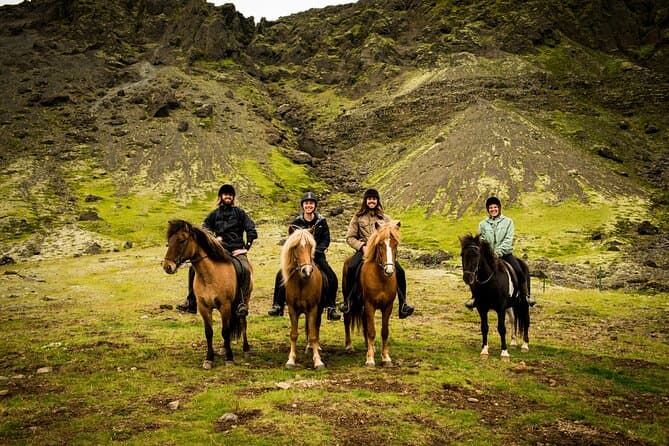
Guided rides in South Iceland cross lava fields, black sand beaches and open valleys, for all experience levels. South Iceland and West Iceland have the highest concentration of horse farms.
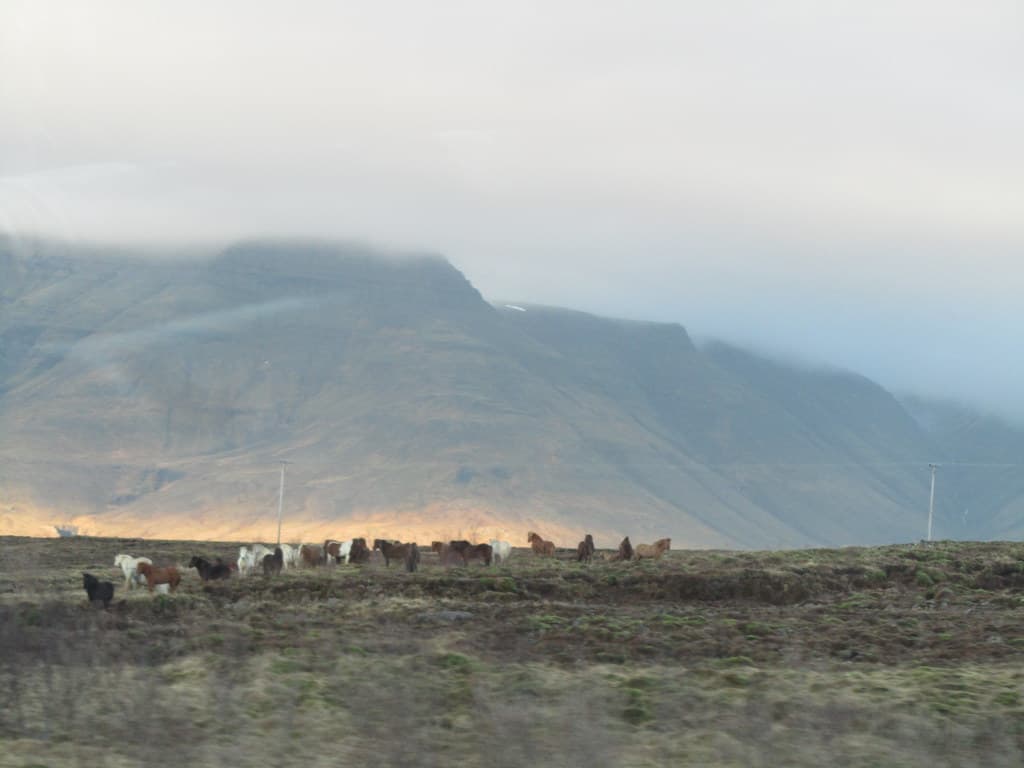
Riding trails in North Iceland follow the coast, climb into the mountains or use old routes. Horses are still an important part of Icelandic culture, and the autumn round-ups bring free-ranging horses down from the mountains.
What a riding tour is like and how to dress for it
Helmets and rain gear are usually provided on riding tours. Riders should wear long trousers, closed-toe low-heeled shoes and layers.
For time outdoors, wool and synthetic layers are best, and cotton should be avoided. Riding tours run all year round.
Operators often set a maximum rider weight and a minimum age, and the limits vary by company. Bringing used riding equipment such as saddles, bridles and whips into Iceland is prohibited, and so are used riding gloves.
Used riding clothes and boots must be machine-washed or dry-cleaned before they enter the country. Use the Packing List to help plan your trip.
Riding through the seasons and choosing your tour
You can compare Reykjavik tours to see the current options.