Around the June solstice near 21 June, Reykjavik gets roughly 21 hours of daylight. Near the December solstice around 21 December, Reykjavik has only about 4 to 5 hours of usable daylight. By law, all children under 135 cm must ride in an approved child car seat at all times in Iceland.
Why Iceland is a natural fit for family travel
Nearly every town in Iceland has its own public geothermal swimming pool, and these pools are very family friendly, with many offering shallow wading pools for small children.
After repeated drownings among fishermen and sailors, Iceland made swimming instruction compulsory for children; municipalities were empowered to require lessons from 1925 and national legislation in 1940 made swimming a mandatory part of schooling.
All bathers in Iceland must shower thoroughly without a swimsuit before entering a public pool or geothermal water, and Icelandic health authorities report very few illnesses linked to the pools.
Planning your family trip around daylight and the seasons
Between May and August the nights stay bright across Iceland and the sky never gets fully dark, with the sun barely dipping below the horizon for several weeks either side of the summer solstice.
Puffin nesting season in Iceland runs from May to early August, and puffins spend the rest of the year out at sea.
You can use the Iceland daylight tool for Reykjavik daylight hours.
Family-friendly things to do in and around Reykjavik
Reykjavik operates 18 public geothermal swimming pools spread across its neighbourhoods.
The Reykjavik Family Park and Zoo in Laugardalur combines a petting zoo of Icelandic farm and native animals with an amusement area featuring rides such as a carousel and bumper boats, and many animals can be petted.
Perlan houses a planetarium and aurora show plus a walk-in ice tunnel about 100 meters long, built using 350 tons of real snow.
The guide to Reykjavik with kids covers more family activities in the city.
Whale watching and puffin trips with children
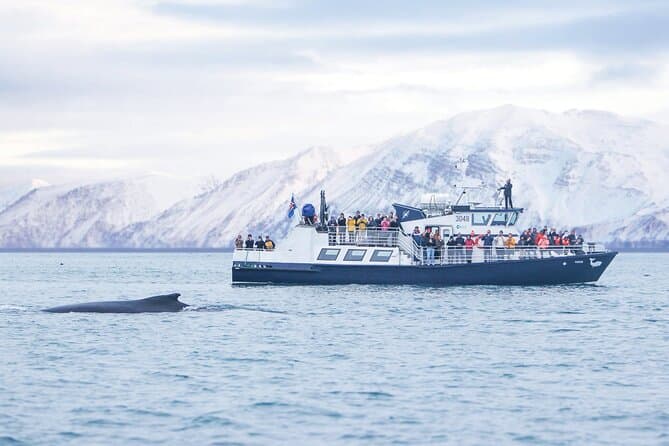
The best whale-watching season is April to September, with June, July and August the peak months when seas are calmer and daylight is longest.
In summer it is easy to combine whale watching and puffin spotting on the same boat trip, and short 1 hour puffin tours run from Reykjavik.
Akureyri sits at the head of Eyjafjordur, a long sheltered fjord in north Iceland whose calm water gives a smoother boat ride that suits families and children prone to seasickness.
The guide to whale watching with kids covers family-focused boat trip basics.
Keeping children safe on the roads and at natural sites
The Icelandic Transport Authority recommends keeping children in backward-facing car seats for as long as possible, and at least until the age of three.
Children under 150 cm must not sit in the front seat in front of an active airbag.
Beaches such as Reynisfjara are exposed to sneaker waves that surge far up the sand without warning even in calm weather, so families must keep children well back from the waterline and heed the warning signs at the entrance.
Comparing family-friendly tours from Reykjavik
You can compare Reykjavik tours to see the current options.