Iceland has been ranked the most peaceful country in the world by the Global Peace Index every year since 2008. Violent crime in Iceland is rare, and the main risks for visitors are environmental, such as weather, terrain, and natural hazards. Iceland has one of the lowest homicide rates in the world, with fewer than 1 intentional homicide per 100000 inhabitants in most recent reporting years.
Is Iceland a safe country for travelers?
Icelandic police do not routinely carry firearms, and Iceland has no standing army. The most common offences are minor ones such as petty theft and traffic violations.
Preparing for Iceland's weather, wind, and emergency help
Iceland's weather can change quickly, and strong wind is one of the most common travel hazards. The Icelandic Meteorological Office, known as Vedur at vedur.is, issues weather warnings and forecasts for the whole country. Even in summer, temperatures in Iceland are cool and changeable, so travellers are advised to pack warm and waterproof layers year round. The nationwide emergency number in Iceland is 112, which reaches police, ambulance, and search and rescue teams. The free 112 Iceland app can send your GPS location to emergency services as a text message, which is useful in places with weak mobile signal. SafeTravel, at safetravel.is, is Iceland's official travel safety service and publishes weather alerts, road conditions, and travel advice.
Staying safe on black sand beaches and the coast
Sneaker waves are large waves that surge far up the beach without warning and can appear among much smaller waves. Sneaker waves are often accompanied by strong rip currents that can pull a person out to sea. Reynisfjara black sand beach near Vik has a warning-light system, and a red light signals extreme danger. On black sand beaches, visitors are advised never to turn their back on the ocean and to stay well back from the waterline.
Driving hazards and the rules of the road
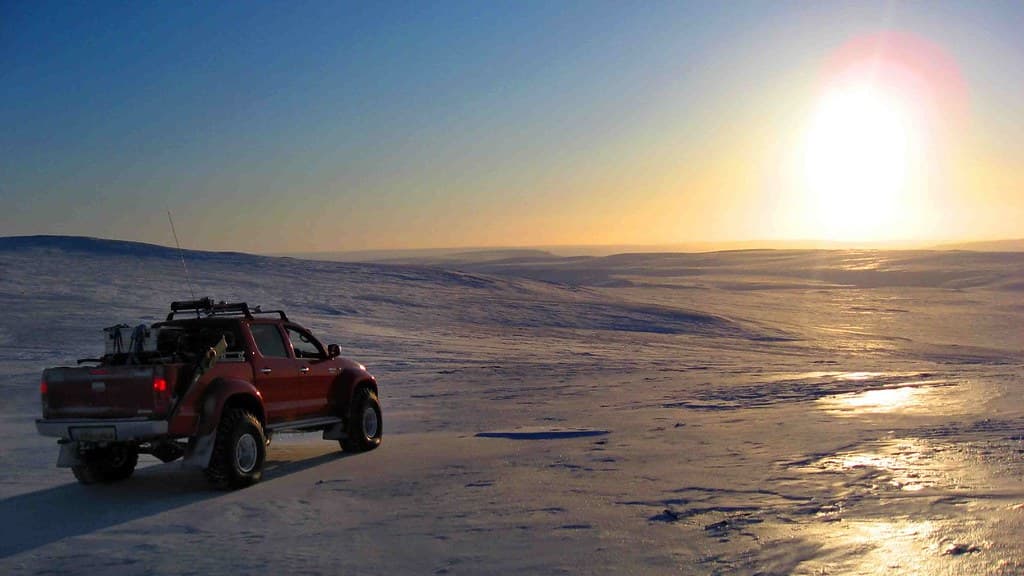
On paved rural roads the speed limit is generally 90 km/h, on gravel roads it is 80 km/h, and in built-up areas it is 30 to 50 km/h. Headlights must be switched on at all times when driving in Iceland, day and night, all year round. Seat belts are mandatory for all occupants of a vehicle in Iceland, in both front and rear seats. Many bridges on the Ring Road are single lane, and the first vehicle to reach the bridge has priority. Gravel roads are common in Iceland, and loose stones can crack windscreens, so slowing down when meeting oncoming traffic is advised. Wind gusts can be strong enough to damage a car door, so drivers are advised to hold doors firmly when opening them. Off-road driving is illegal in Iceland and can be punished with heavy fines or imprisonment. F-roads are mountain roads into the Highlands that require a 4x4 vehicle by law and are usually open only in summer, from around late June to early September. Many F-roads include unbridged river crossings, which can be dangerous and are typically not covered by standard rental car insurance. Road conditions and closures across the country are published by the Icelandic Road and Coastal Administration, Vegagerdin, at road.is. Use the Road Conditions to help plan your trip. Several of the hazards above are signposted rather than obvious, and Icelandic road signs explained covers the warnings for a paved road ending, a single-lane bridge, a blind rise and an unbridged ford.
Geothermal areas, glaciers, and volcanic risks
Water in geothermal areas can exceed 100 degrees Celsius and can cause severe burns, so visitors should stay on marked paths and never step on steaming ground. Glaciers contain crevasses that can be hidden by thin snow bridges, so travellers are advised never to walk on a glacier without a certified guide and proper equipment. During volcanic eruptions, gases such as sulphur dioxide can build up to dangerous levels near vents and lava. Visitors are advised not to enter areas closed by authorities and never to walk on fresh or cooled lava.
Getting emergency help and comparing guided tours
Joining a guided tour is a common way to reduce risk on glaciers, volcanoes, and highland routes, because guides carry proper equipment and know current conditions. You can compare Reykjavik tours to see the current options.