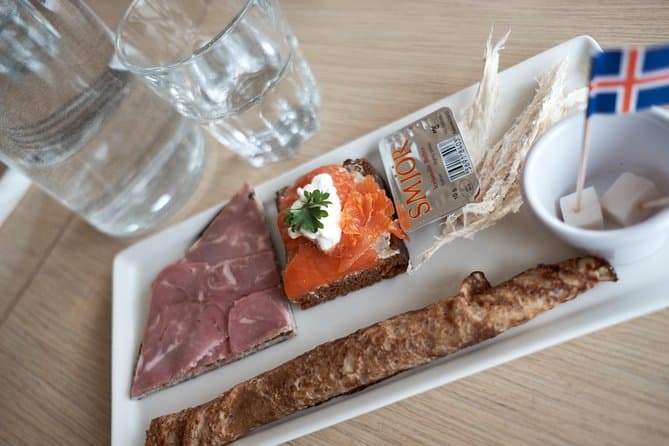
Icelandic food centers on fish, lamb, and skyr, a dairy product eaten in Iceland for more than 1100 years. Skyr contains roughly 11 percent protein, and a single cup can provide up to 17 grams of protein. Traditional dishes range from rugbraud rye bread, slow-baked for about 24 hours, to hakarl, the fermented Greenland shark served at the midwinter Thorrablot feast.
The staples of the Icelandic table: fish, lamb, and skyr
Skyr is a cultured Icelandic dairy product that is technically a fresh cheese rather than a yogurt, and it is naturally thick, high in protein, and low in fat. Skyr has been eaten in Iceland for more than 1100 years and is still eaten daily. Lamb is Iceland's national meat, and sheep roam free-range across the countryside in summer, which is credited with the meat's flavour. Fresh fish such as cod, haddock, and Arctic char is central to Icelandic cooking because of the country's fishing industry.
The country's most famous street food is the Icelandic hot dog
The Icelandic hot dog, known locally as pylsa or pulsa, is one of the most popular casual foods in the country. Unlike most hot dogs abroad, Icelandic pylsur are made mainly from lamb, blended with some pork and beef. Ordering a hot dog eina med ollu means one with everything: ketchup, the sweet mustard called pylsusinnep, crispy fried onions, raw onions, and remoulade sauce. The Baejarins Beztu Pylsur hot dog stand in Reykjavik has operated continuously since 1937.
Rye bread, dried fish, and other everyday traditional dishes
Rugbraud is a dense, dark Icelandic rye bread, sometimes slow-baked using geothermal heat in the ground for about 24 hours, which gives it a slightly sweet flavour. Hardfiskur is wind-dried fish jerky, traditionally eaten with butter as a high-protein snack. Plokkfiskur is a traditional fish and potato stew, born of using up leftover boiled fish. Hangikjot is smoked lamb, traditionally smoked over birch or dried sheep dung for 1 to 2 days and served especially around Christmas. Kjotsupa is a traditional Icelandic lamb and vegetable soup associated with autumn and winter.
Regional specialities and how far you travel to reach them
The southeastern fishing town of Hofn, near Vatnajokull, is known as Iceland's langoustine capital, where langoustine is called humar. Some traditional foods, such as Hofn langoustine, are regional specialities that require travelling to a specific region of the country to eat at the source. Use the Driving Distance Calculator to help plan your trip.
Acquired tastes and the midwinter Thorrablot feast
Hakarl is fermented Greenland shark, fermented for several weeks and then hung to dry for months, developing a strong ammonia-rich smell and taste. Greenland shark meat is toxic when fresh, so fermentation and drying were originally developed to make it safe to eat. Hakarl is eaten mainly during the midwinter festival rather than as an everyday food. Thorrablot is an Icelandic midwinter feast held during the old Norse month of Thorri, which runs from mid January to mid February, featuring a spread of traditional food called thorramatur. Brennivin is a traditional Icelandic schnapps flavoured with caraway and is often drunk as a shot alongside hakarl.
Comparing food tours and tastings in Reykjavik
Guided food walks and tasting tours in Reykjavik let visitors sample several traditional dishes, such as lamb soup, rye bread, and skyr, in a single outing with local context. You can compare Reykjavik tours to see the current options.
Frequently Asked Questions
What is skyr?
Skyr is a cultured Icelandic dairy product that is technically a fresh cheese rather than a yogurt. It is naturally thick, high in protein, and low in fat, and it has been eaten in Iceland for more than 1100 years.
What is in an Icelandic hot dog with everything?
An Icelandic hot dog ordered eina med ollu comes with ketchup, the sweet mustard called pylsusinnep, crispy fried onions, raw onions, and remoulade sauce, made from a pylsa blended mainly from lamb with some pork and beef.
Why is hakarl fermented before it is eaten?
Greenland shark meat is toxic when fresh, so hakarl is fermented for several weeks and then hung to dry for months to make it safe to eat.