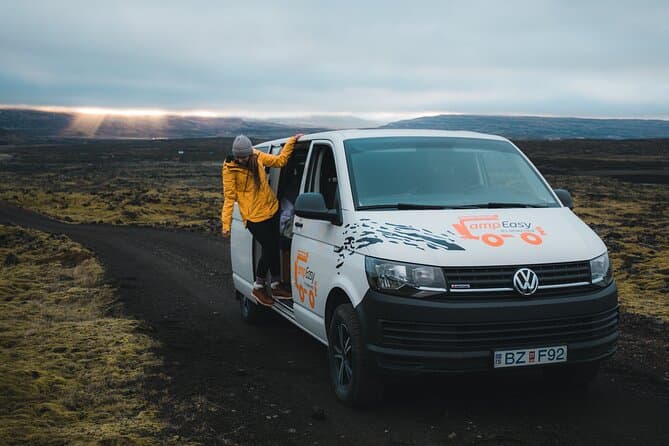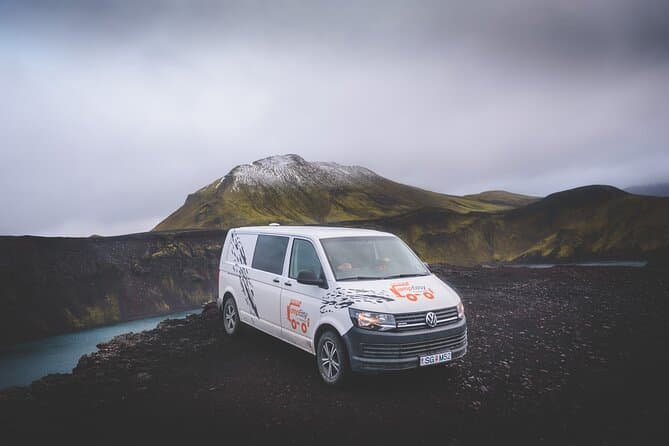
A campervan combines transport and sleeping quarters in a single vehicle. The main self-drive season for campervans in Iceland runs from about May to September, when most campsites are open.
What campervan travel in Iceland actually involves
Travellers drive and sleep in the same rented van. Campervan travel removes the need to book separate hotels each night and lets travellers change their route as they go.
Choosing between a two-wheel-drive and a four-wheel-drive campervan
A two-wheel-drive campervan is suited to paved roads such as the Ring Road, the Golden Circle and the South Coast. By Icelandic law, only 4x4 (four-wheel-drive) vehicles are permitted on F-roads, which are the mountain roads into the highlands. A campervan may drive on F-roads only if it has four-wheel drive. Driving a 2WD vehicle onto an F-road is illegal and voids the vehicle insurance coverage. F-road terrain includes loose volcanic sand, large boulders and unbridged river crossings, which is why four-wheel drive is required.
Where you can legally sleep and what campsites provide
Since 2015, Icelandic law requires campervans and motorhomes to stay overnight only at registered campsites. Pulling over to sleep in a remote area or on private land without permission is not allowed for campervans. Iceland has more than 100 registered campsites spread from the Ring Road to more remote areas. Use the Driving Distance Calculator to help plan your trip. Most campsites are open from May to September and offer basic amenities such as toilets, showers and cooking areas. Larger campsites provide 230V electricity hook-ups that campervans can plug into. A Camping Card is available that covers access to a set of participating campsites for one summer season.
Planning your route and daily driving distances
Iceland's Ring Road, also called Route 1, is about 1309 kilometres long and encircles the country. The Ring Road was completed in 1974. It connects major settlements including Borgarnes, Akureyri, Egilsstadir, Hofn, Vik and Selfoss.
Driving rules, road types and staying safe in a campervan
In Iceland you must drive on the right side of the road. Icelandic law requires vehicle headlights to be on at all times, day and night. The speed limit is 90 km/h on paved rural roads, 80 km/h on gravel roads and 50 km/h in urban areas. Drivers should slow down before moving from a paved road onto gravel because tyres can lose grip. Driving off-road is illegal in Iceland and damages the environment.
Comparing campervan trips and self-drive options
You can compare campervan rentals to see current rates, or compare Reykjavik tours for guided alternatives.