Winter in Iceland is generally considered to run from November through March. In December Reykjavik gets only about 4 to 5 hours of daylight. The northern lights season in Iceland runs from about September to April.
What the weather and temperatures are really like in an Icelandic winter
Winter in Iceland is generally considered to run from November through March. December, January and February are the coldest and darkest months of the Icelandic winter. Average December daytime temperatures in Reykjavik range from about -2C to 4C. Iceland's coastal weather is milder than its far-north latitude suggests because of the warm North Atlantic Current, a continuation of the Gulf Stream. Winter weather in Iceland changes quickly, and strong winds, snow and rain are common.
How short the daylight hours get and how to plan around them
In December Reykjavik gets only about 4 to 5 hours of daylight. In January Reykjavik gets roughly 4 to 6 hours of daylight. The winter solstice, the shortest day of the year, falls around December 21. Around the winter solstice the sun rises close to 11:30 and sets close to 15:30 in Reykjavik. Daylight lengthens steadily through February and March as Iceland moves toward spring. You can use the Iceland daylight tool to check daylight hours.
Chasing the northern lights during the long dark nights
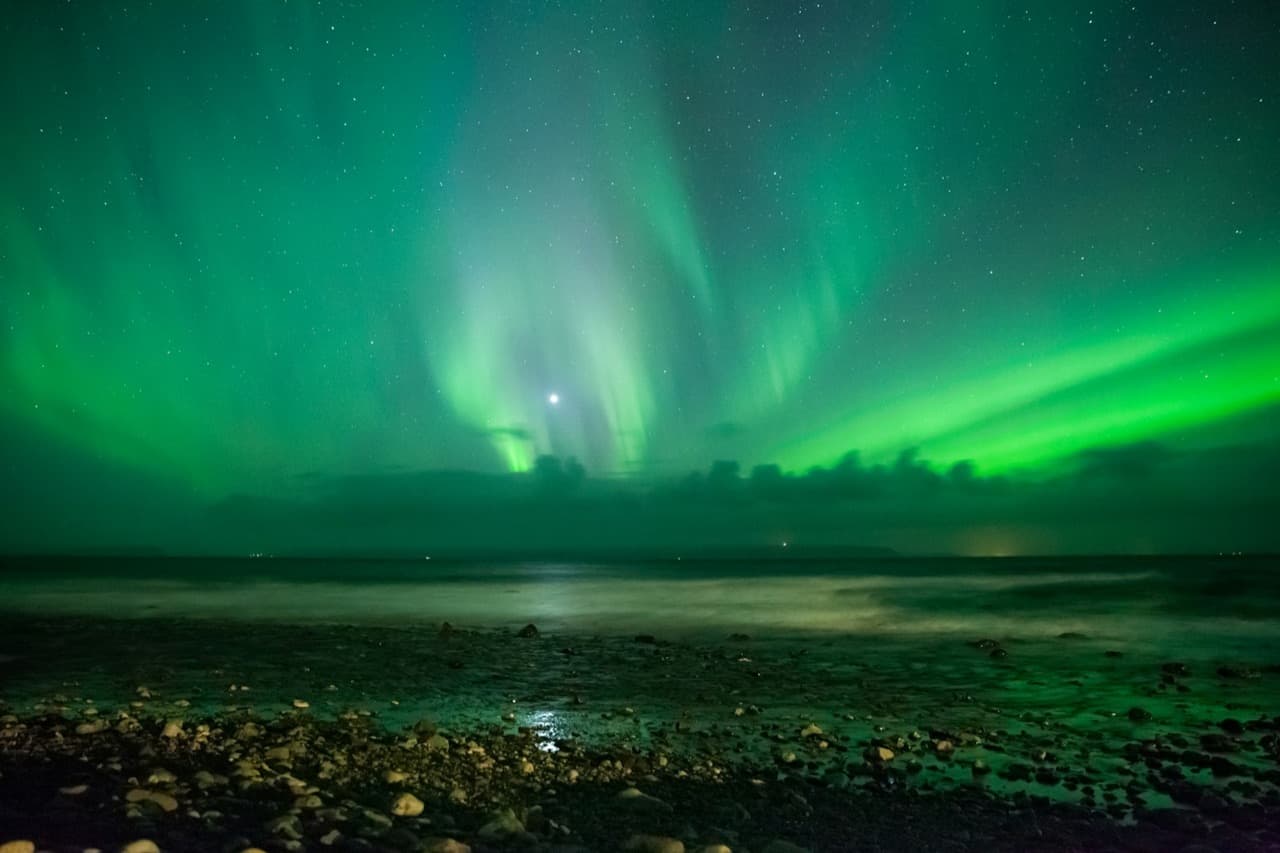
The northern lights season in Iceland runs from about September to April. Long dark winter nights make winter one of the best times of year to see the aurora. The best aurora viewing usually happens between about 22:30 and 01:00. Clear skies, low light pollution and strong solar activity give the highest chance of seeing the northern lights. The equinox months of September and March tend to be especially active for auroras. The best time for northern lights in Iceland article covers the same season and viewing window.
Winter activities from ice caves to glacier hikes
Natural ice caves in the Vatnajokull glacier are accessible only in winter, generally from November through March. Vatnajokull is one of the largest glaciers in Europe by volume. Popular winter activities include glacier hiking, ice caving, snowmobiling and guided northern lights tours. The ice caves in Iceland guide covers natural ice caves in Vatnajokull.
Driving and getting around Iceland safely in winter
Winter tires are required on all cars in Iceland from November 1 to April 15. Studded tires are permitted only between November 1 and April 15. Highland roads, marked with an F prefix, are closed in winter, typically from around October until late June. A 4x4 or all-wheel-drive vehicle is recommended for winter driving in Iceland. Road conditions can be checked at road.is and weather forecasts at vedur.is. The Ring Road, also called Route 1, circles the country and is more than 1,300 km long. Golden Circle and South Coast day tours from Reykjavik run year round, including through winter.
Comparing winter tours to plan your trip
You can compare Reykjavik winter tour options at Reykjavik tours.