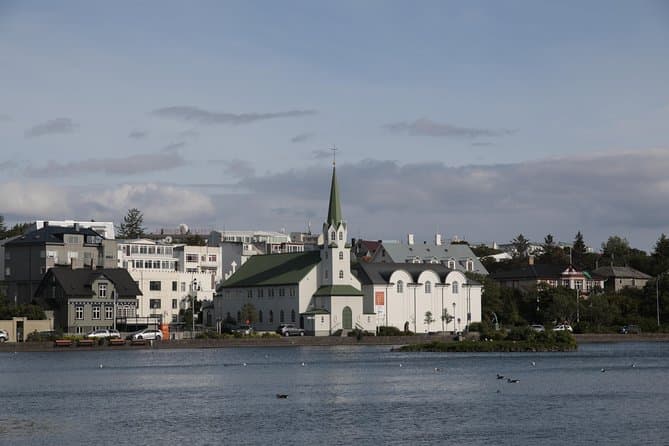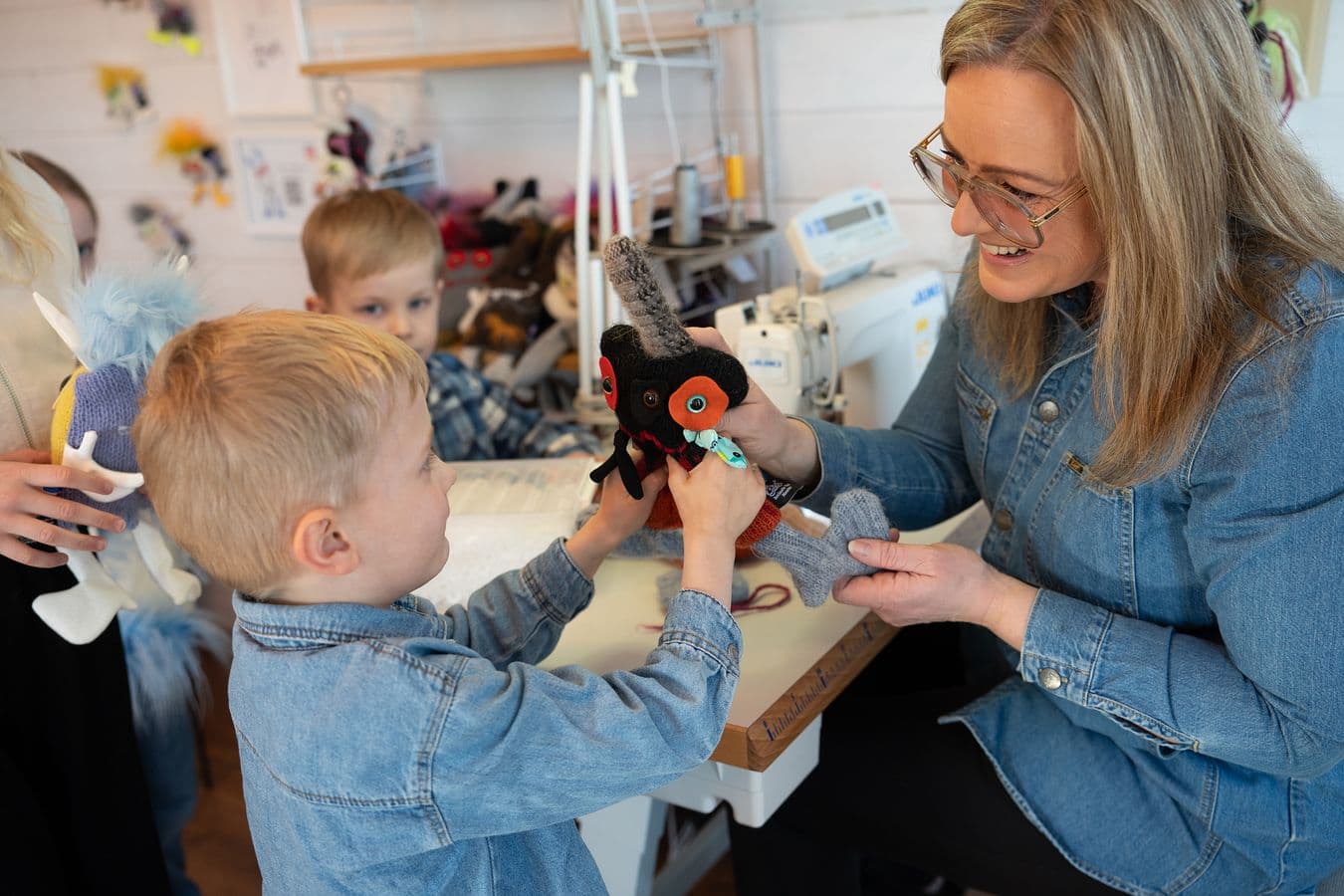
Wool processing has run continuously in Mosfellsbaer, formerly under the name Alafoss.
What an Icelandic fleece is made of
Wool from Icelandic sheep divides into thel and tog. Only very few of the hundreds of sheep breeds in the world today have such a double-coated structure.
What thel does
Thel is fine, soft and irregularly waved. Its hairs do not lie tightly together, which gives the wool its fullness. Thel holds a lot of air, has good breathing properties, insulates well and is light.
What tog does
Tog is longer and coarser than thel, and it is smooth and water-repellent. Tog forms a protective layer around the thel and shields the sheep from wind and weather. Tog gives Icelandic wool its strength and structure.
The sheep it grows on
The Icelandic sheep has been with Icelanders since the settlement of Iceland, and the stock has stayed isolated through the centuries. The Latin name of the Icelandic sheep is Ovis aries borealis. The Icelandic sheep does not shed its fleece easily, so shearing is an important part of its welfare. Most Icelandic sheep farmers shear in autumn and in spring.
How the fleece gets off the mountain each year
Sheep are let out when the new lambs are born in May. They graze the Icelandic countryside for the whole summer, feeding only on fresh grass, herbs and berries. In wintertime most Icelandic sheep are inside stables or close to the farms. Rettir is the Icelandic sheep round-up, and it takes place all over the country from early September to mid-October.
The words lopi and lopapeysa
The Icelandic dictionary of modern Icelandic defines lopi as a fairly thick, unspun thread of carded wool. The same dictionary defines lopapeysa as a sweater made from Icelandic wool, lopi, often with a knitted-in patterned band. The dictionary gives the word parts of lopapeysa as lopa and peysa.
Who washes and spins it
Istex is an Icelandic wool-processing company whose stated aim is to create as much value as possible from Icelandic wool. Istex buys wool directly from Icelandic farmers, and it washes and treats the great majority of all Icelandic wool. Icelandic farmers own the majority of Istex.
Istex runs a wool-washing station at Blonduos and a spinning and yarn factory in Mosfellsbaer. Washed wool from Blonduos carries OEKO-TEX certification. Istex produces hand-knitting yarn from Icelandic wool, including Alafosslopi, Einband, Joklalopi, Lettlopi and Plotulopi. Istex publishes hand-knitting pattern books.
Packing wool for an Iceland trip
Wool is the natural material that can absorb the most moisture and also releases it easily again, and it has good heat and moisture regulation. The recommended clothing approach for Iceland is a system of three layers, and the mid layer should be an insulating fleece or wool layer. Use the Packing List to help plan your trip.
Comparing Reykjavik tours and activities
You can compare Reykjavik tours to see the current options.