Rettir is the Icelandic sheep round-up, held all over the country from early September to mid-October. Sheep and sometimes free-roaming horses are gathered home for the winter. Family, friends and spectators come together, followed by parties and hearty food.
What rettir is
Rettir takes place all over Iceland from early September to mid-October. The gathering brings sheep home for the winter, and sometimes includes free-roaming horses. Family, friends and spectators come together at rettir. Parties and hearty food follow the gathering. Stodrettir, the Icelandic horse round-ups, usually take place by the end of September or the beginning of October.
Why the sheep are up there in the first place
Sheep are let out when the new lambs are born in May. They graze the Icelandic countryside for the whole summer, feeding only on fresh grass, herbs and berries. Visit Iceland attributes the taste of Icelandic lamb meat to that summer grazing.
In wintertime, most Icelandic sheep are inside stables or close to the farms. Their summer grazing takes place in the Icelandic countryside before they return home for the winter. Wool from Icelandic sheep divides into thel and tog, and only very few of the hundreds of sheep breeds in the world today have such a double-coated structure.
The gongur, the search that comes first
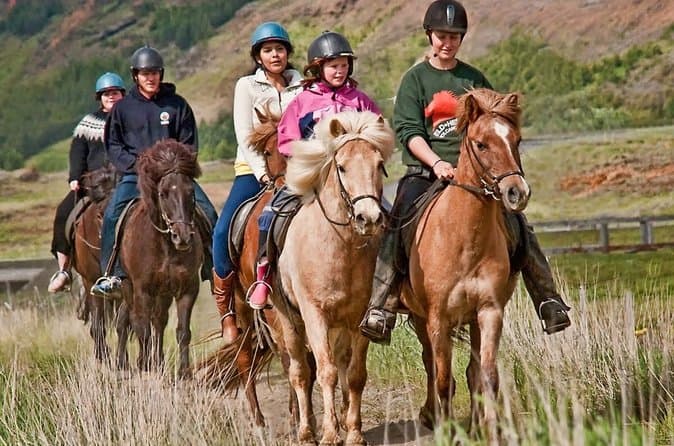
Rettir starts with the gongur. Search parties ride horses and quad-bikes into the grazing land to look for roaming sheep. The gongur trip spans a few days to a week.
Cold and rainy autumn weather can turn the gongur into an exhausting endeavour. Sheep usually stay in the wider area where they were put to graze, although some get lost. A second search takes place a few weeks after the first.
Sorting at the pen
When the collected flock reaches the valley, it is herded into sorting pens made up of one central pen and many spokes that belong to certain farms. The central pen holds sheep from different farms, which then have to be sorted.
The preferred technique for handling a sheep is to grab it by the horns, hold its body with the thighs and lift its forefeet slightly up. Sheep at the sorting pens are identified by their earmarks.
Who has to take part, and who decides when
Fjallskil is the duty of a livestock owner to perform a set number of day-works in the search for sheep. Everyone who holds livestock subject to fjallskil must take part in the gongur and in the clearing of home lands.
The municipal council governs each fjallskil district. Where more than one municipality forms a single district, those municipalities must agree on its governance.
Each fjallskil district board is responsible for a fjallskilasamthykkt. It sets the district's outer boundaries, its division into sections, and the rights and duties attached to use of the mountain commons and the shared summer grazing land. It also sets the fjallskil and the gathering of home lands in spring and autumn.
A fjallskilasamthykkt takes effect only once the minister has confirmed it. The Icelandic alphabet guide has pronunciation hints for words like this one. Gongur, rettir and sheep searches in Iceland are governed by the Act on mountain pasture matters and fjallskil, No. 6/1986.
The rettarball
Rettarball is the name of the party held after the rettir, with live music. Everybody is invited to the rettarball.
Going to watch
The rettir are open to everyone. Visit Iceland describes the rettir as a way to learn how to catch a sheep and manoeuvre it into the right corral. Children can take an active part in the rettir and help.
An Icelandic calendar of all the rettir in Iceland is published each year. During the rettir, it is important to watch for sheep running around, herders on horses, and other tourists photographing the flocks.
Visit Iceland tells travellers to keep their eye on the road, especially during the time of the sheep round-ups.
Checking road conditions for the drive out
Road conditions and closures for Iceland are published by the Icelandic Road and Coastal Administration.
Use the Road Conditions to help plan your trip.
Comparing tours for the same season
You can compare Reykjavik tours to see the current options.