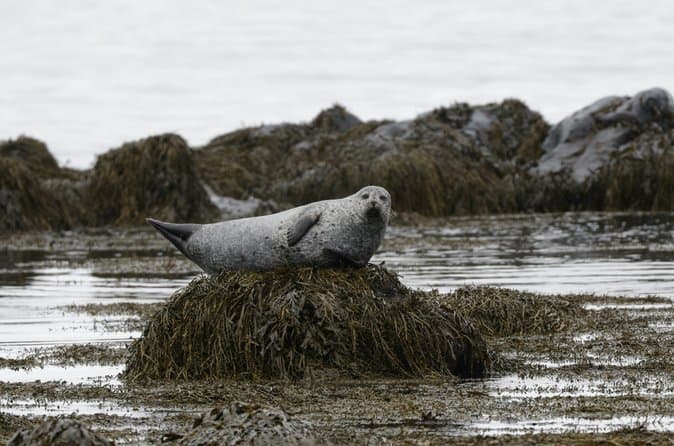
Two seal species live in Icelandic waters, and the Vatnsnes Peninsula in northwest Iceland is the most famous region for spotting them. The prime seal-watching season runs from April to October, with June and July bringing the largest numbers ashore. Visitors are advised to keep a distance of about 100 metres from any seals they find.
Which seals live in Icelandic waters
Two seal species breed and produce their young in Icelandic waters: the harbour seal (Phoca vitulina) and the grey seal (Halichoerus grypus). The harbour seal is the most commonly seen seal around Iceland's coast. Harbour seals typically measure 1.2 to 1.8 metres in length and weigh 50 to 130 kilograms. Grey seals are larger, with males reaching up to 2.5 metres and weighing over 300 kilograms, while females measure about 1.8 metres and weigh around 150 kilograms. Grey seals are recognised by their long, dog-like snouts and mottled grey coats. Other seal species sometimes visit Icelandic waters, including harp, hooded, ringed and bearded seals, and walruses appear only rarely.
The Vatnsnes Peninsula, Iceland's seal-watching heartland
The Vatnsnes Peninsula in northwest Iceland is the most famous region for seal watching and is home to some of the country's largest seal colonies. Route 711 is the coastal road that loops around the Vatnsnes Peninsula. Illugastadir is a farm on Vatnsnes and one of the most reliable seal-watching spots, with a walking path leading to areas where seals haul out on the rocks. Hvitserkur is a 15 metre high basalt sea stack on the eastern shore of the Vatnsnes Peninsula, beside Route 711, and seals gather in the surrounding waters. The town of Hvammstangi sits at the base of the Vatnsnes Peninsula and is home to the Icelandic Seal Center, known in Icelandic as Selasetur Islands.
Ytri-Tunga and other reliable places to spot seals
Ytri-Tunga is a golden-sand beach on the Snaefellsnes Peninsula with a resident seal colony, making it one of the most reliable places to see seals in west Iceland. Seals are also frequently seen at Jokulsarlon Glacier Lagoon, where they swim among floating icebergs.
Timing your visit around tides, season and daylight
Seals can be seen year round in Iceland, but the prime seal-watching season runs from April to October. June and July bring the largest numbers of seals ashore because this is the harbour seal pupping season, and these months also have the longest daylight hours. For the best sightings, arrive within 2 hours of low tide, meaning from 2 hours before until 2 hours after low tide, when more seals are hauled out on rocks and beaches. Seals are more visible when there is little wind and no rain or snow. Use the Daylight Calculator to help plan your trip.
Getting there and choosing a seal or wildlife tour
Hvitserkur on the Vatnsnes Peninsula is roughly 230 kilometres from Reykjavik, about a 3 hour drive by road. The Icelandic Seal Center advises visitors to keep a distance of about 100 metres from seals and to never try to pet or feed them. You can compare whale watching tours to see the current options.
Frequently Asked Questions
What seal species live in Iceland?
Two seal species breed in Icelandic waters, the harbour seal (Phoca vitulina) and the grey seal (Halichoerus grypus). The harbour seal is the most commonly seen of the two.
Where is the best place to see seals in Iceland?
The Vatnsnes Peninsula in northwest Iceland is the most famous region for seal watching, with reliable spots at Illugastadir farm and around Hvitserkur along Route 711.
How close can you get to seals in Iceland?
The Icelandic Seal Center advises keeping a distance of about 100 metres from seals and never trying to pet or feed them.