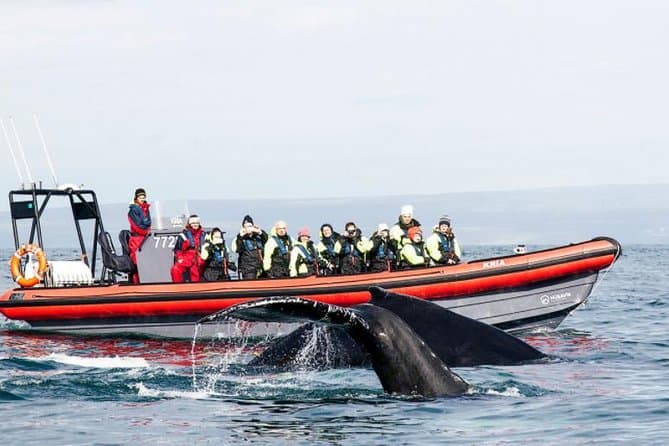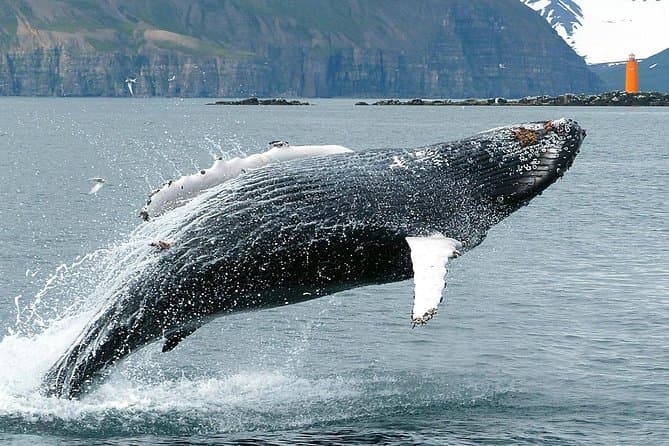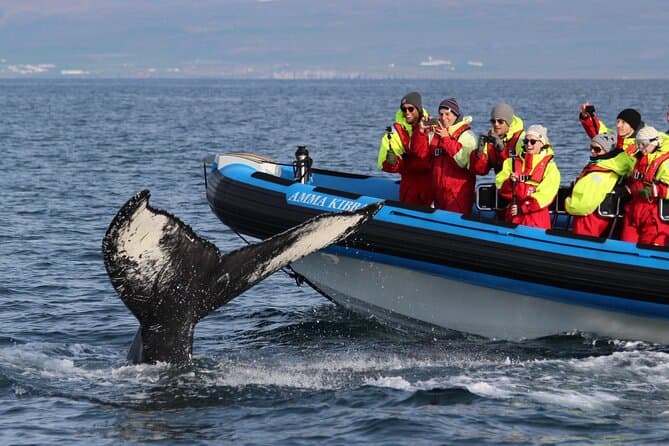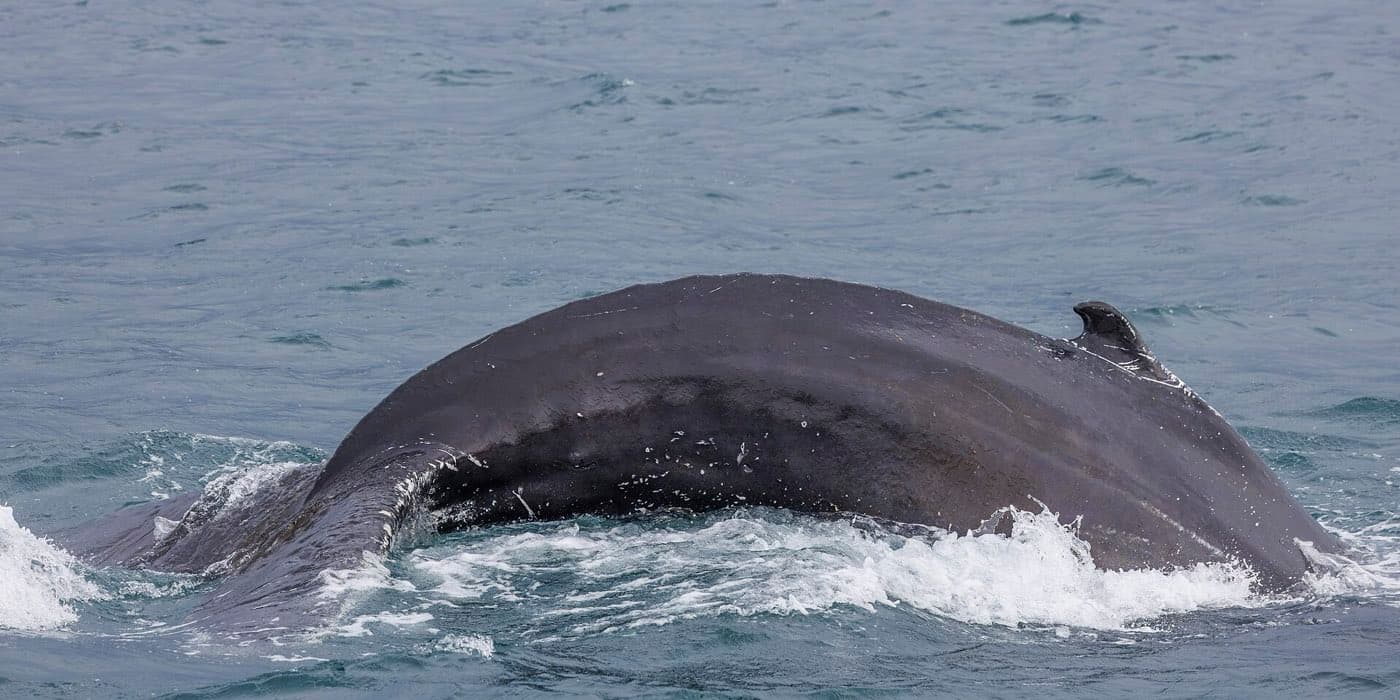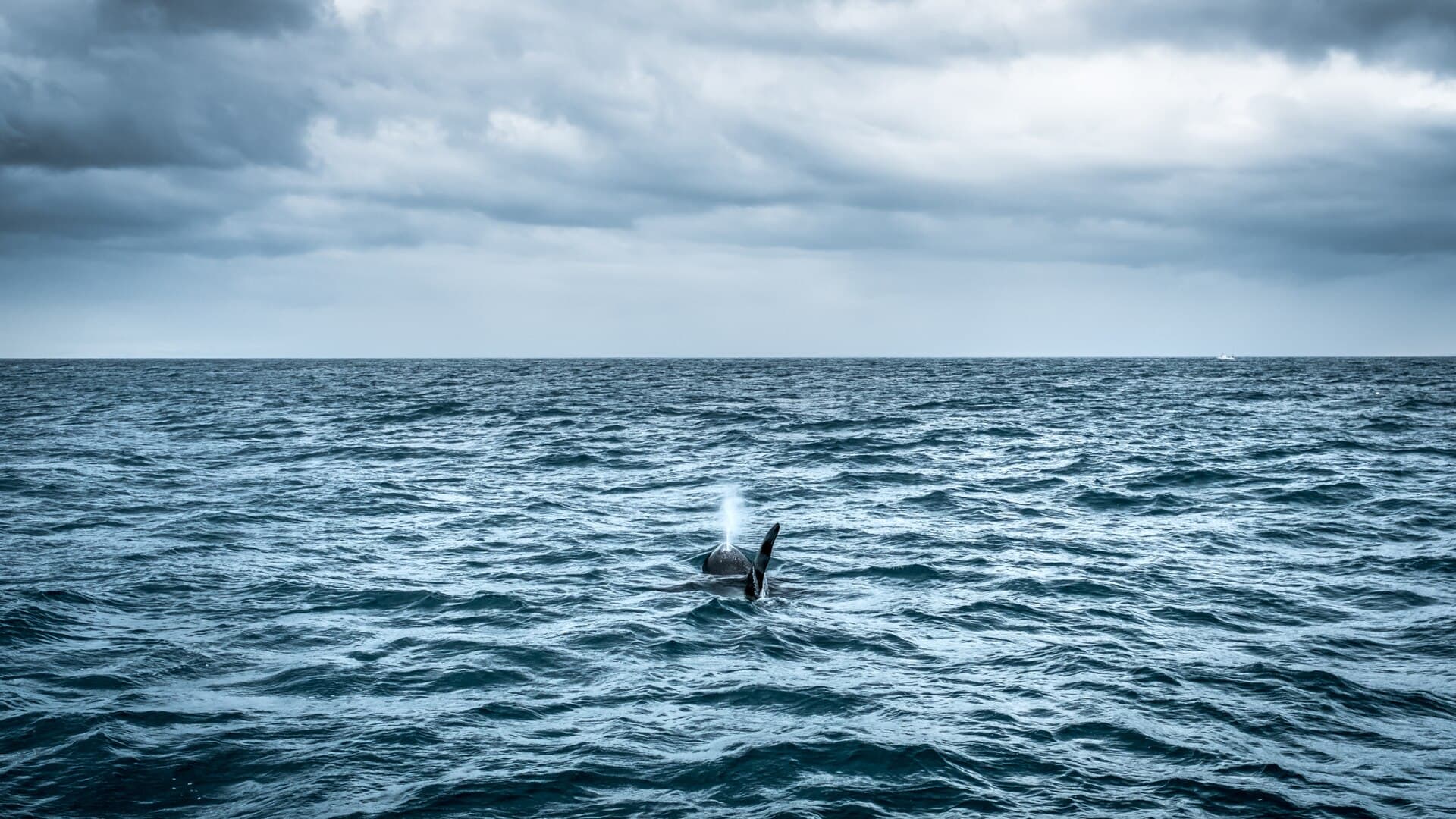
Whale watching runs year-round from some harbours in Iceland. The best chances are from about April to October. Sightings are never guaranteed in any season.
When to go whale watching
Whale watching runs year-round from some harbours in Iceland, and best time whale watching in Iceland is a related topic. The best chances are from about April to October. In those months migratory whales feed in the bays and the summer seas are calmer.
Month by month
April and May
Migratory whales return to feed in the bays, which is where the stronger run of chances begins. Puffins are around from roughly May, so a late-spring sailing can take in both.
June, July, and August
Midsummer carries the most departures each day and the calmest, brightest conditions. Puffins are still around through August, so these are the months when a trip can combine whales and puffins.
September and October
These months close out the April to October stretch of best chances. Conditions are less settled than at midsummer.
November to March
Trips still run from places such as Reykjavik and, for orcas, from Grundarfjordur on Snaefellsnes. Winter seas are colder and rougher, with fewer sailings.
The open sea is cold year-round, so warm layers are needed in any month.
Planning by season and whale-watching tours
Species often seen include minke whales, humpback whales, and white-beaked dolphins. You can compare whale watching tours to see the current options.
Get ready for the day
For a visit or activity connected with Whale Watching Season, the Iceland Packing List is a useful starting point for what to bring.