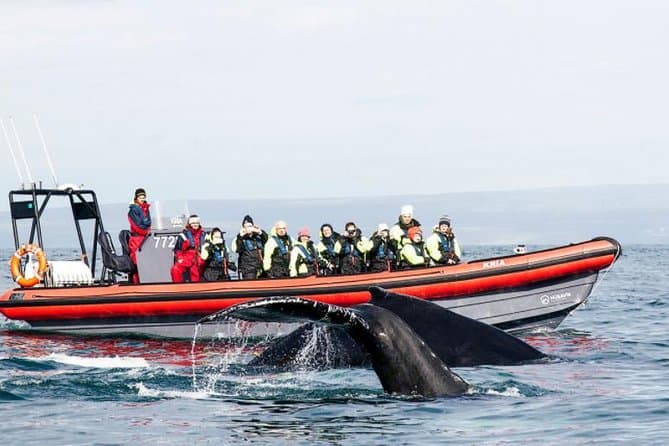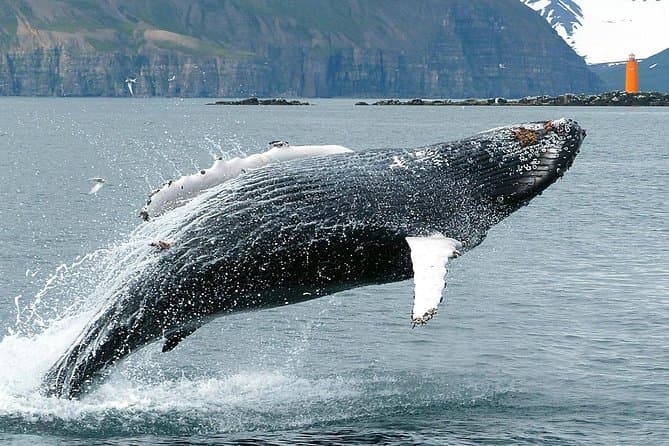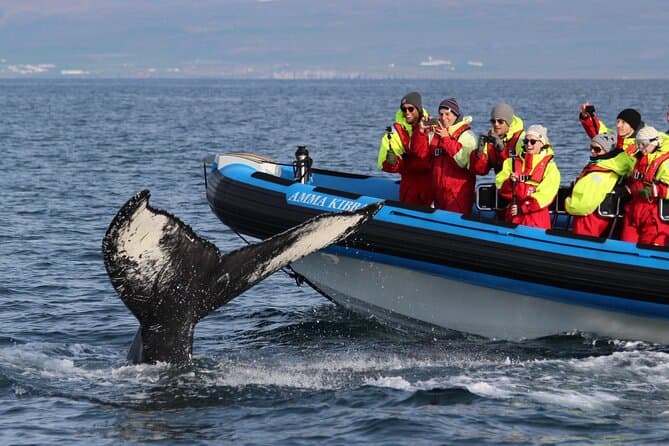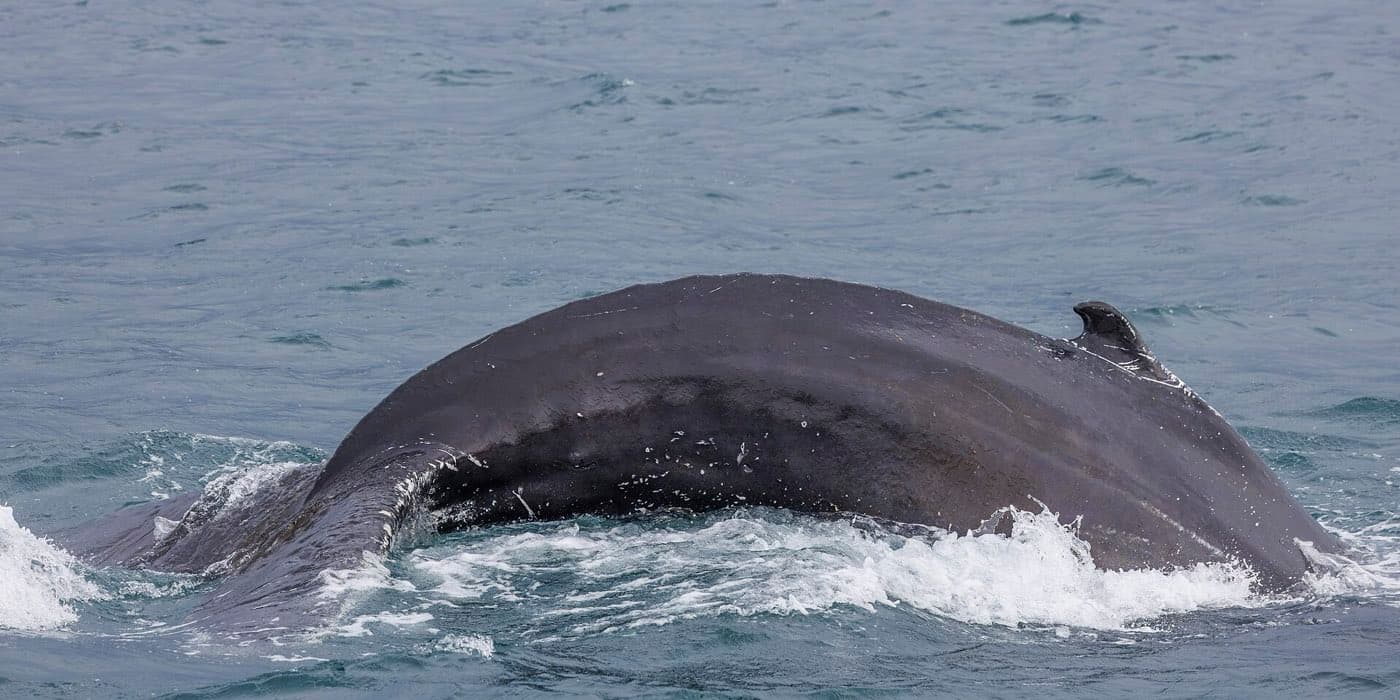
Blue whales in Iceland are seen most often in summer in Skjalfandi Bay, on tours from Husavik in the north. They come to Iceland's waters to feed in summer, then return toward warmer southern waters to breed. Blue whales reach lengths of up to about 30 metres.
What blue whales are
Blue whales are baleen whales. In Iceland, the name usually comes up in the context of summer feeding in northern waters, especially around Husavik and Skjalfandi Bay.
The largest animal on Earth
The blue whale is the largest animal ever known to have lived on Earth. Blue whales reach lengths of up to about 30 metres, which gives a practical sense of their scale on the water.
What they eat
Blue whales feed mostly on plankton and krill. They can eat up to about 5 tonnes a day, using baleen to filter food from the water.
Where and when to see them
In Iceland they are seen most often in summer in Skjalfandi Bay, on tours from Husavik in the north. This is tied to their seasonal feeding pattern in Iceland's waters. After summer feeding, they return toward warmer southern waters to breed.
Seeing blue whales on a whale tour
Blue whale sightings in Iceland are associated with tours from Husavik in the north, especially in summer around Skjalfandi Bay. If you want to compare options, see whale watching tours.
Prepare for the conditions
If blue whale watching is part of your plans, use the Iceland Packing List to prepare for Iceland's changeable weather and time outdoors.