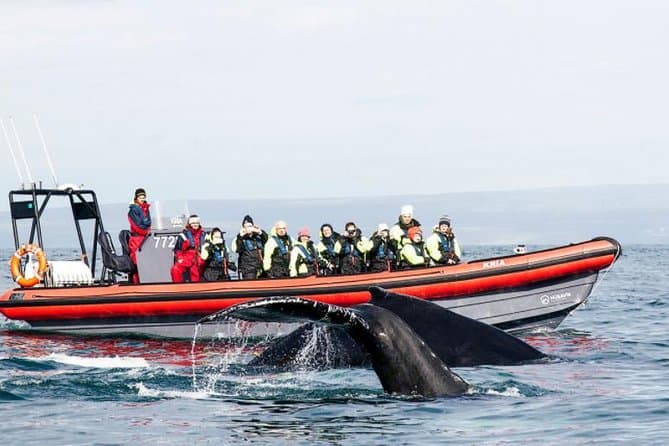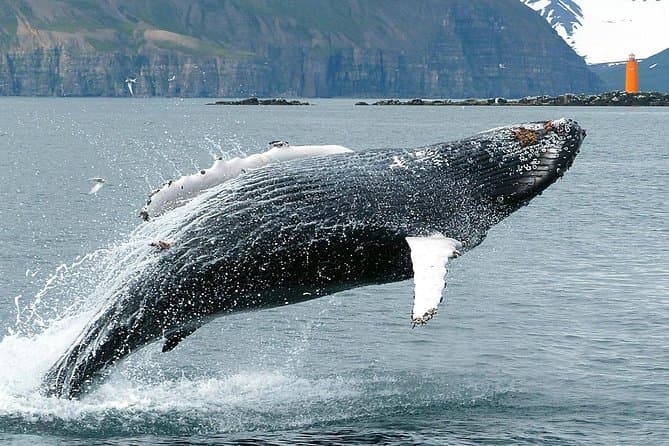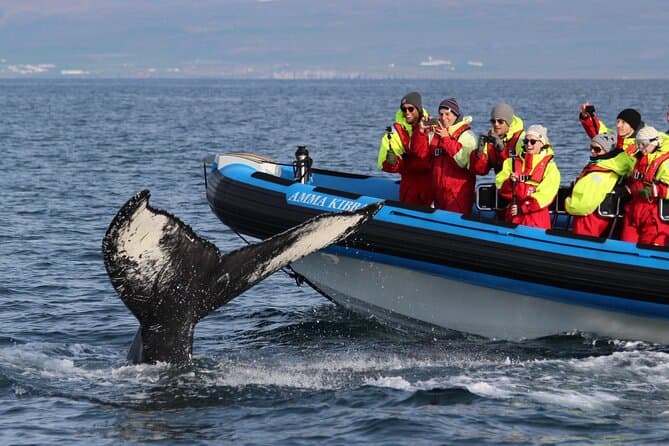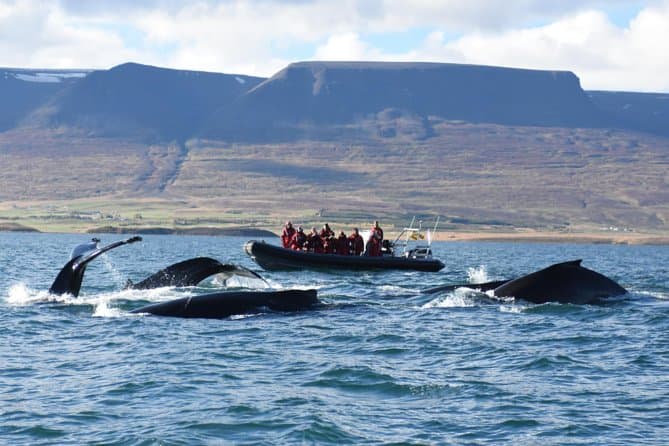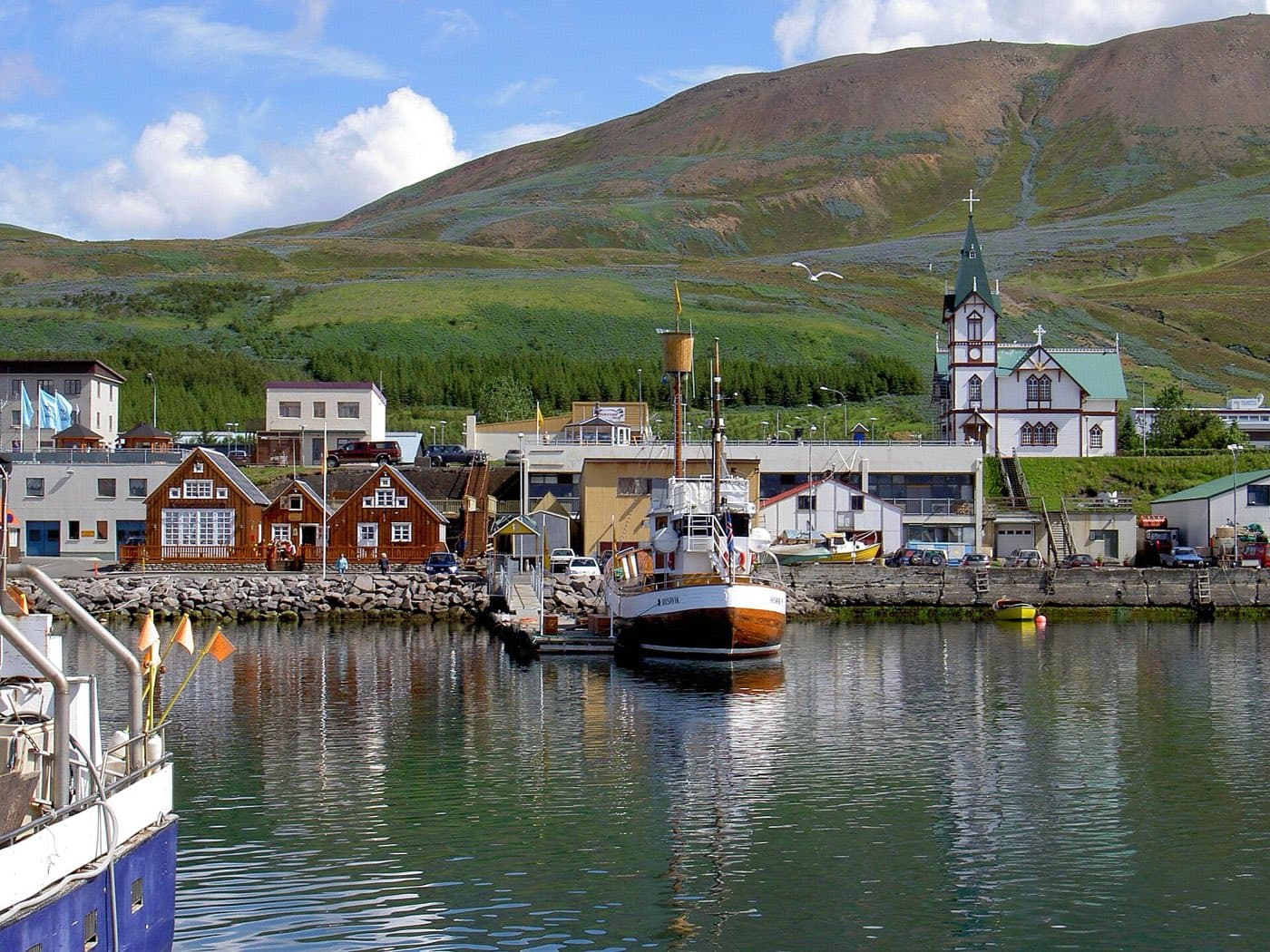
Húsavík, a town on Skjálfandi Bay on Iceland's north coast, is widely called the whale watching capital of the country. The nutrient-rich bay supports up to 11 cetacean species, and one long-running operator reports an overall sighting rate of about 97 percent since 1995. The season runs from around March to November, with humpback and minke whales the most regular sightings.
Húsavík whale watching at a glance
| Feature | Detail |
|---|---|
| Location | Skjálfandi Bay, north coast of Iceland |
| Reputation | Whale watching capital of Iceland |
| Season | About March to November |
| Peak | May to September |
| Most common whales | Humpback and minke |
| Species recorded in the bay | Up to 11 cetaceans |
Why Húsavík is the whale capital
Húsavík earns its reputation from Skjálfandi Bay itself, a large northern bay whose cold, nutrient-rich water supports the fish and krill that whales feed on. Up to 11 cetacean species have been recorded there, which is a wide range for a single bay. The town is small and the harbour sits right on the water, so trips reach the feeding grounds quickly. That combination of rich water and short sailing time is what set Húsavík apart as a whale watching base.
The season in Skjálfandi Bay
The season runs from around March to November, longer than many people expect for a northern site. The peak falls in the summer months from May to September, when the whales are actively feeding and the weather is at its most settled. Early and late in the season the water is quieter and colder, and trips depend more on conditions. If your dates are flexible, the summer window gives the steadiest combination of activity and weather.
Which whales you can see
The mix of species in the bay has shifted over the years, and today the humpback whale is the star:
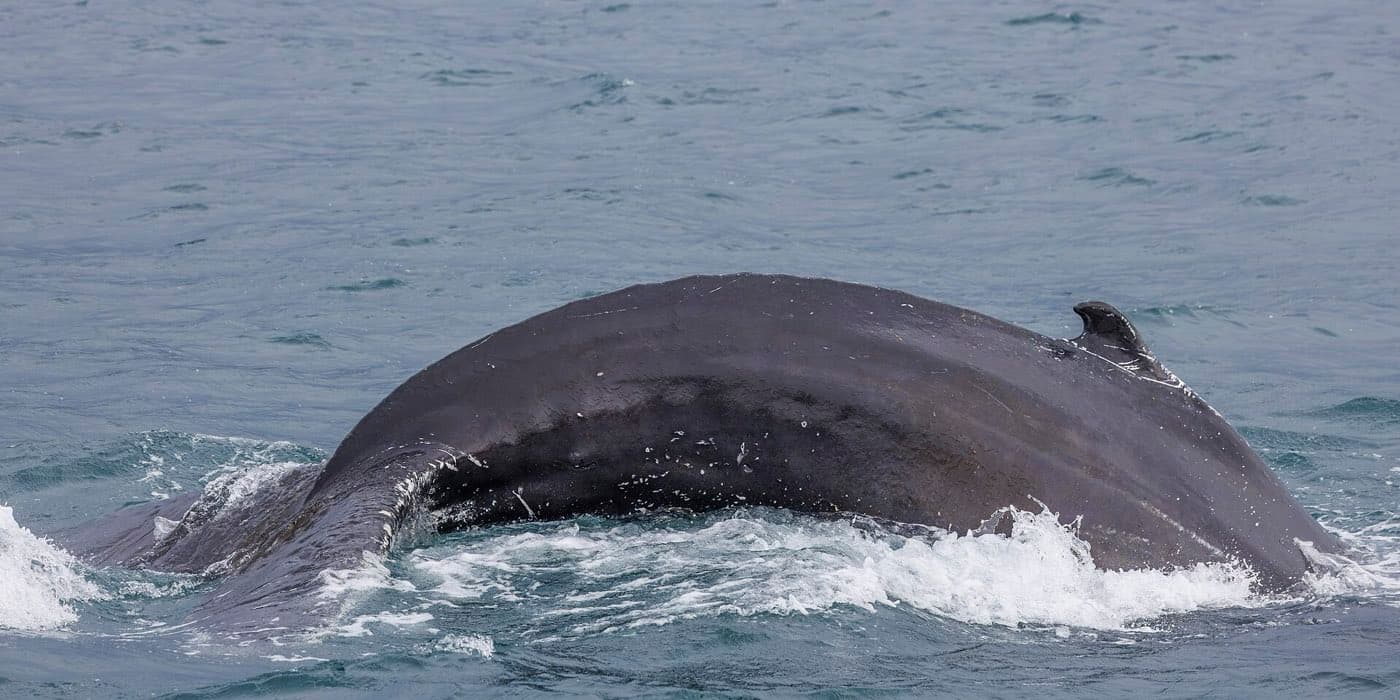
- Humpback whale: the most commonly seen species over the last ten years, often surfacing near the boats.
- Minke whale: a regular sighting throughout the season.
- White-beaked dolphin and harbour porpoise: frequent, and often travelling in groups.
- Blue whale: seen occasionally in spring and early summer, the rarest of the regular visitors.
- Fin, orca, and sperm whales: recorded, but far less often.
Sighting rates and what shapes them
North Sailing, which has operated from Húsavík since 1995, reports an overall sighting rate of about 97 percent across that history. A number that high reflects the richness of the bay, but it is a long-run average rather than a promise for any single trip. Weather, sea state, and time of year all shape what a given sailing finds. Going in the peak summer months and allowing more than one attempt improves your odds if a sighting matters to you.
Planning a trip and comparing tours
Húsavík runs several operators and boat types, from a classic Húsavík whale-watching trip on a larger vessel to traditional oak sailing boats, and trip lengths vary. Comparing them side by side is the easiest way to match a tour to your dates and budget. You can compare Húsavík whale watching tours alongside trips from the other main ports.
Get ready for the day
For a visit or activity connected with Húsavík whale watching, the Iceland Packing List is a useful starting point for what to bring.