A Breed Apart: Origins and Purity Laws
Icelandic horses descend from horses brought by Norse settlers beginning in the late 9th century AD. In 982 AD the Icelandic Althing passed a law prohibiting the import of horses into Iceland, ending crossbreeding with other breeds. Once an Icelandic horse leaves the country it is not permitted to return, a rule intended to keep the domestic herd free of foreign disease. The breed has been bred pure in Iceland for more than 1,000 years as a result of the import ban.
Size, Build, and Why It Is Called a Horse Not a Pony
Icelandic horses typically stand between 12.2 and 14.2 hands at the withers, with 13 to 14 hands most common. Despite their small stature, most breed registries and Icelandic owners refer to the animal as a horse rather than a pony. The breed displays nearly every horse coat color except appaloosa patterning, with chestnut being the most common.
Five Gaits: Tolt and Flying Pace Explained
In addition to the standard walk, trot, and canter or gallop, many Icelandic horses can perform two extra gaits, the tolt and the flying pace. The tolt uses the same footfall sequence as the walk but can be performed at speeds ranging from a fast walk up to a normal canter pace. The flying pace is a two-beat gait used in pacing races, with some horses reaching speeds up to about 48 kilometers per hour. Not every Icelandic horse can perform the flying pace, and horses that master both the tolt and the flying pace alongside the three standard gaits are considered five-gaited.
Where to See and Ride Icelandic Horses in the North
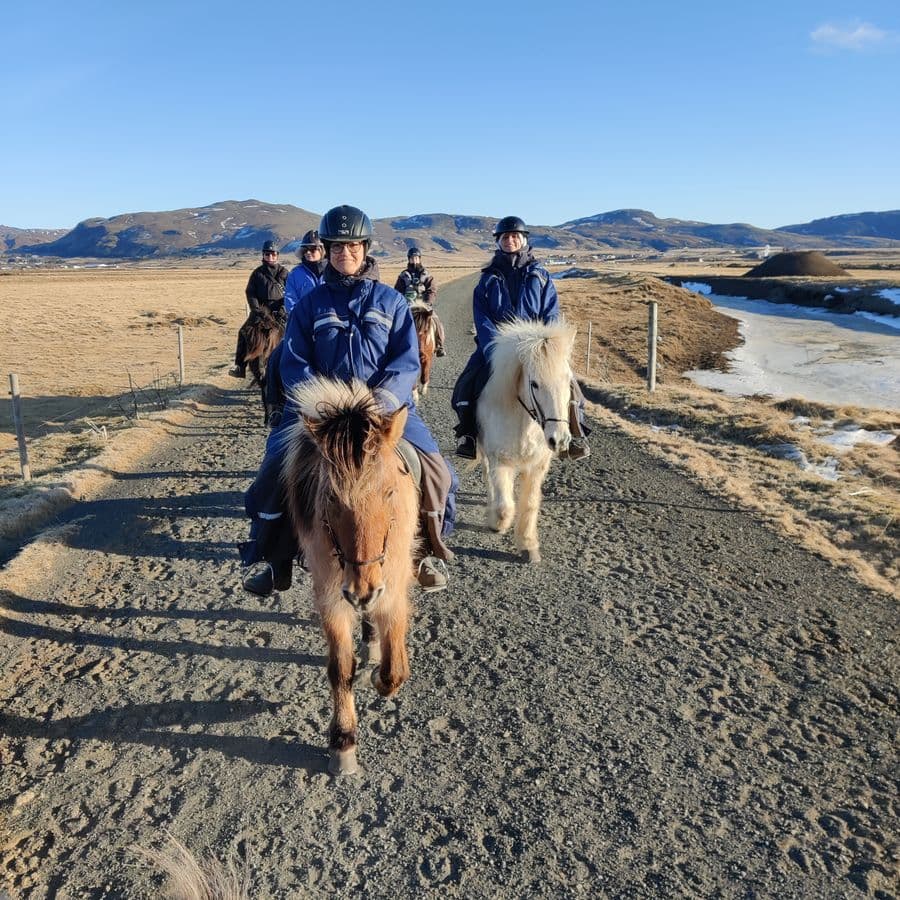
Horse farms and riding tours are common across the North Iceland region. Stodrettir, the Icelandic horse round-ups, are a tradition mostly exclusive to the north of Iceland and usually take place by the end of September or the beginning of October.
Planning a Horseback Day
Use the Driving Distance Calculator to help plan your trip.
Compare North Iceland Tour Options
You can compare North Iceland tours to see the current options.