Yes, Iceland is expensive, and the cost is concentrated in a few places rather than spread evenly. Eating out, guided activities and a bed for the night are where a budget goes. The median listed tour price by category shows how far the activity line varies by what you book, computed from live listings rather than from an average anybody remembers. The landscape you came for is mostly free to look at, and the things that make daily life work, water and public transport among them, are not where you will lose money.
That distinction is the useful part. A trip here is expensive by decision more than by default, and knowing which decisions carry the weight is worth more than any average daily figure.
Why prices are what they are
Start with tax, because it is the one part of Icelandic pricing that is published and verifiable rather than inferred. Iceland's standard rate of value added tax is 24% and the reduced rate is 11%.
The interesting thing is where that reduced rate lands. It applies to catering and the sale of food, and to the sale of other products for human consumption. It applies to the rental of hotel rooms and guest rooms, and to other accommodation let for commercial purposes. It applies to campground facilities. It applies to the transportation of passengers by land, air or sea, including coaches and bus trips. It also applies to alcohol, to travel agent services, to self-employed guides, and to spas and saunas.
Read that list again with a traveller's eye. Nearly every category a visitor spends money on already sits at the reduced rate rather than the standard one. Sleeping, eating, moving and being guided are all taxed at 11% rather than 24%.
Which means tax is not the explanation for why Iceland feels expensive. If anything, the tax structure is working in a visitor's favour. Whatever is pushing Icelandic prices up is happening before VAT is applied, in the cost of running a restaurant or a guiding operation here, and that is not something this page will pretend to quantify.
Where the reduced rate helps you
The practical consequence of that tax structure is that the number you see is the number you pay. Prices displayed to consumers in Iceland include value added tax, which is worth internalising if you are visiting from somewhere that quotes prices before tax. There is no unpleasant addition at the till, and the shelf price on a bag of groceries is final.
It also means the reduced rate quietly follows you through most of the day. The guesthouse, the campground, the bus, the sandwich, the pool, the guide: all of them sit in the reduced band.
What is genuinely cheap or free
Icelandic tap water is safe to drink straight from the tap. This is not a minor detail. Buying bottled water in a country where the tap runs cold and clean is one of the few genuinely wasted expenses available to a visitor, and carrying a refillable bottle removes it entirely.
Most natural attractions carry no entry fee. The waterfalls, the beaches, the coastal paths and the lava fields are not ticketed in the way that comparable sights in many countries are. Reykjavík itself has a substantial amount worth seeing at no cost, which is the subject of free things to do in Reykjavík.
Be careful with the word free, though. No entry fee is not the same as no cost to visit, because reaching a site still takes fuel or a seat on something, and popular car parks have increasingly become a place where access is charged even where the site itself is not.
The costs you actually control
Three decisions move an Icelandic budget more than all the rest combined.
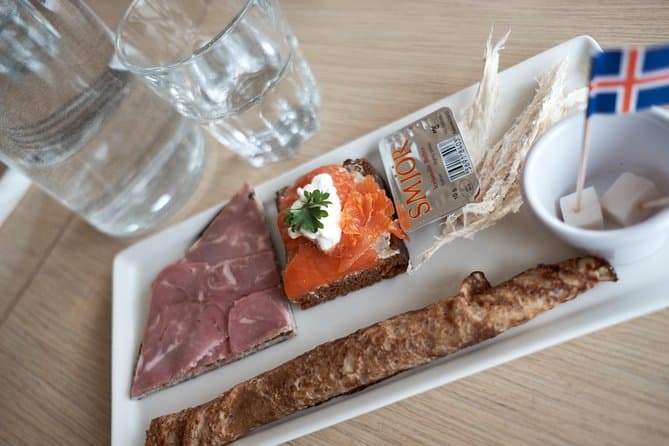
The first is whether you cook. The gap between self-catering and eating out is the single widest cost gap available to a visitor here, wider than the gap between accommodation types. A kitchen, or even a kettle and a cool bag, changes the shape of a trip's spending.
The second is what you sleep in. Iceland has a genuine range, from campsites and sleeping-bag accommodation through guesthouses with shared bathrooms to full hotels, and moving one step down that ladder costs you comfort rather than access to the country.
The third is when you go. Demand, not generosity, sets Icelandic prices, and travelling outside the busiest weeks changes what everything costs without changing what you can see, up to the point where daylight starts to constrain you.
Getting around without overspending
Public transport in the capital area is one of the few costs here with a straightforward published answer. Strætó fares are paid using the Klappið mobile application, by contactless payment, or with a Klapp card or keychain. There is no need to hunt for exact change, and no cash arrangement to work out on the way to the bus.
For a visitor staying in Reykjavík and heading out on organised trips rather than driving, the bus network handles the in-city half of the problem cheaply enough that it rarely appears in a post-trip reckoning of where the money went.
Work out your own numbers
Use the Trip Budget Calculator to plan your trip.
Compare Reykjavik tours
You can compare Reykjavík tours to see the current options.