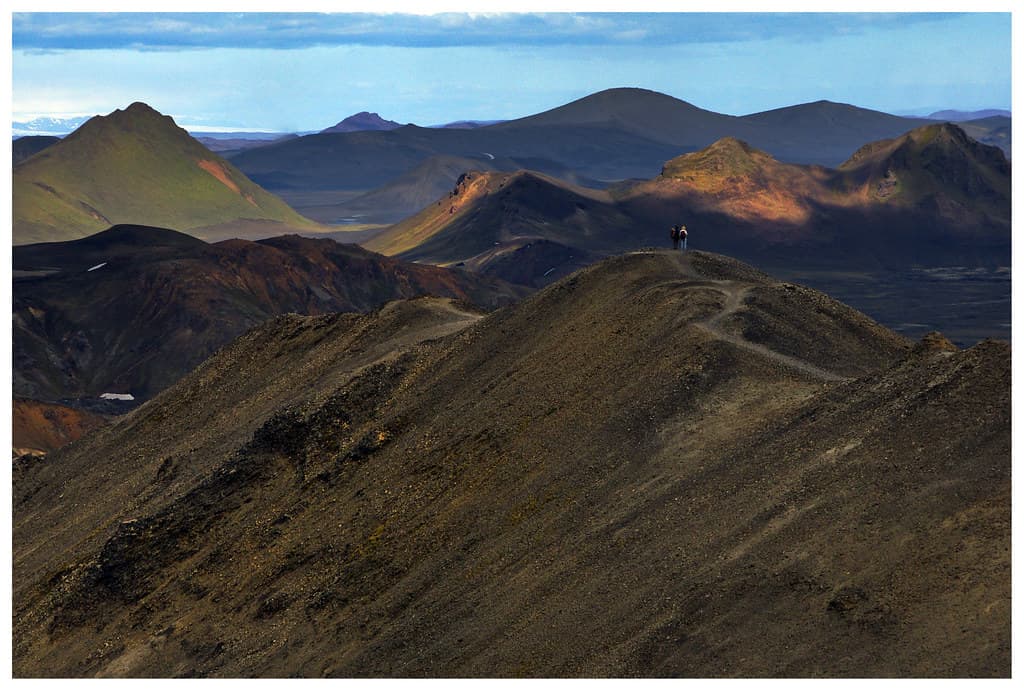
Kerlingarfjoll is a highland mountain range of rhyolite peaks and hot springs.
A highland rhyolite massif
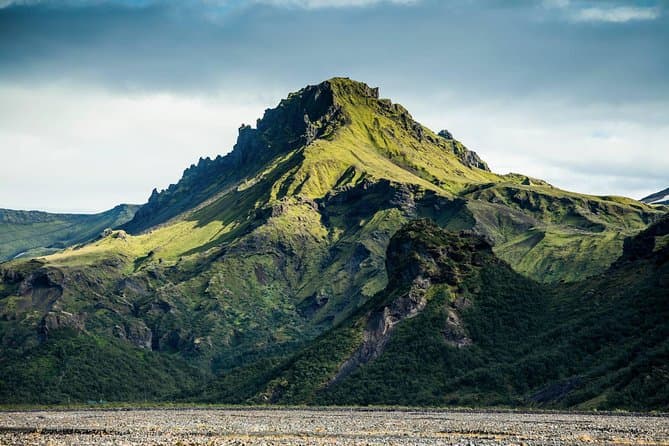
Kerlingarfjoll is a large mountain range in Iceland's central highlands, just south of the Hofsjokull glacier. The range is in the chain of mountains and glaciers around the Kjolur area.
Kerlingarfjoll is a largely intact central volcano and holds the second-largest rhyolite area in Iceland. All of its rhyolite formed in eruptions under a glacier, and some peaks are rhyolite table mountains, a formation that is rare worldwide.
The mountains are mostly light-brown rhyolite, with palagonite mountains around the edges, and obsidian is common. Kerlingarfjoll was protected as a landscape protection area to preserve its geology, landscape and wilderness and to strengthen it as an outdoor area.
Hveradalir Geothermal Area
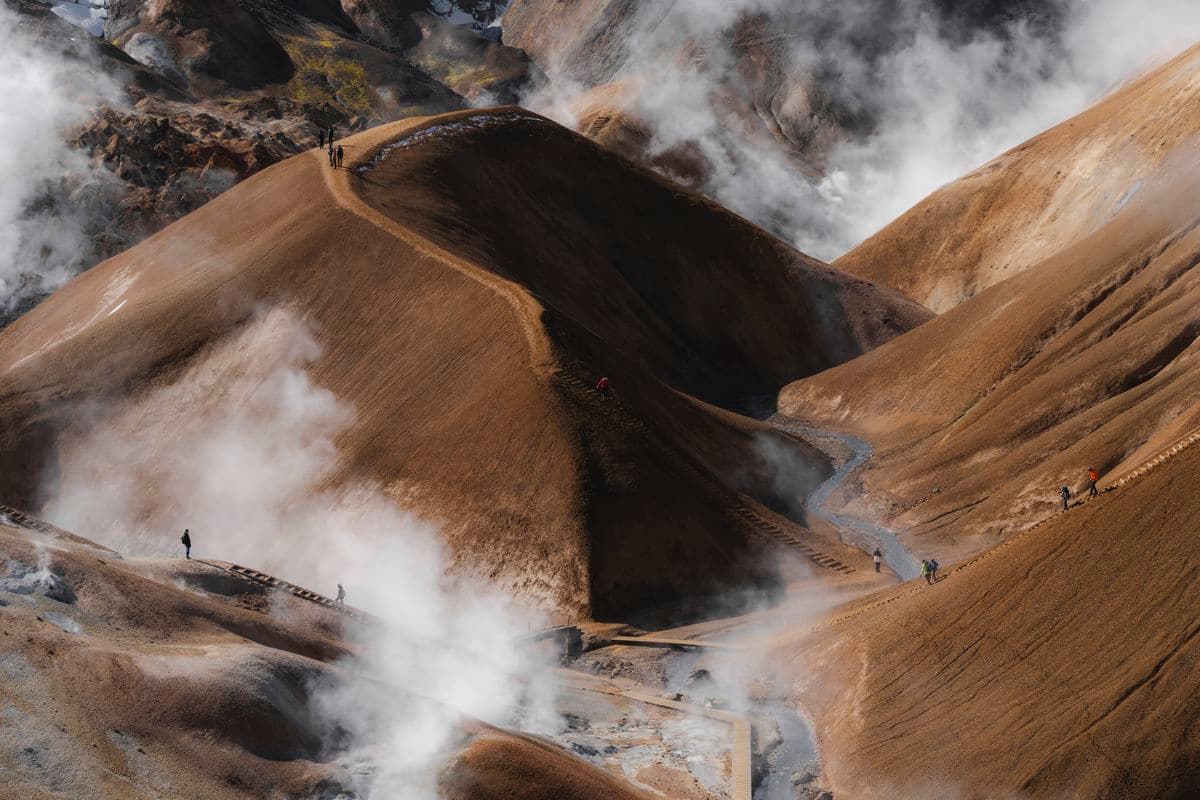
Kerlingarfjoll has powerful hot-spring areas, including Nedri Hveradalir, Efri Hveradalir and Hverabotnar. It is rare to find such a density of pools, hot springs and steam vents as in Kerlingarfjoll.
The hot-spring areas change quickly. Some steam vents vanish, new ones open, and their strength can change suddenly. Visitors to the highlands should stick to marked trails, and off-road driving is strictly forbidden.
Peaks, the Kerling pillar and the hiking routes
Lodmundur in Kerlingarfjoll is 1429 metres high. The mountains are named after a large, dark palagonite pillar called Kerling, which stands on light rhyolite scree.
Kerlingarfjoll was once Iceland's most popular summer ski area, which has mostly ended as the climate warmed and the snowfields shrank. Many hiking routes cross the area, including through one of Iceland's most varied hot-spring areas.
Getting there on the Kjolur road
Kerlingarfjoll is reached by driving the Kjolur road and turning onto the Kerlingarfjallavegur spur road. Kjolur has lost its F-road designation in recent years because of road improvements.
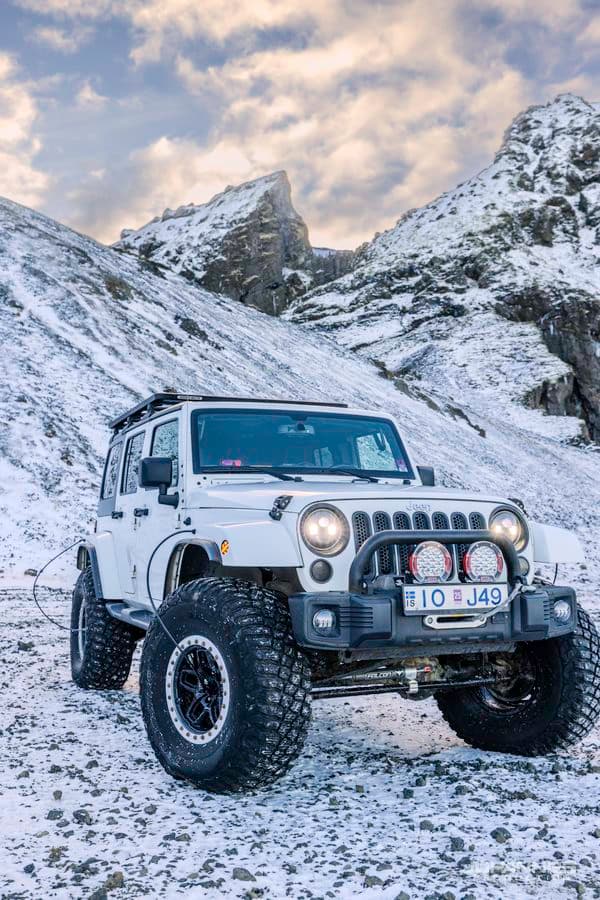
In summer the road to Kerlingarfjoll is passable for small four-wheel-drive vehicles and larger ones, and there are no fords on the way. Rougher tracks into the area from the south and east open later, have unbridged rivers and are only for four-wheel-drive vehicles.
When You Can Visit
Snow cover is the most important factor in deciding when mountain roads can open. Mountain roads are only open for a short part of the year.
The highland weather can change suddenly, and snow commonly falls on the highest peaks in every month of the year. Use the Road Conditions to help plan your trip.
Compare Highland Tours
You can compare highland tours to see the current options.