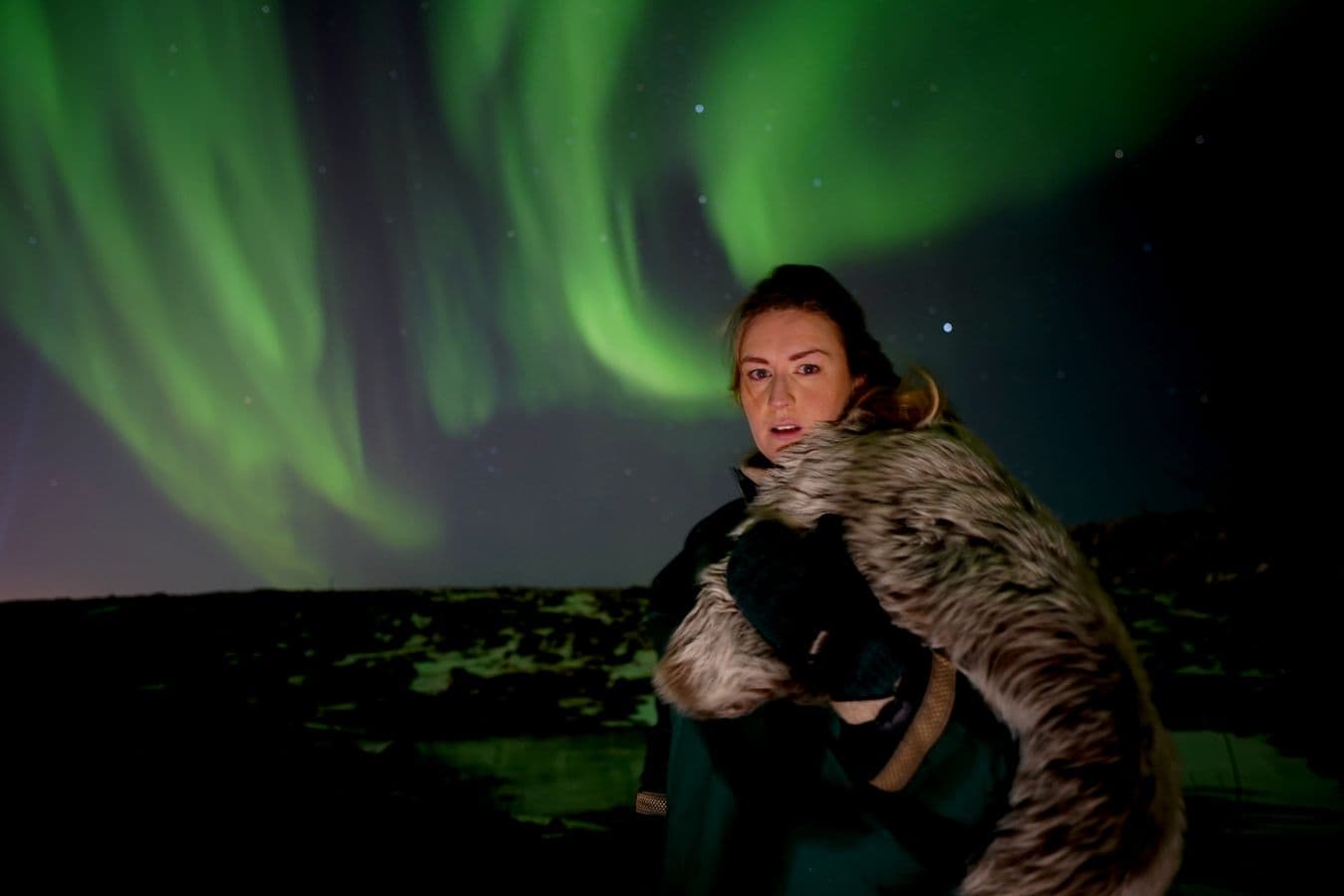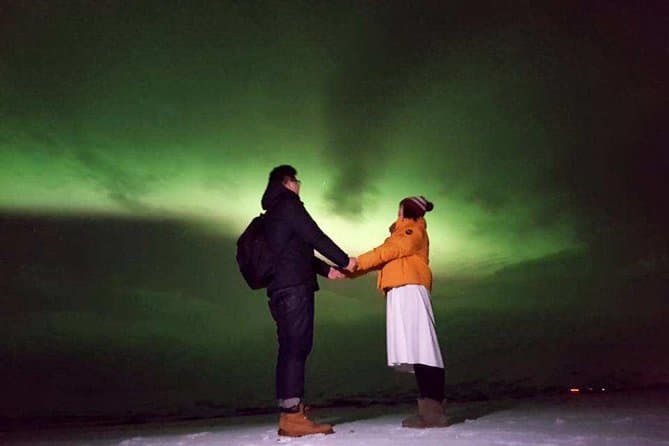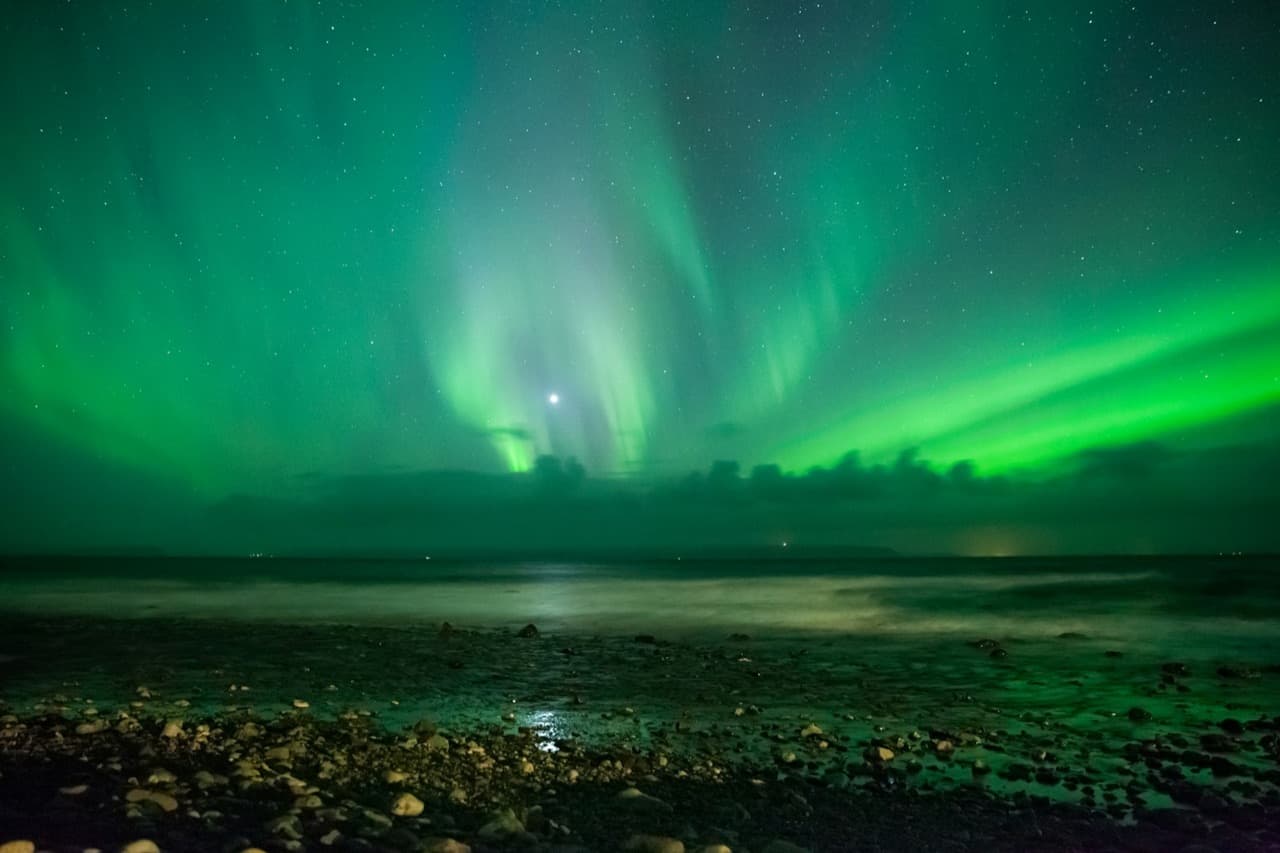
The northern lights are seen in Iceland during the dark part of the year, roughly from September to April. In summer the nights are too bright, because of the midnight sun, to see them.
The aurora season
The northern lights are seen in Iceland during the dark part of the year, roughly from September to April; see our guide to the best time for the northern lights for the wider picture, and when to visit Iceland for how the aurora season fits the whole travel year.
Month by month
September and October
Nights are returning after the bright summer, with milder weather and often clearer skies than midwinter.
November, December, and January
These are the longest, darkest nights of the year, but also the most unsettled winter weather, so clear spells can be harder to catch.
February and March
Long nights continue, with a better chance of clearer, calmer spells than midwinter.
April
Nights grow short again quickly and the season effectively ends by the end of the month.
In every month, dark, clear skies matter more than the exact date, so cloud cover and the aurora forecast should be checked.
The Icelandic Met Office publishes an aurora forecast on vedur.is.
The lights are never guaranteed on any night.
Planning by month and northern lights tours
You can compare Northern Lights tours to see the current options.
Use the available light
The Daylight Hours Calculator makes it easier to plan a viewing night around sunrise, sunset, and the hours of darkness in between.