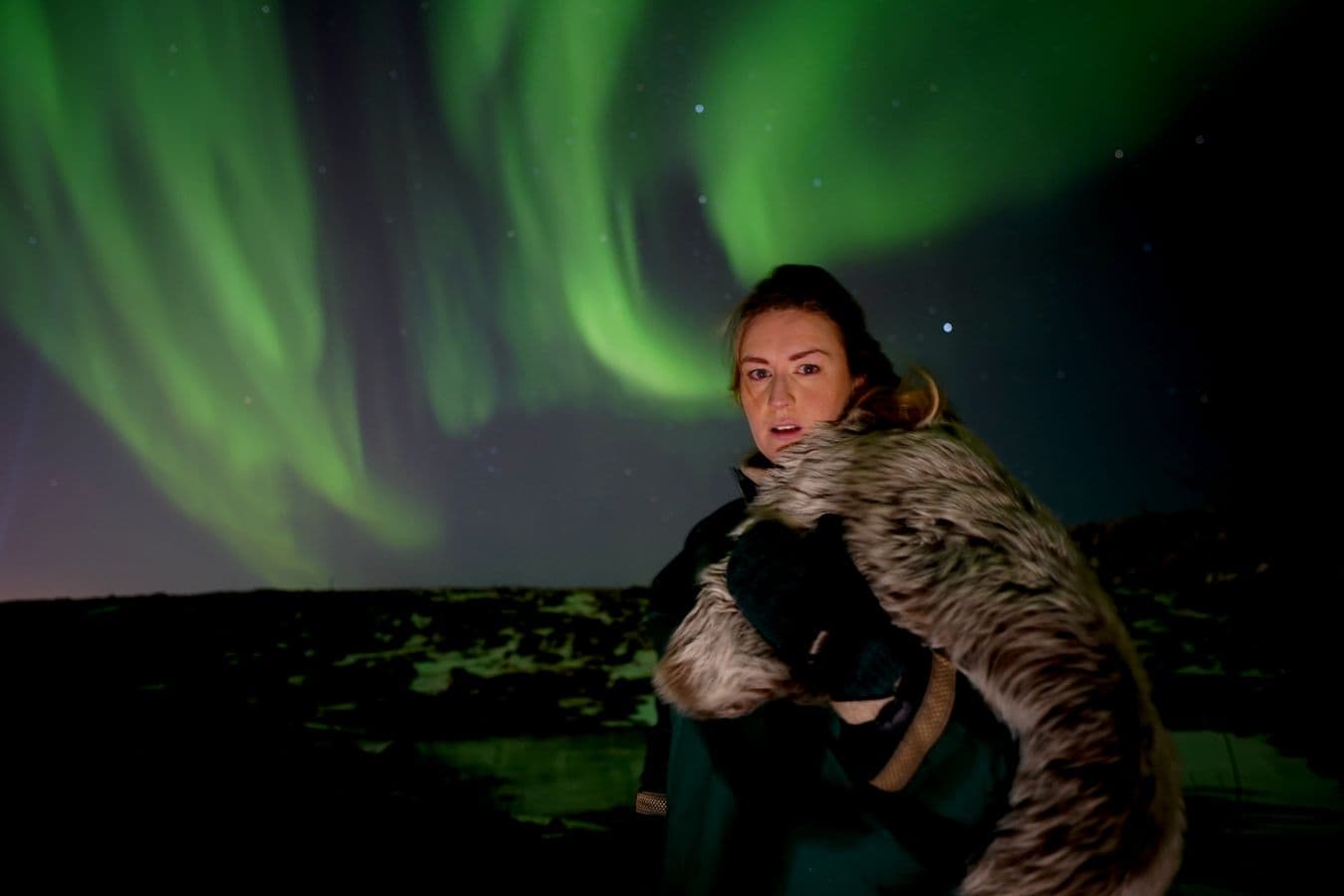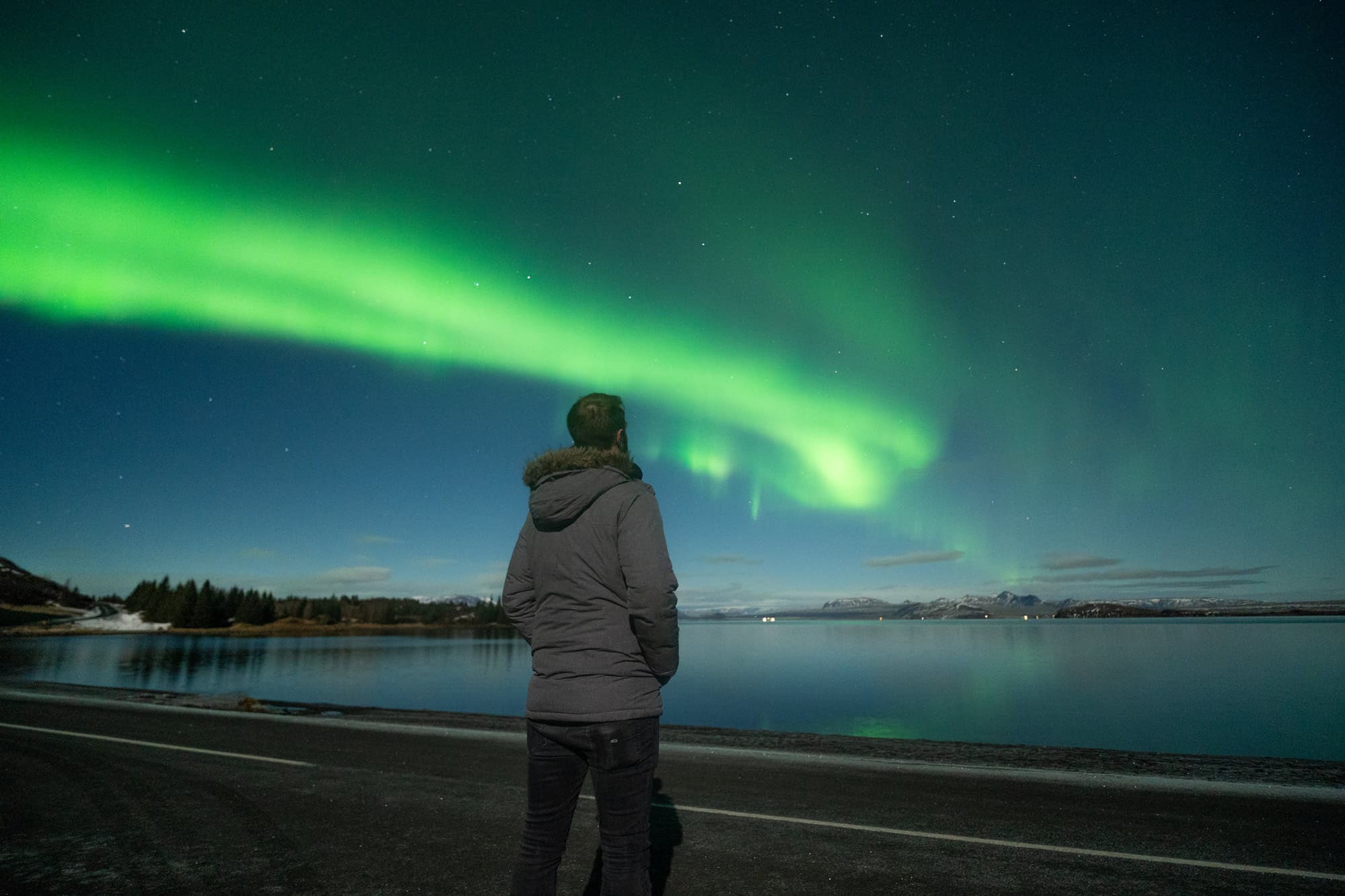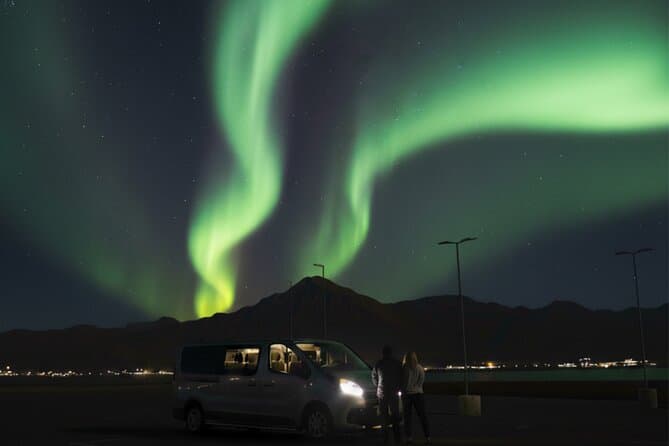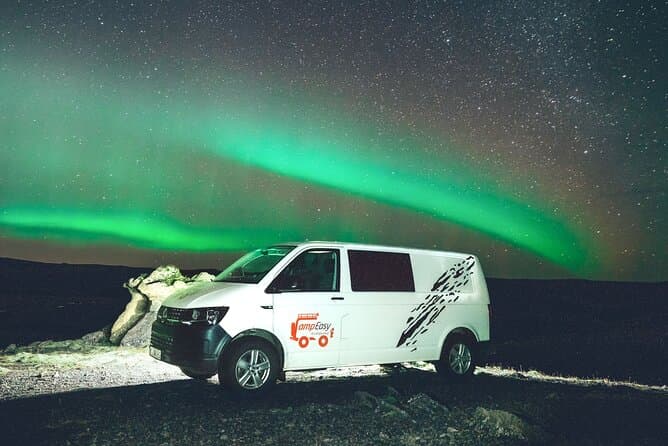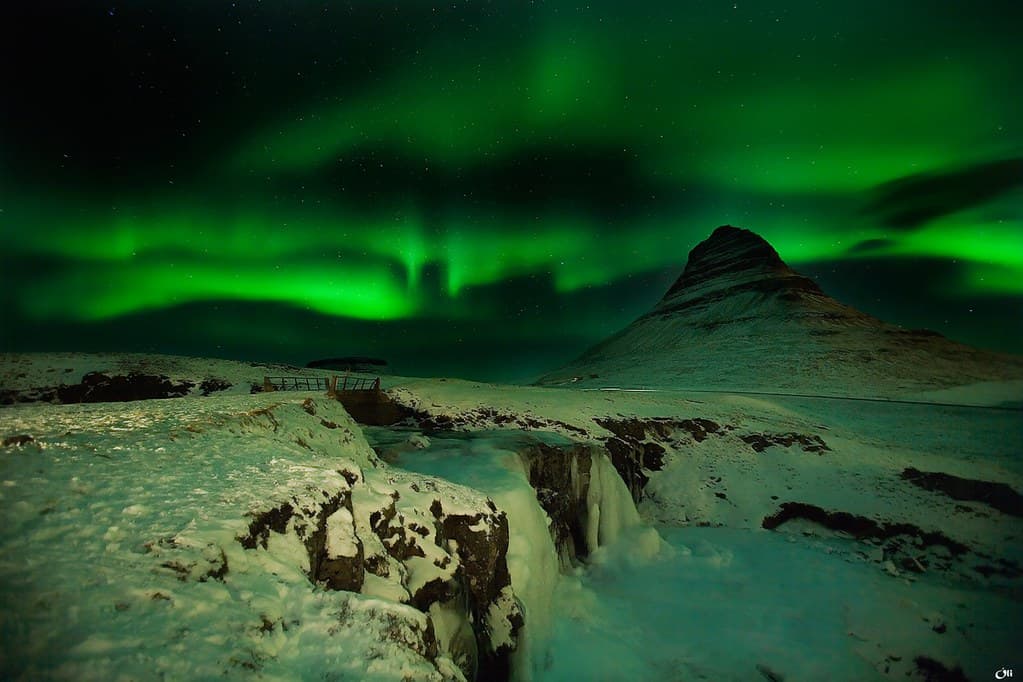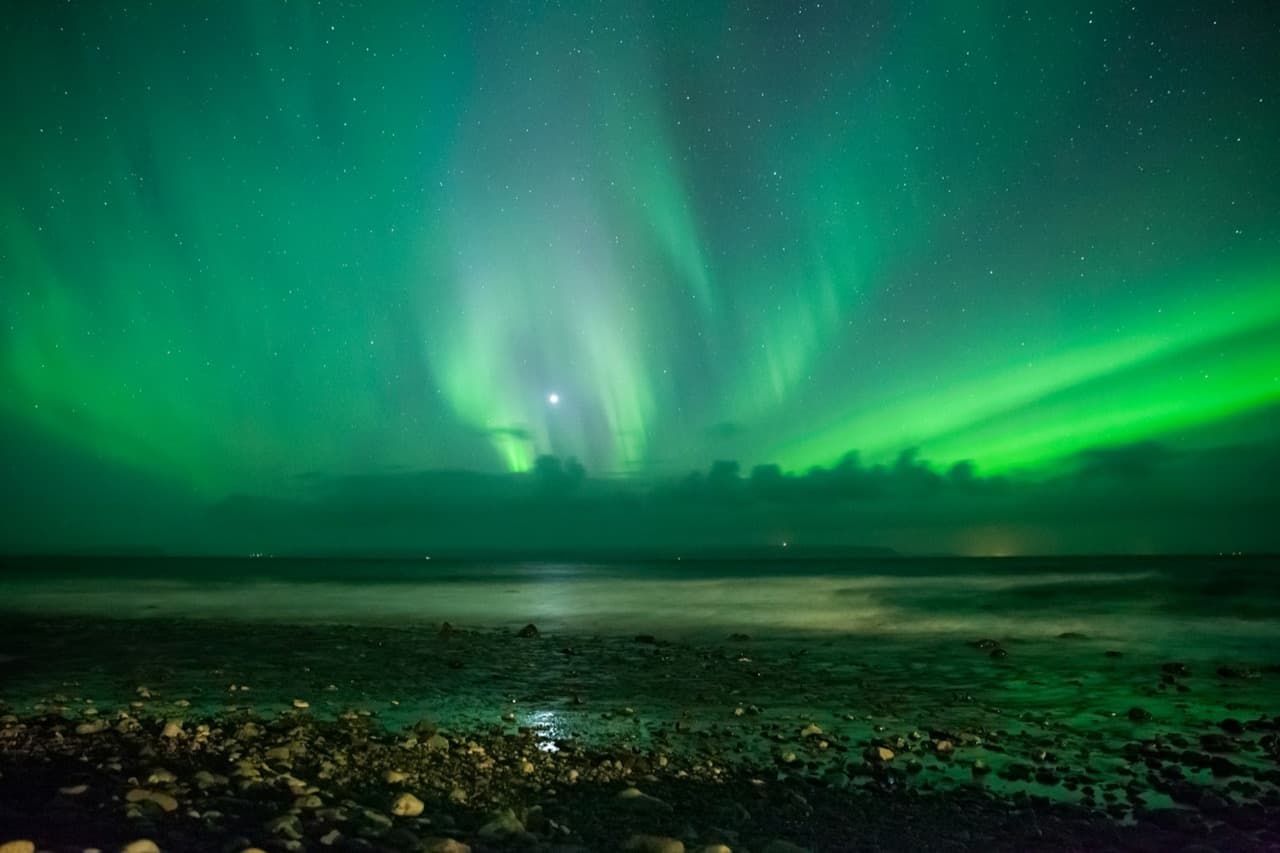
A guided northern lights tour uses a driver who follows the forecast, while a self-drive trip relies on the traveler checking conditions directly. The northern lights season in Iceland runs roughly from September to April, and aurora displays are most often visible between about 10 pm and 1 am. In midwinter, during December and January, Iceland has only about 4 to 5 hours of daylight, leaving long dark nights for aurora hunting.
How seeing the northern lights in Iceland actually works
Three conditions are needed to see the aurora: darkness, clear skies with few clouds, and solar activity. The aurora is effectively not visible in Iceland around June, because the midnight sun keeps the sky too bright at night. By February and March, daylight gradually extends to around 8 to 10 hours per day.
What you get on a guided northern lights tour
Guided northern lights tours are led by guides who follow the forecast and drive guests toward areas with the clearest skies that night. Guided northern lights tours commonly let guests rebook on a later night at no extra charge if the aurora does not appear.
What chasing the aurora by self-drive involves
Chasing the aurora by self-drive usually means leaving Reykjavik and its light pollution behind to find darker rural skies. The aurora can sometimes be seen from within Reykjavik on strong nights, but darker areas away from city lights give clearer views. A 4x4 vehicle is recommended for winter driving in Iceland because it gives better traction and control on snow and ice. Rental cars in Iceland use winter tyres in the winter months, and studded tyres are common. Headlights must be on at all times when driving in Iceland, both day and night. All F roads, the mountain and highland roads, are closed in winter, and many roads in the highlands and the Westfjords are not accessible. Major routes such as the Ring Road and the Golden Circle are regularly cleared and sanded in winter. Black ice, which is hard to see on the road surface, is a common winter hazard, especially when the temperature is just below freezing. Before each driving day in winter, drivers should check road conditions at road.is and weather forecasts at vedur.is.
How to read the aurora forecast before you head out
Solar activity relevant to the aurora is measured on the KP index, a scale that runs from 0 to 9. The KP index was introduced in 1949 by the German scientist Julius Bartels. A KP reading of 3 or higher is generally considered promising for a good aurora display. A high KP number is not required to see the aurora: a KP of 2 or 3 combined with clear, genuinely dark skies can still produce a strong display. The Icelandic Meteorological Office publishes an aurora forecast alongside a cloud-cover forecast at vedur.is. Use the Aurora Forecast to help plan your trip.
Deciding between a tour and driving yourself, and comparing tours
You can compare Northern Lights tours to see the current options.