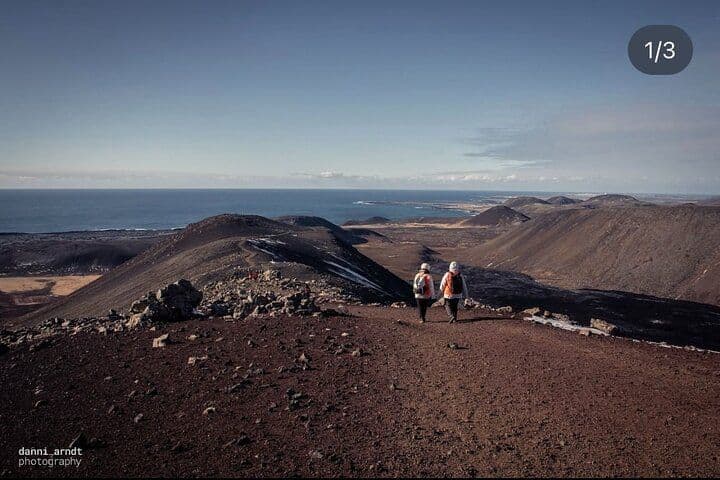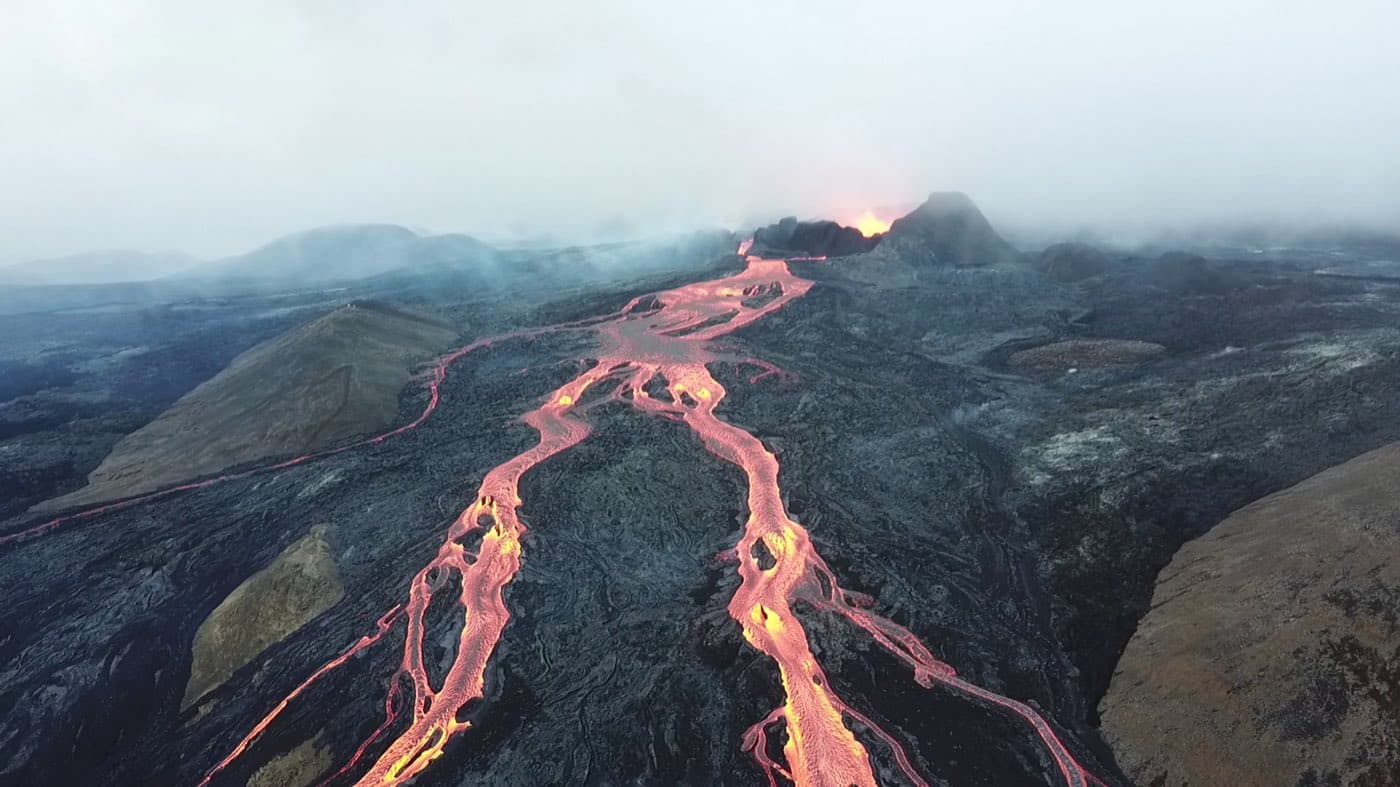
The Reykjanes Peninsula is in southwestern Iceland. The North American and Eurasian tectonic plates diverge across the peninsula at a rate of about 1.8 cm per year. Before the activity that began in 2021, the Reykjanes Peninsula had experienced roughly 800 years of volcanic repose.
Where the Reykjanes Peninsula sits on the Mid-Atlantic Ridge
The Reykjanes Peninsula is where the Mid-Atlantic Ridge rises from the sea and continues onto land, as the continuation of the mostly submarine Reykjanes Ridge. The Bridge Between Continents on Reykjanes is a footbridge spanning a fissure in the rift zone between the North American and Eurasian plates. The dominant volcanic rock on the Reykjanes Peninsula is basalt.
The volcanic systems that shape the peninsula
Depending on the source, the peninsula is described as having 3 to 7 volcanic systems. Named volcanic systems on and around the peninsula include Reykjanes, Svartsengi, Fagradalsfjall, Krysuvik, Brennisteinsfjoll and Hengill, plus the largely submarine Eldey system. An earlier period of eruptions known as the Reykjanes Fires ended around the year 1240. Over the past 4000 years, Reykjanes volcanism has alternated between periods of frequent eruptions and repose intervals lasting several centuries. The Reykjanes Power Station, built in 2006, generates about 100 MW of power. The geothermal potential of the Reykjanes system has been described as up to 176 MW.
A timeline of the recent Reykjanes eruptions since 2021
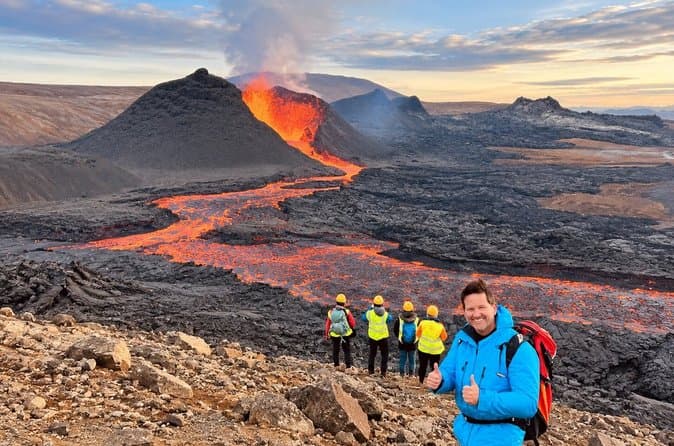
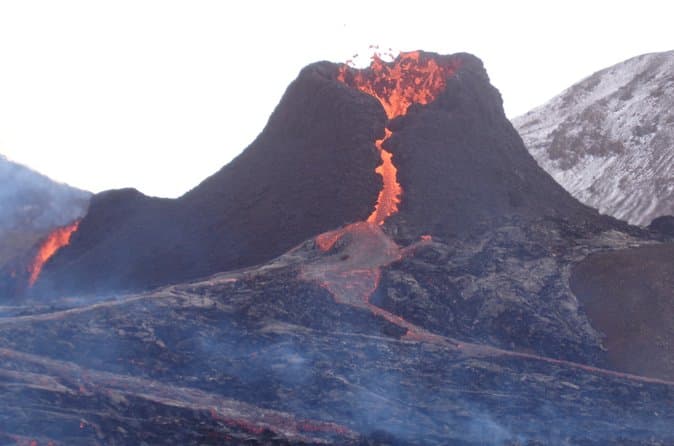
The Fagradalsfjall eruption began on 19 March 2021 in the Geldingadalir valley to the south of Fagradalsfjall mountain. The initial fissure of the 2021 eruption lengthened to about 700 metres over the course of the activity. The 2021 Fagradalsfjall eruption emitted fresh lava until 18 September 2021. A second Fagradalsfjall eruption began on 3 August 2022 and stopped on 21 August 2022. A third eruption in the Fagradalsfjall system ran from 10 July 2023 to 5 August 2023 and opened a fissure about 900 metres long. From December 2023 onward, a series of fissure eruptions occurred in the Svartsengi and Sundhnukur area near the town of Grindavik.
How to visit the volcanic sites safely
Volcanic sites can release sulfur dioxide gas, which is hazardous for people with respiratory conditions and when winds are unfavourable. Hot spots and fissures can emit odourless carbon dioxide that collects in depressions and hollows, especially in calm weather. Fresh lava fields have uneven and unstable terrain, and eruption or trail areas can close on short notice due to gas levels or new activity. The Icelandic Meteorological Office and Safe Travel Iceland publish official volcano status, hazard maps and gas warnings for the area. Going with a guide takes the judgement about which ground is currently open off the visitor, and a small-group tour of the Reykjanes geothermal areas, volcanoes and cliffs covers the accessible sites in a day. Use the Road Conditions to help plan your trip.
Other volcanic and geothermal sights across Reykjanes
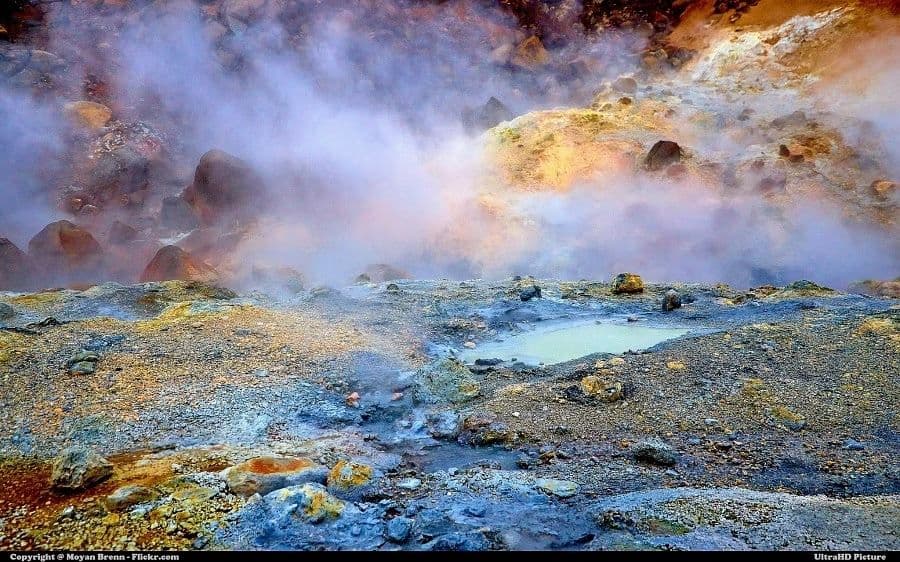
Reykjanes is a UNESCO Global Geopark. Gunnuhver is a high-temperature geothermal area on the Reykjanes headland. Seltun is a geothermal area within the Krysuvik volcanic system. The Blue Lagoon geothermal spa sits within a lava field on the Reykjanes Peninsula. Keflavik International Airport is located on the Reykjanes Peninsula. Grindavik is the nearest town to the Fagradalsfjall eruption area, roughly 10 km away. The Fagradalsfjall area is roughly 50 km from Reykjavik.
Comparing Reykjanes volcano and geothermal tours
You can compare Reykjanes tours to see the current options.