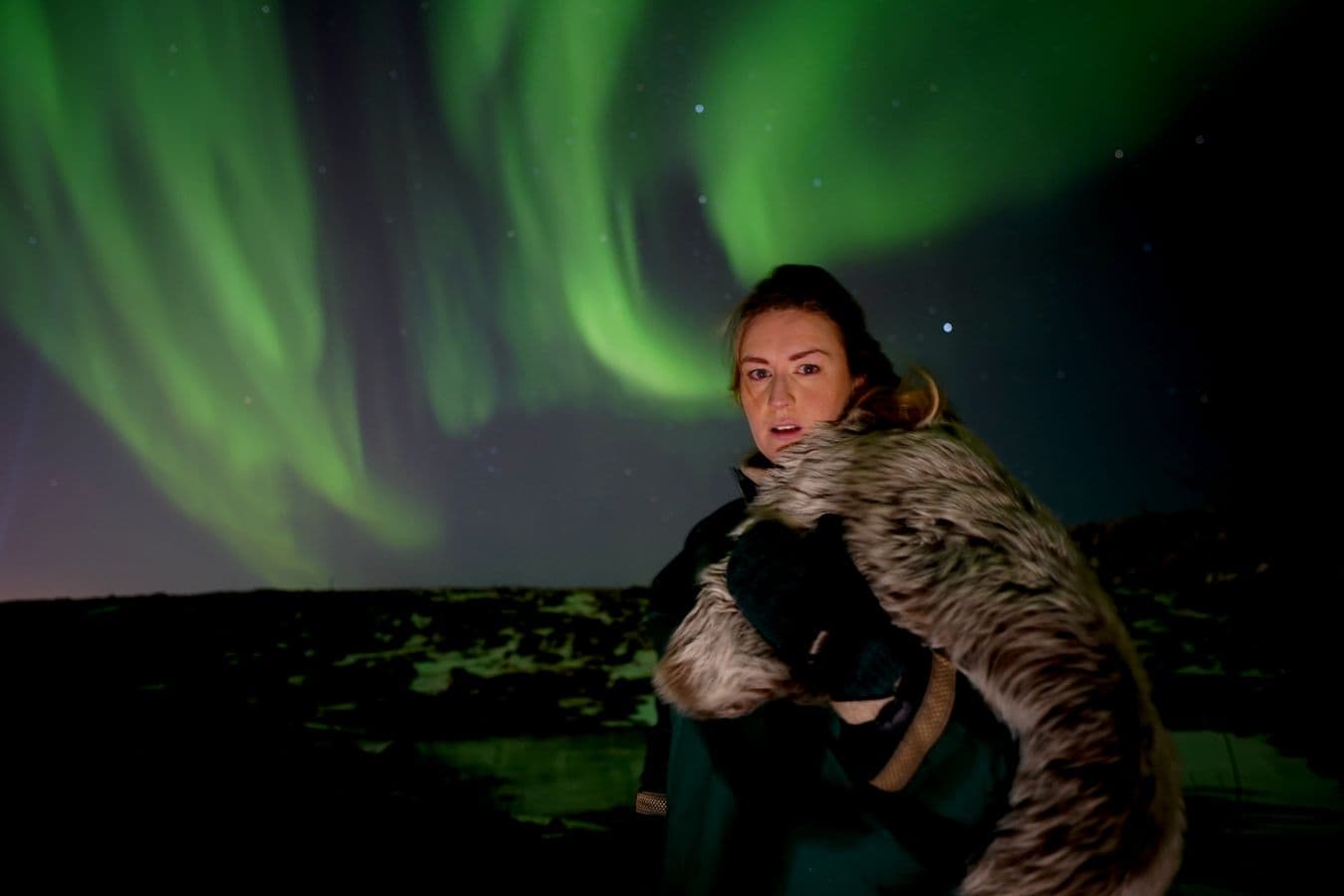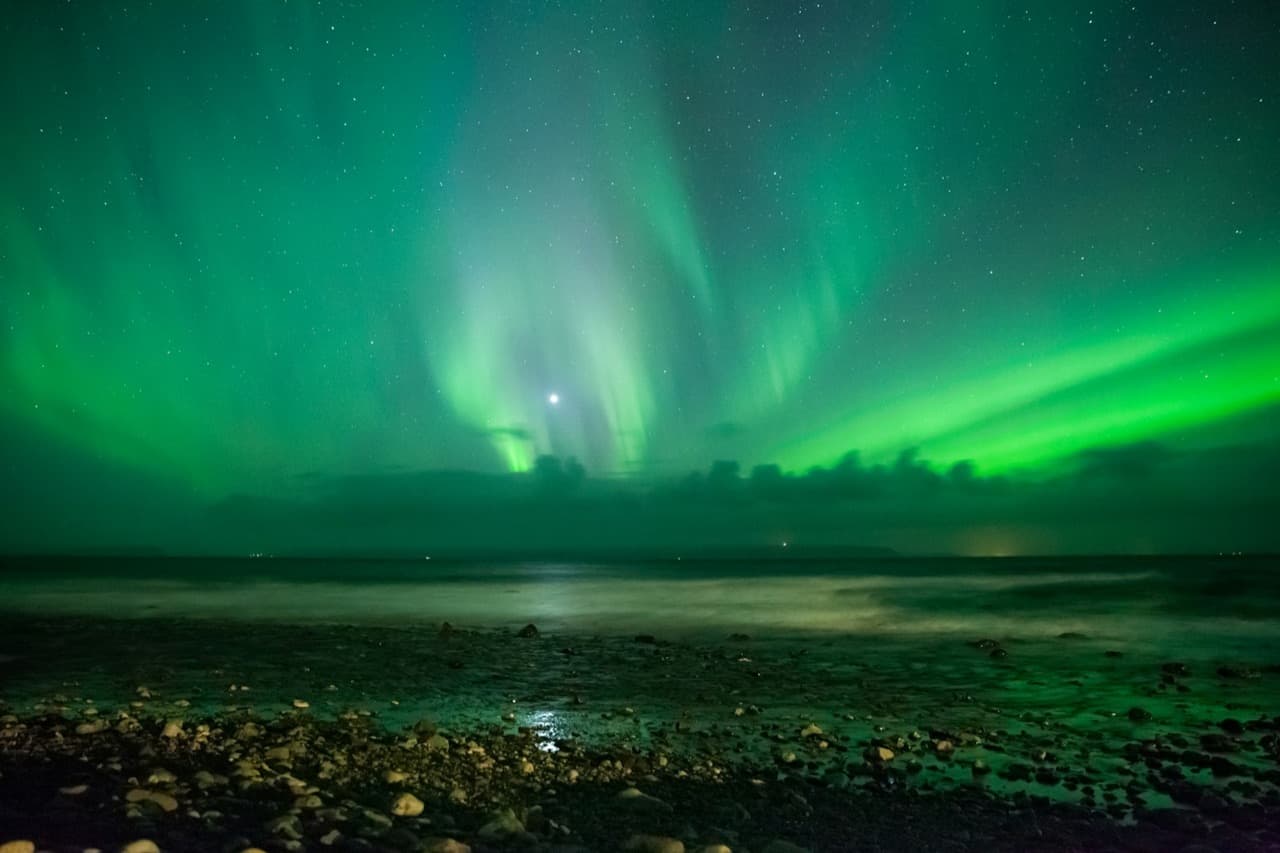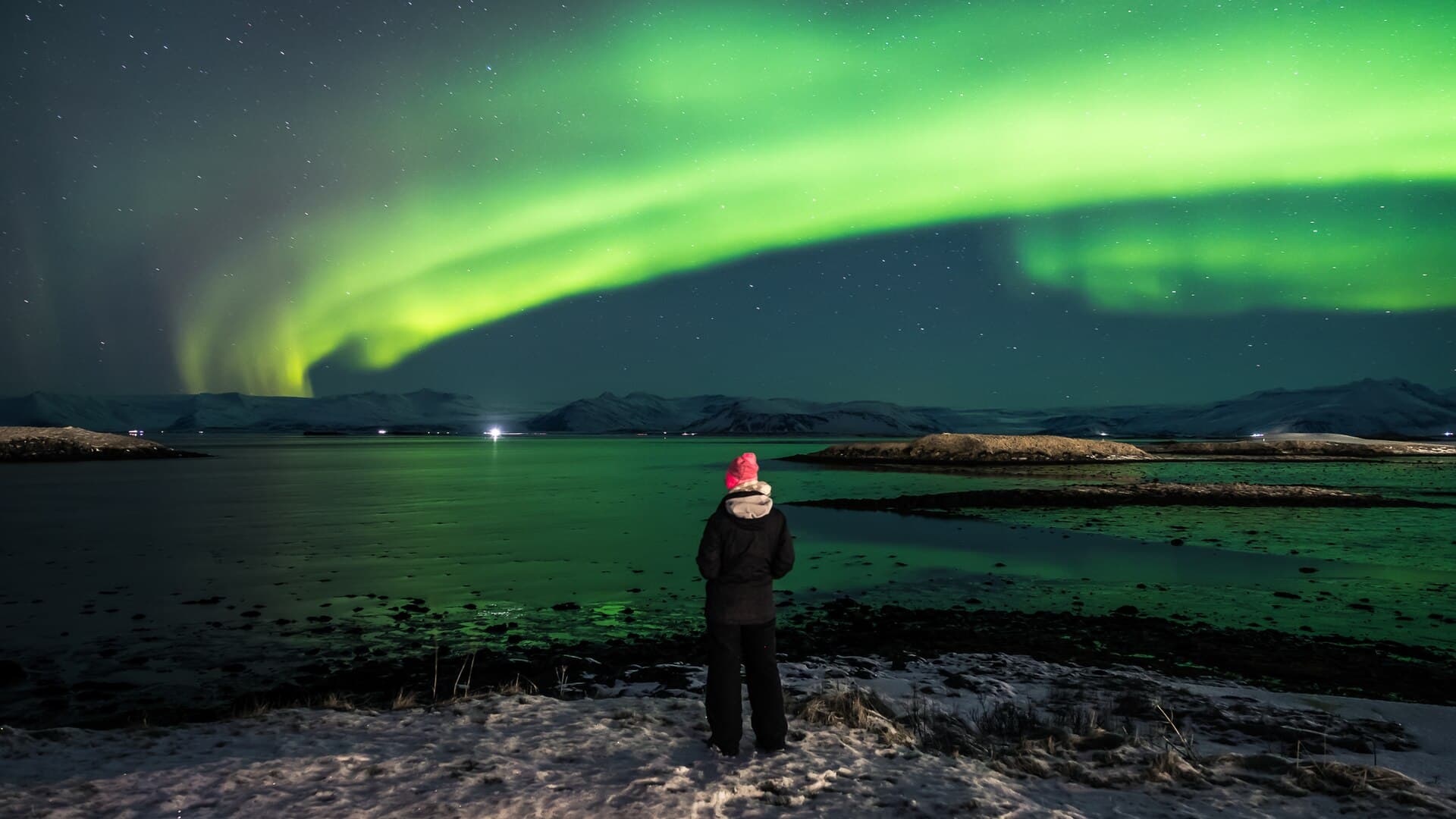
The northern lights appear in different colours, most often green. Green light is produced by oxygen at around 100 kilometres up. The colours come from particles from the sun hitting gases high in the atmosphere.
Why the northern lights have colours
The colour depends on which gas is struck and how high up it happens. What causes northern lights describes the same process.
Green, the most common colour
The human eye sees green most easily, so a faint aurora can look grey or white to the eye but green in photographs.
Red, purple, and other colours
Red light comes from oxygen much higher in the atmosphere and is rarer. Purple, blue, and pink shades come from nitrogen. Stronger auroral activity can bring several colours at once.
Seeing the colours and northern lights tours
The lights are seen on dark, clear nights during the aurora season; our guide on where to see the northern lights covers the conditions. You can compare Northern Lights tours to see the current options.
Put the science into practice
When you want to see the colours described here, the Aurora Forecast shows the current cloud cover and activity to weigh up.