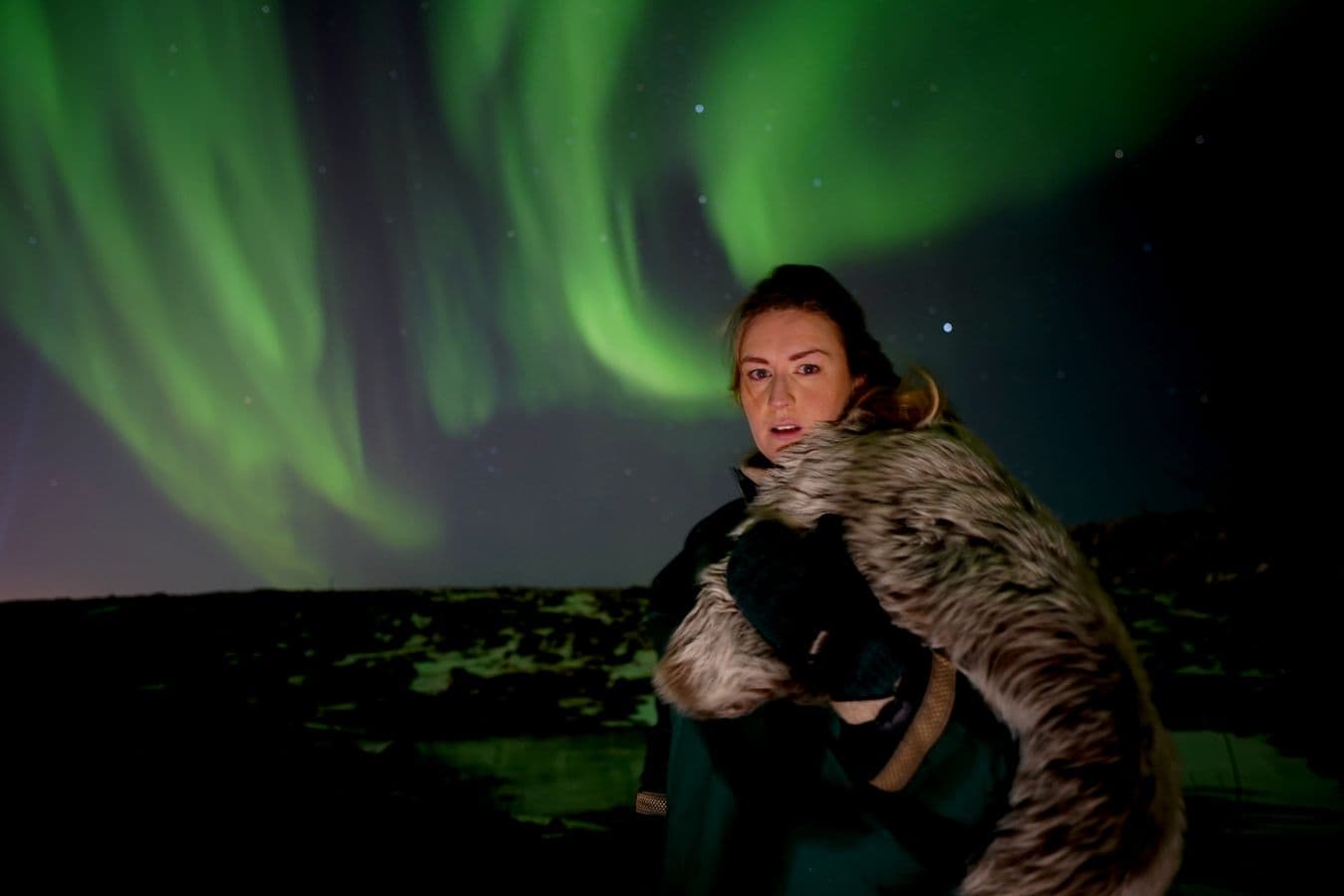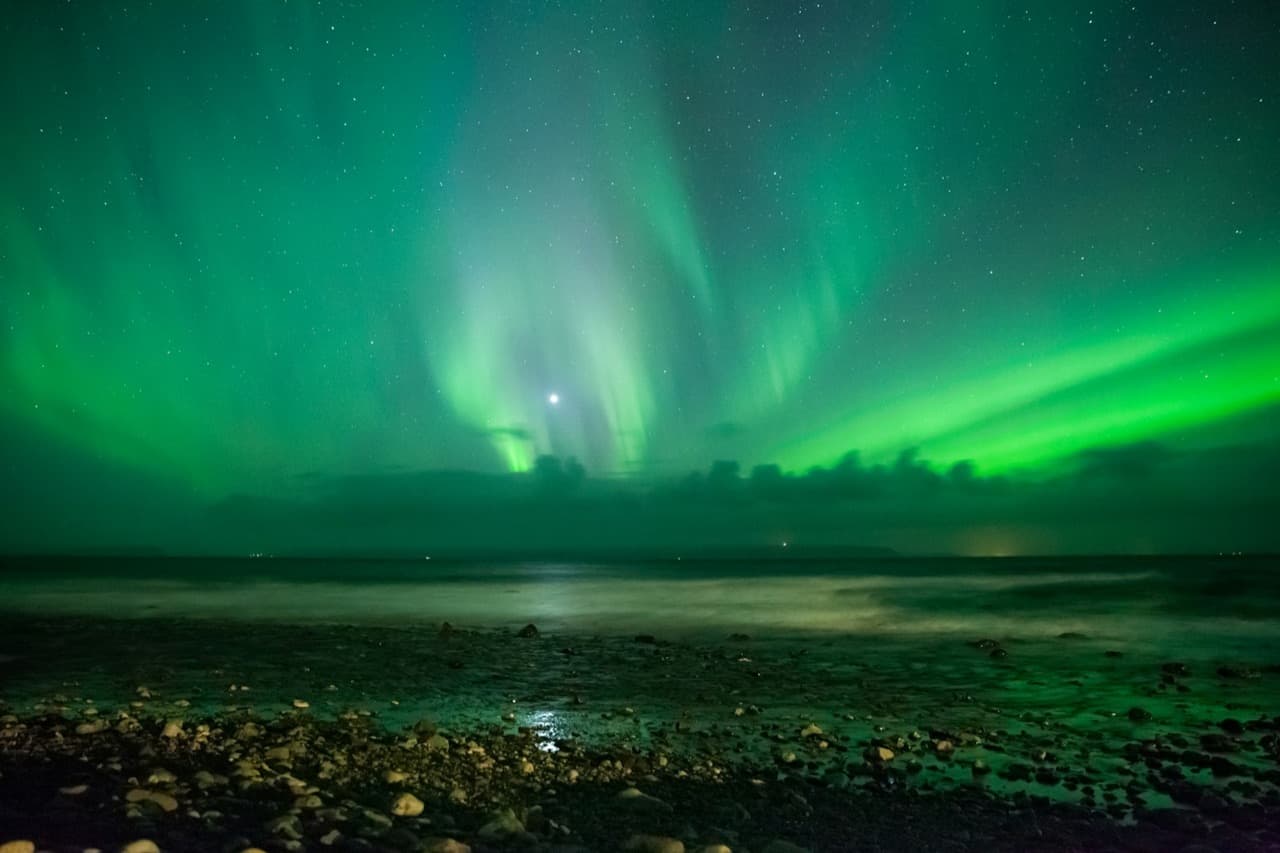
Charged particles from the Sun meeting gases high in Earth's atmosphere are what produce the northern lights, also called aurora borealis. The process starts with the solar wind, then depends on Earth's magnetic field steering part of that stream toward the polar regions.
What the northern lights are
The northern lights, or aurora borealis, appear when charged particles from the Sun interact with gases high in Earth's atmosphere.
The solar wind
The Sun gives off a constant stream of charged particles called the solar wind.
How Earth's magnetic field steers the particles
Earth's magnetic field channels some of these particles toward the polar regions. As the particles strike oxygen and nitrogen high in the atmosphere, the gases give off light.
Why the lights glow green, red and purple
Oxygen most often produces the green light people associate with the aurora, and a red glow higher up. Nitrogen can add blue and purple tints.
Seeing the northern lights in Iceland
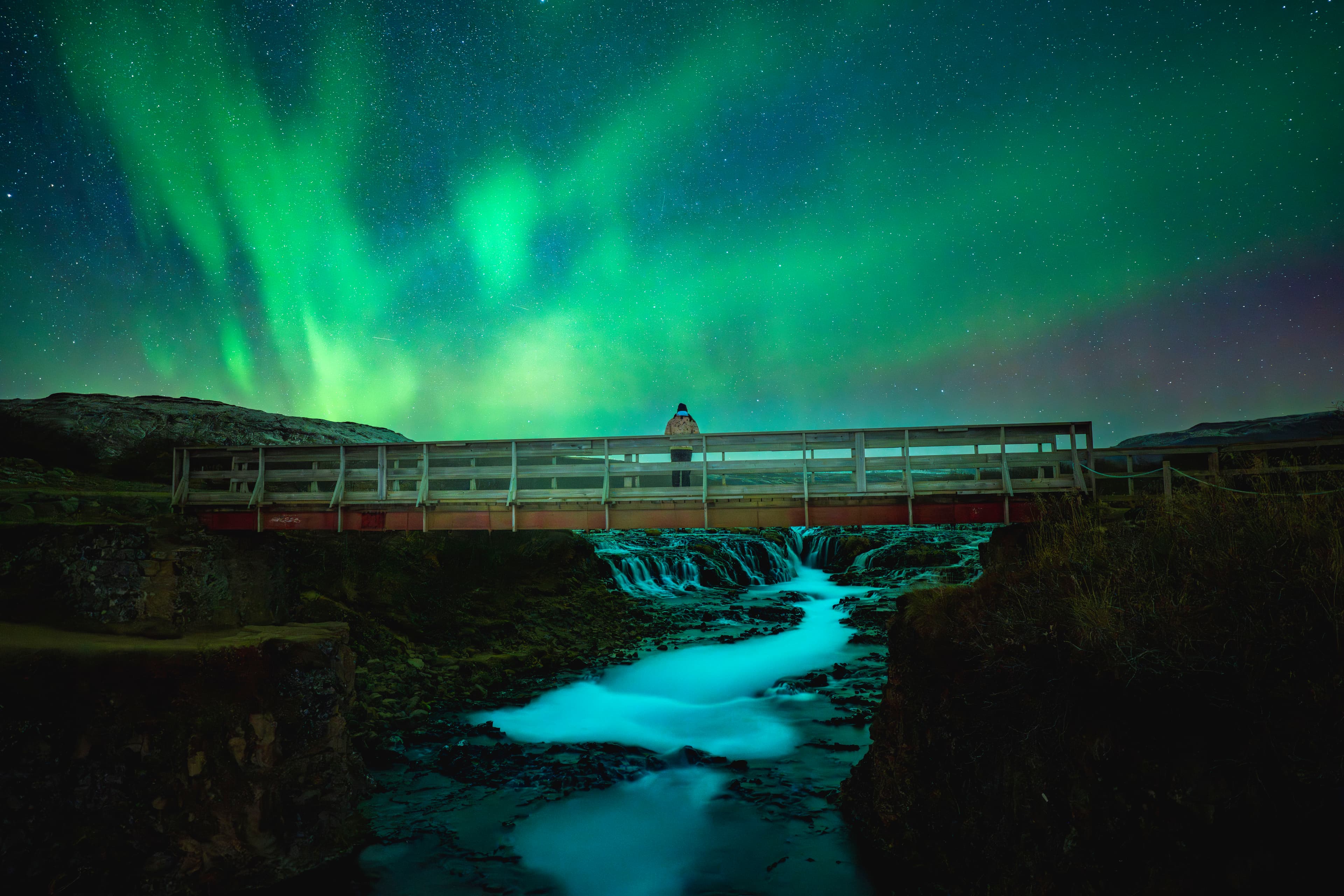
In Iceland, the same process creates the aurora borealis seen in northern skies. How strong a display is on a given night is often summarised by the KP index, and activity rises and falls with the Sun's 11-year solar cycle. If you want to compare options for going out to look for them, see northern lights tours.
Check before you go
For a current read on the sky, check the Aurora Forecast before making northern-lights plans around your travel dates.