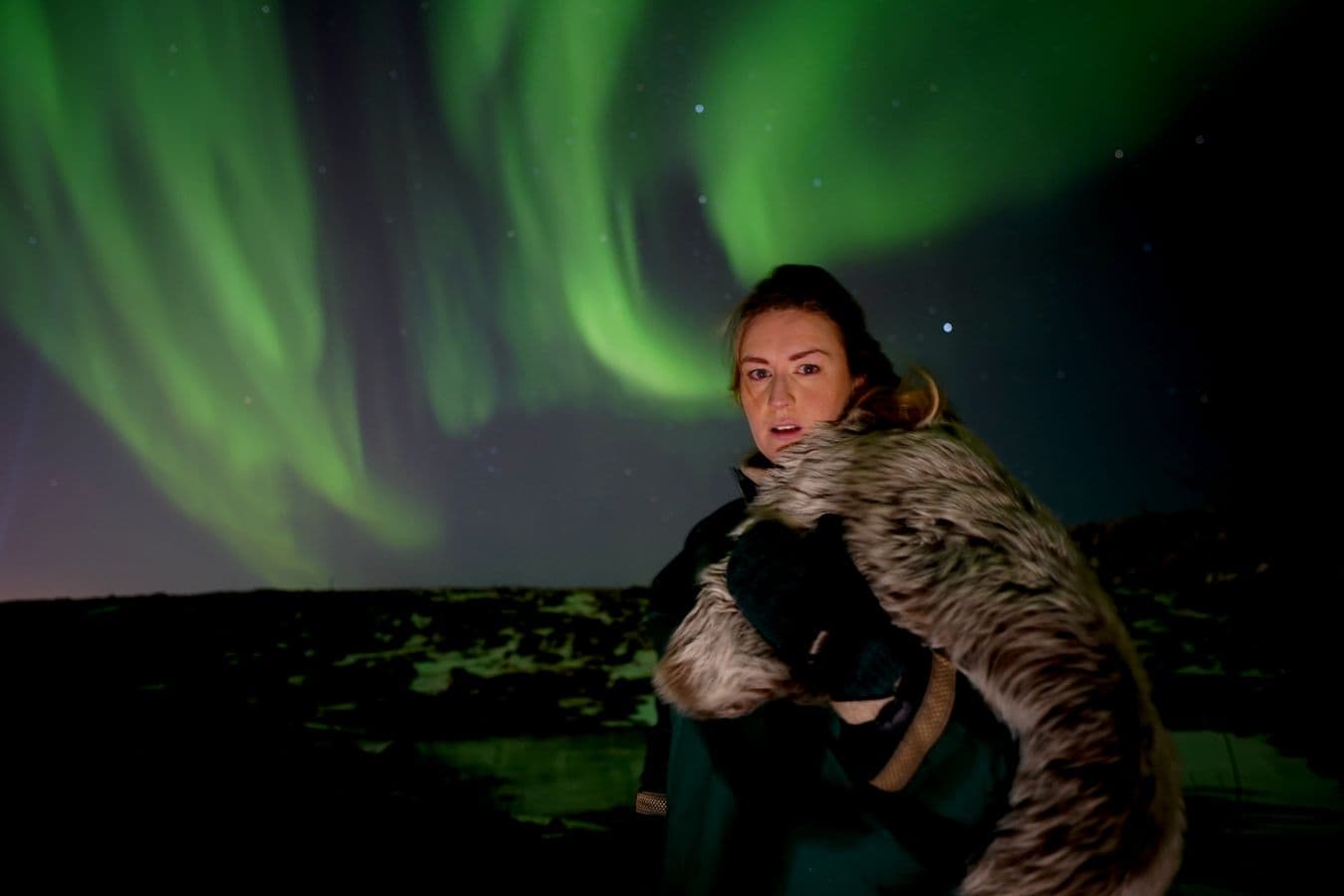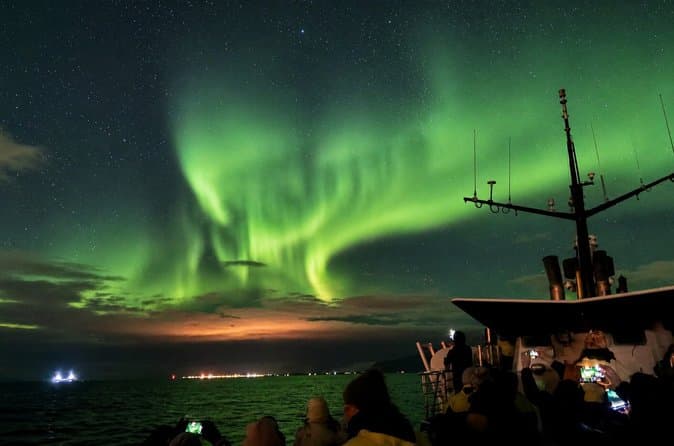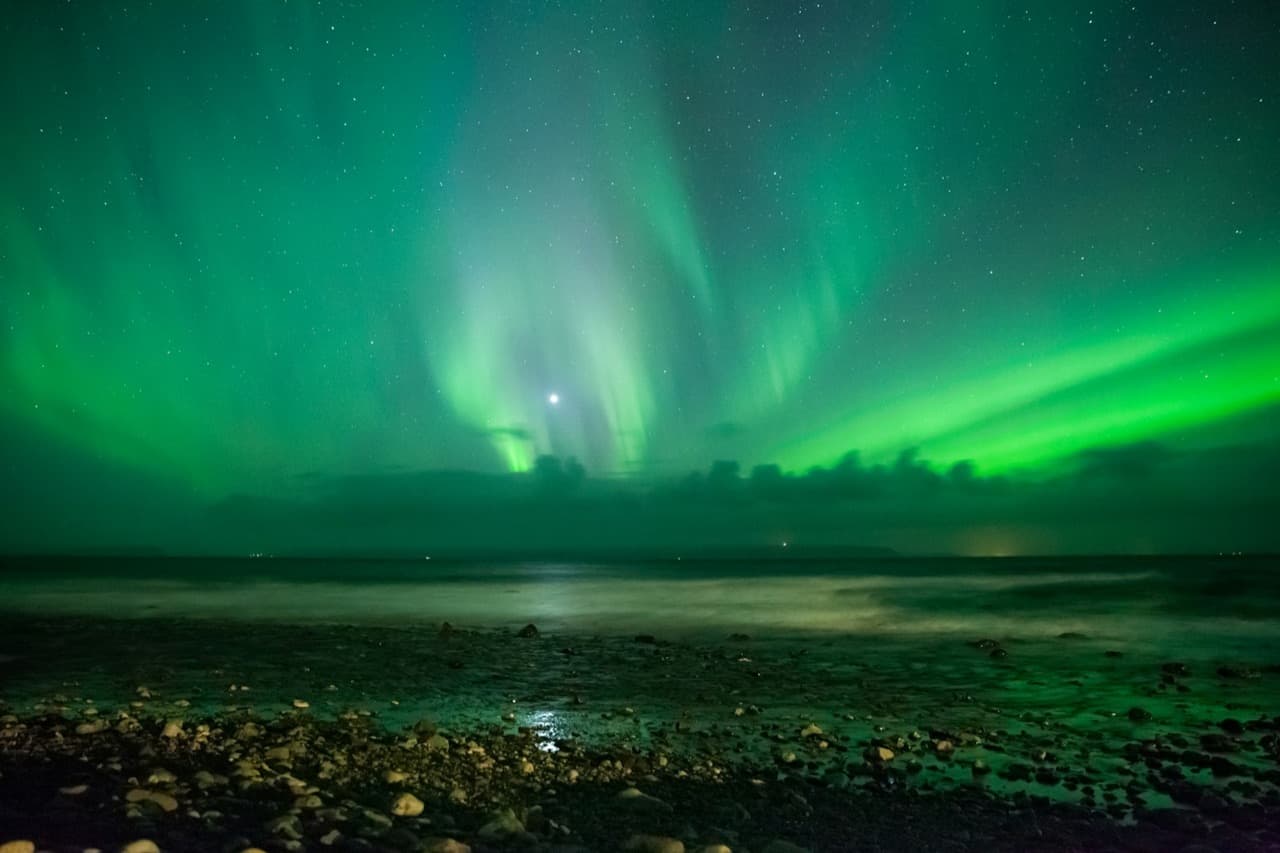
The best place to see the northern lights in Iceland is anywhere dark, with a clear view of the sky and no city glow behind you. Reykjavík sits around Bortle 7 to 8 on the light-pollution scale, while a dark site like Þingvellir is around Bortle 2 to 3, which is why leaving town makes such a difference. This guide covers dark-sky spots from the edge of the capital out to the glacier lagoons, plus the season and how to read the official forecast.
Northern lights locations at a glance
Short on time? Here is the quick version.
| Location | Why it works |
|---|---|
| Grótta lighthouse | Dark shore about 5 km from central Reykjavík |
| Þingvellir | Wide dark sky, about a 45-minute drive |
| Kirkjufell | Landmark peak on Snæfellsnes |
| Jökulsárlón | Glacier lagoon in the south-east |
| North Iceland and Westfjords | Further north, longer dark nights |
Why darkness matters more than distance
The aurora is often faint, and city light washes it out, so the single biggest thing you control is how dark your sky is. Reykjavík rates around Bortle 7 to 8 on the light-pollution scale, while much of the interior, including Þingvellir, rates around Bortle 2 to 3, with very little artificial light once you are outside the towns. You also want a clear horizon, especially toward the north, and no direct lights in your eyes, so a beach, a field, or a lakeshore beats a lit car park.
Close to Reykjavík: Grótta and Þingvellir
You do not have to go far. Grótta lighthouse sits on the Seltjarnarnes peninsula at the western edge of the capital, about 5 kilometres from downtown, with a dark shoreline and open views out to sea; there is a small Kvika foot bath by the path. Þingvellir National Park is about a 45-minute drive away and gives you a wide, dark sky over the rift where two tectonic plates meet. Both are common choices for a first attempt, since you can reach them in an evening and retreat to the city afterward.
Further afield: Snæfellsnes, the south coast, and the glacier lagoons
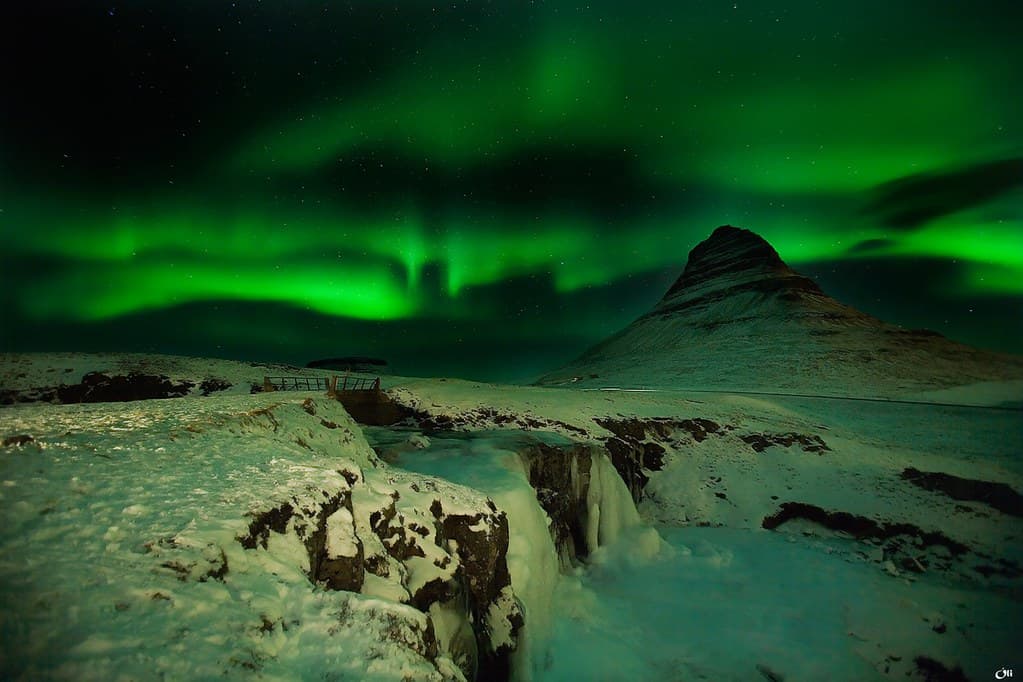
With more time and a car, the darker and more scenic sites open up. On the Snæfellsnes peninsula, the pointed Kirkjufell is a favourite foreground for the lights. Along the south-east coast, the Jökulsárlón glacier lagoon pairs the aurora with floating ice, one of the most striking settings in the country. These take planning and, in winter, careful attention to road and weather conditions, but the skies are far darker than anything near the capital.
The far north and the highlands
The further north you go, the longer the nights, which widens your window. North Iceland and the Westfjords sit higher in latitude than Reykjavík and stay dark for more of the night through the season. Þórsmörk, a highland valley reached by super jeep in winter, is remote enough to be genuinely dark on a clear night. These are trips in their own right rather than quick evening outings, but they reward the effort with sky and silence.
Season, timing, and the forecast
Darkness across the calendar matters too. The aurora is visible roughly from late August to mid-April, with the best odds from late September to early March, and it tends to be strongest in the hours around midnight, roughly 10pm to 2am. Clear skies count as much as the aurora itself, so check the Icelandic Met Office aurora forecast at en.vedur.is, which shows activity on a 0 to 9 scale over a cloud-cover map. Read it in the evening on the night itself, then choose a dark location where the sky is forecast to be clear. If you would rather let a guide handle the driving and the chasing, compare your choices on our northern lights tours page.
Check before you go
For a current read on the sky, check the Aurora Forecast before making northern-lights plans around your travel dates.