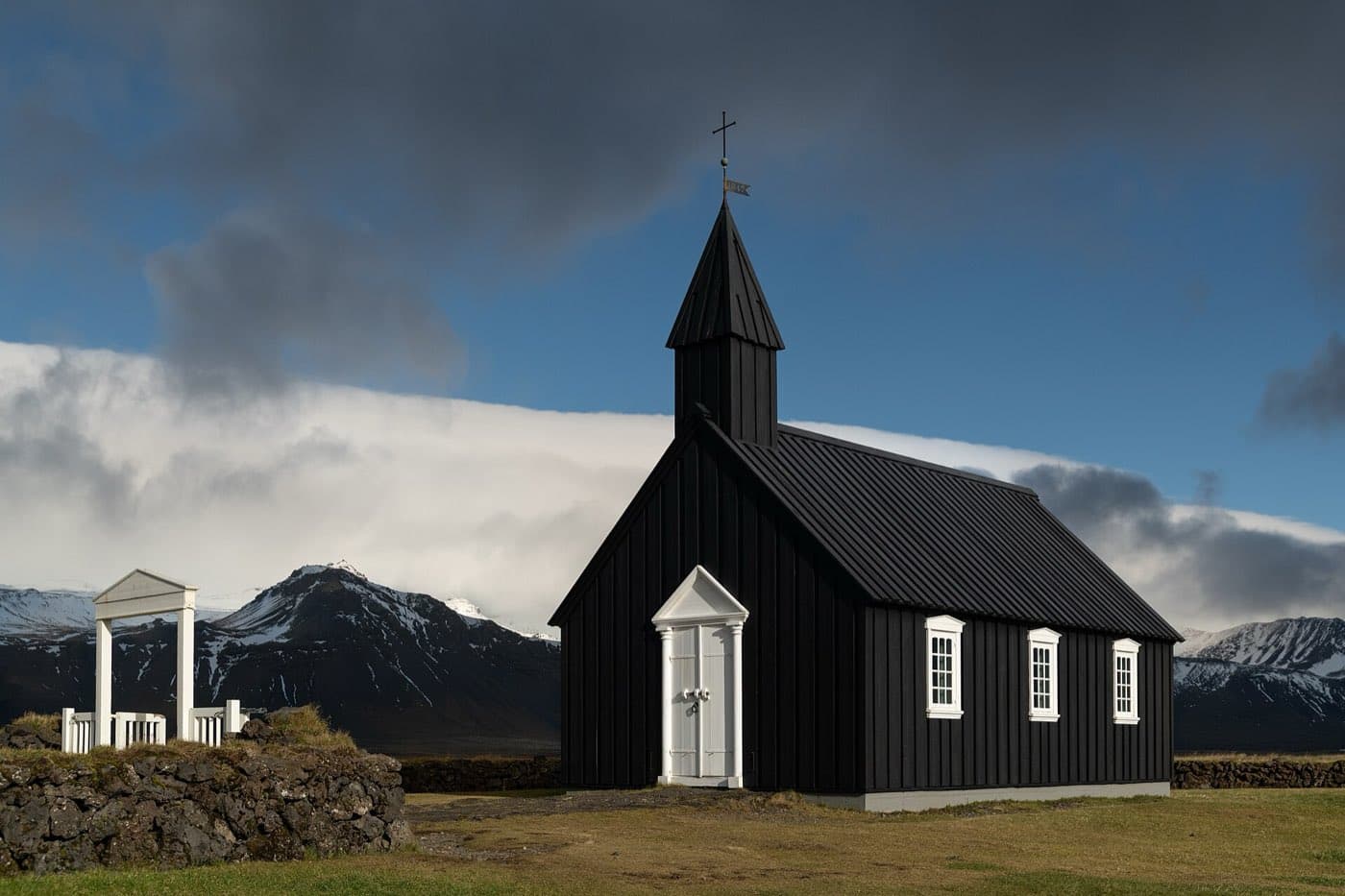
Búðakirkja is a small black timber church at Búðir on the south shore of the Snæfellsnes peninsula in West Iceland, about 175 kilometres from Reykjavík. A church was first established here in 1703, and the present timber building was rebuilt in 1848, then relocated in 1984 and reconsecrated in 1987. This guide covers the drive, the church's history, its lava-field setting, and how to photograph it.
Búðakirkja at a glance
The essentials before you plan a stop.
| Feature | Detail |
|---|---|
| Location | South shore of the Snæfellsnes peninsula, West Iceland |
| From Reykjavík | About 175 km, roughly two and a half hours by Route 54 |
| First church | Established in 1703 |
| Present church | Rebuilt in 1848, reconsecrated in 1987 |
| Setting | The Búðahraun lava field, beside Hótel Búðir |
| Known for | Black timber and photography |
Getting to Búðir
Búðir sits on the south coast of the Snæfellsnes peninsula, about 175 kilometres northwest of Reykjavík, roughly a two-and-a-half-hour drive. The route runs north and then out along the peninsula on Route 54, with a short side road down to the shore at Búðir. The roads are paved, though winter weather can slow the drive, so it is worth checking conditions first. There is a car park by Hótel Búðir, and the church stands a short walk away across the lava.
The church and its history
A church was first established at Búðir in 1703. The earlier church was later pulled down, and for a time the site had no church. A local widow, Steinunn Sveinsdóttir, campaigned to change that and had the present timber church rebuilt in 1848. A ring on the door still records that the church was rebuilt that year without support from the church authorities. The building was moved to its current spot in 1984 and reconsecrated in 1987 after restoration, and it remains a working parish church used for weddings, concerts, and other gatherings rather than one open every day.
The black timber and its setting
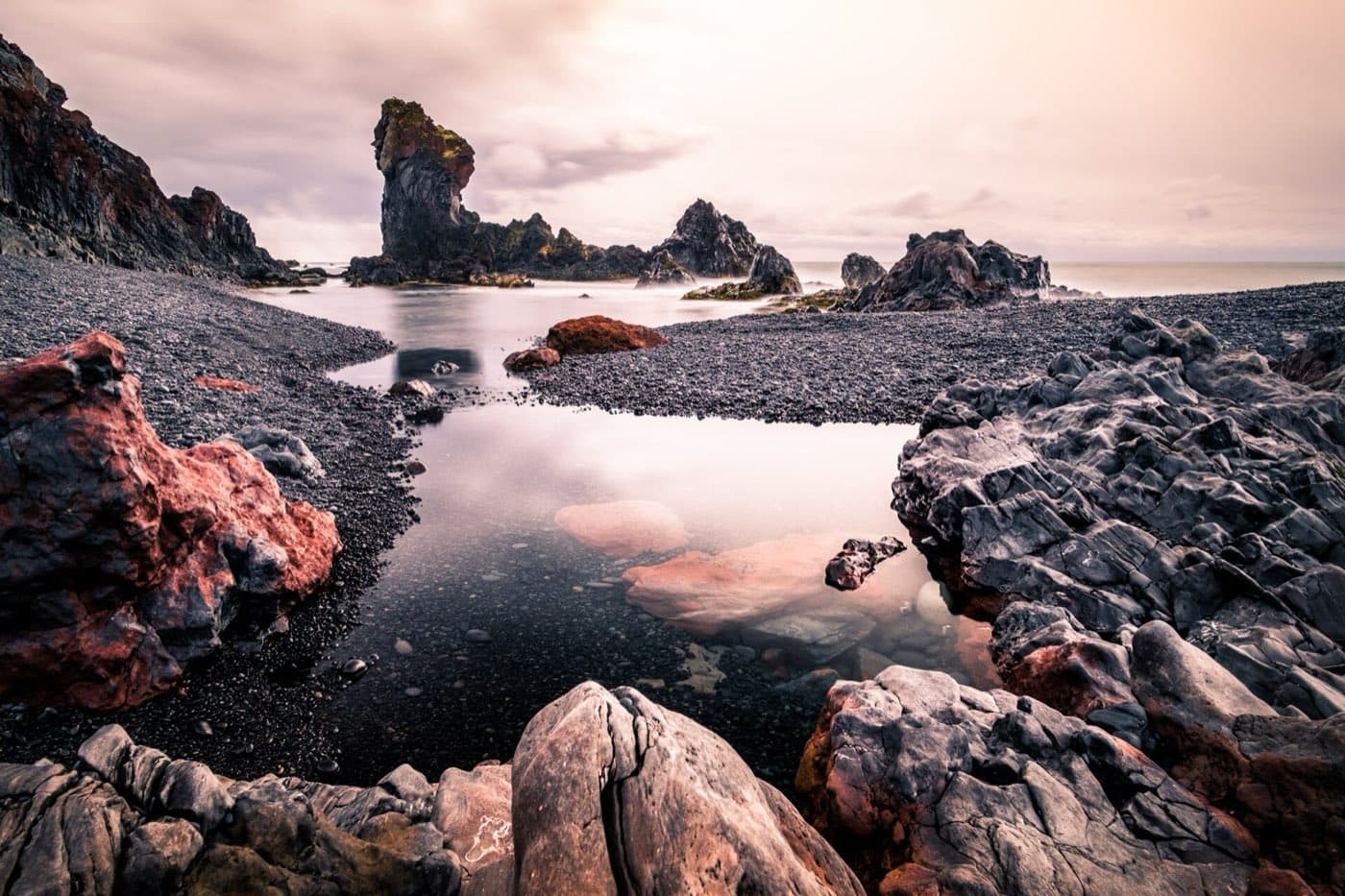
The church is dark because its timber is coated in black pitch, an old Icelandic way of sealing church wood against wind, rain, and salt spray. It stands alone in Búðahraun, a moss-covered lava field that flowed long ago from the Búðaklettur crater and is now a protected nature reserve known for its varied plants, including ferns in the sheltered hollows. Beside the church is Hótel Búðir, a countryside hotel and restaurant, and from the shore the Snæfellsjökull glacier rises to the west. On the slope above, the waterfall Bjarnarfoss drops below the peak of Mælifell.
Photographing Búðakirkja
The black church against pale moss, sea, and sky makes Búðakirkja one of the most photographed churches in Iceland. The building sits low in open ground, so it reads clearly from many angles, with the lava field in front and the coast or Snæfellsjökull behind. Long summer light and the low sun of winter both suit it, and in the dark months the open setting away from town lights makes it a candidate for northern-lights frames. The churchyard and its low wall are part of the picture, so keep to the paths and treat the graveyard with care.
When to visit and tours
Búðir is an easy stop on a self-drive loop of the south side of Snæfellsnes, and a car lets you fold it in with the coast and villages nearby. It also features on many guided day trips from Reykjavík that take on the long highway drive for you. The church itself is not open every day, so plan around the setting and the exterior rather than the interior. Operators set their own prices and popular trips fill up in summer, so it is worth comparing current Snæfellsnes tours before you book.
Check the timing
The Driving Distance Calculator helps turn a visit to Búðakirkja into a realistic self-drive day.