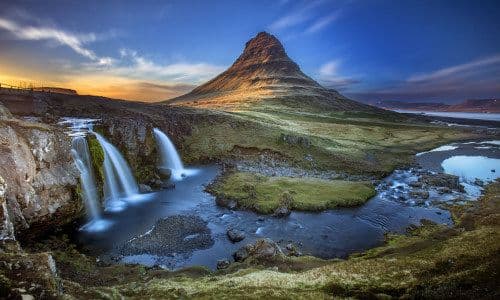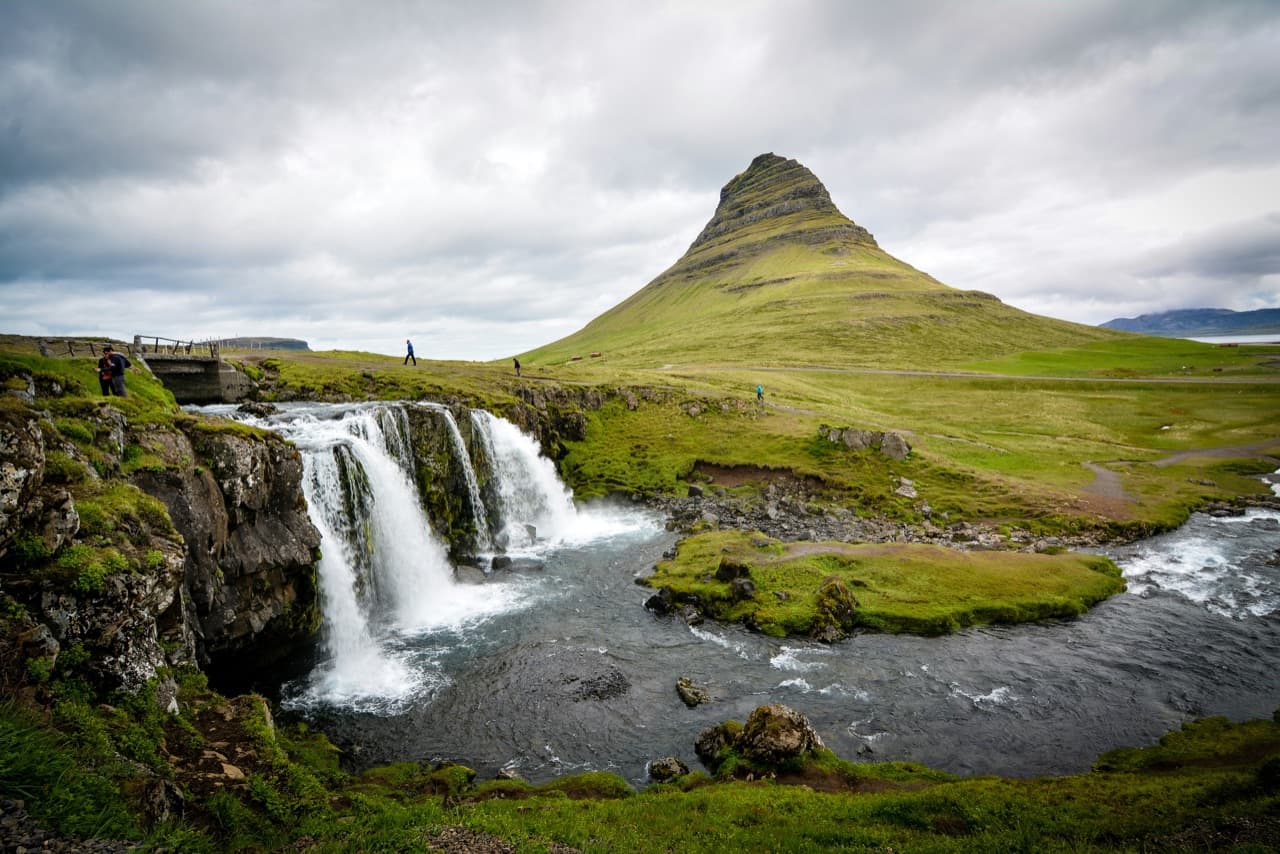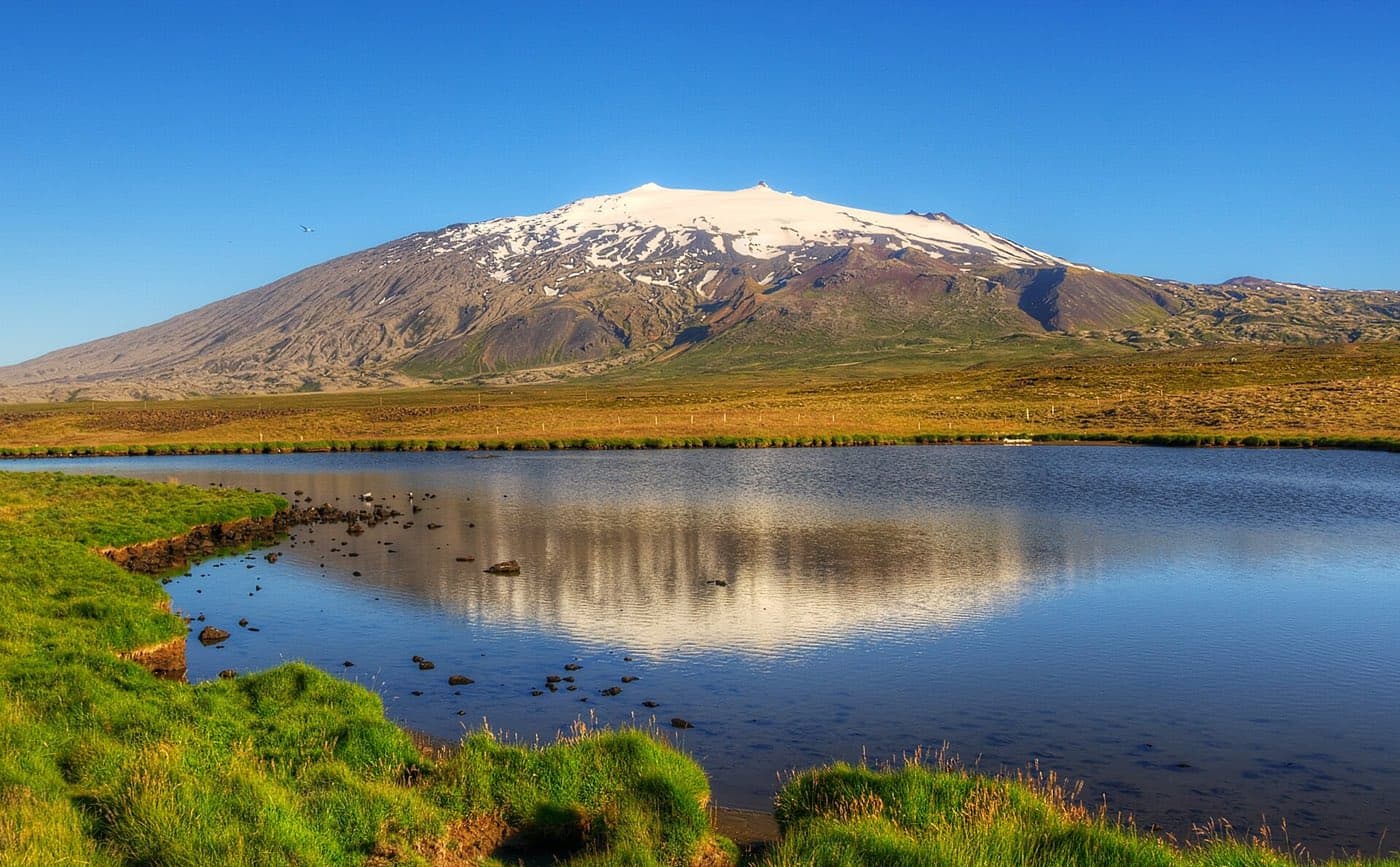
Snæfellsjökull National Park sits at the western tip of the Snæfellsnes peninsula in West Iceland, about 200 km and roughly two and a half hours from Reykjavík. Founded in 2001, it is the only national park in Iceland that reaches the sea, and it is built around Snæfellsjökull, a glacier-capped stratovolcano rising to 1,446 metres. The same mountain is where Jules Verne set the descent in his 1864 novel Journey to the Center of the Earth.
Snæfellsjökull National Park at a glance
Here is the short version before the detail.
| Feature | Detail |
|---|---|
| Location | Western tip of the Snæfellsnes peninsula, West Iceland |
| Distance from Reykjavík | About 200 km, roughly two and a half hours |
| Founded | 2001 |
| Area | About 170 square kilometres |
| Centrepiece | Snæfellsjökull, a glacier-capped volcano, 1,446 metres |
| Known for | Jules Verne's novel, Djúpalónssandur beach, Dritvík cove |
Getting there from Reykjavík
The park lies about 200 km northwest of Reykjavík, roughly two to two and a half hours by road. The usual route runs north on Route 1, the Ring Road, then onto Route 54, which carries you out along the Snæfellsnes peninsula to its western tip. Because the park sits at the far end of the peninsula, it is a longer drive than the eastern parts of Snæfellsnes, so many visitors give it a full day or stay overnight nearby. On a clear day the ice cap is visible from a long way off, including from Reykjavík across the bay.
The glacier volcano at the park's heart
At the centre of the park stands Snæfellsjökull, a stratovolcano capped by an ice cap and rising to 1,446 metres. It is an old mountain, roughly 700,000 years old, and it is still classed as active, though its last eruption is thought to have been about 1,800 years ago. The park around it covers about 170 square kilometres and takes in lava fields, craters, coastal cliffs, and the shoreline, which is what makes it the only national park in Iceland that runs from the mountains down to the sea.
Jules Verne and the journey underground
Snæfellsjökull is known well beyond Iceland because of Jules Verne. In his 1864 novel Journey to the Center of the Earth, the explorers begin their descent into the planet through the crater at the top of the mountain. The book fixed the volcano in the popular imagination, and it remains one of the main reasons visitors seek the park out.
Djúpalónssandur and Dritvík
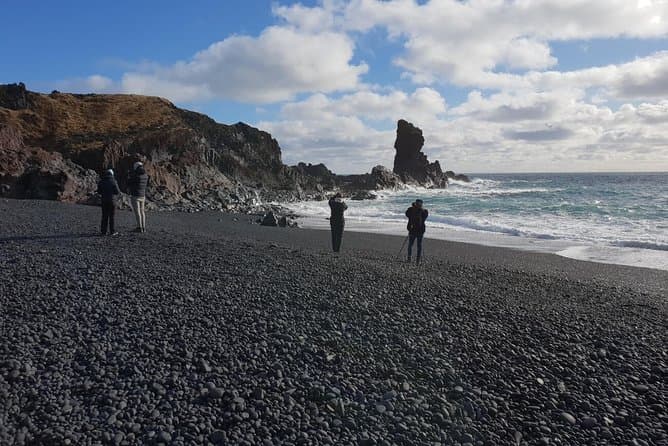
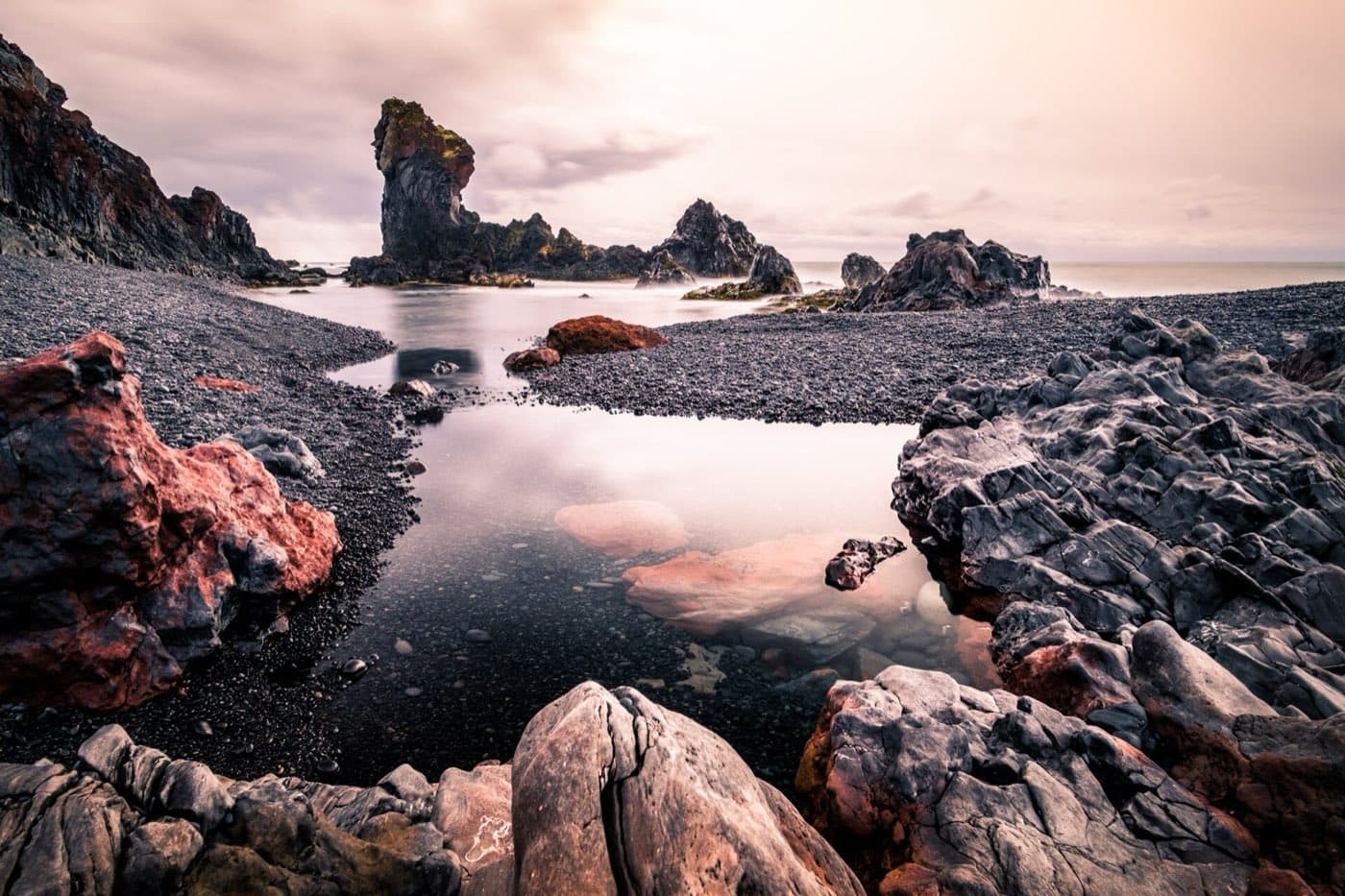
On the park's southern coast, Djúpalónssandur is a beach of smooth black pebbles reached by a path down through lava rock. Four old lifting stones sit on the sand, once used to test whether a man was strong enough to work the fishing boats. From lightest to heaviest they are named Amlóði at 23 kg, Hálfdrættingur at 54 kg, Hálfsterkur at 100 kg, and Fullsterkur at 154 kg. A short walk leads on to Dritvík, a cove that was one of Iceland's busier fishing stations in earlier centuries. Scattered across the beach are the rusted remains of the Epine, a Grimsby trawler wrecked here on 13 March 1948, when fourteen of the crew lost their lives. The metal is left in place as a memorial rather than cleared away.
Planning your visit and comparing tours
The park works well as a long day trip from Reykjavík or as part of a longer Snæfellsnes loop with an overnight stay on the peninsula. Fuel and services thin out toward the western tip, so fill up in the larger towns first and carry what you need. You can drive it yourself, or join a guided trip that takes on the long highway stretch and the navigation. To weigh the options, see our Snæfellsnes tours and day trips; prices vary by operator and season, so check current rates there rather than relying on a figure quoted elsewhere.
Plan the journey
The Driving Distance Calculator can help you sequence Snæfellsjökull National Park with nearby sights without overfilling the day.