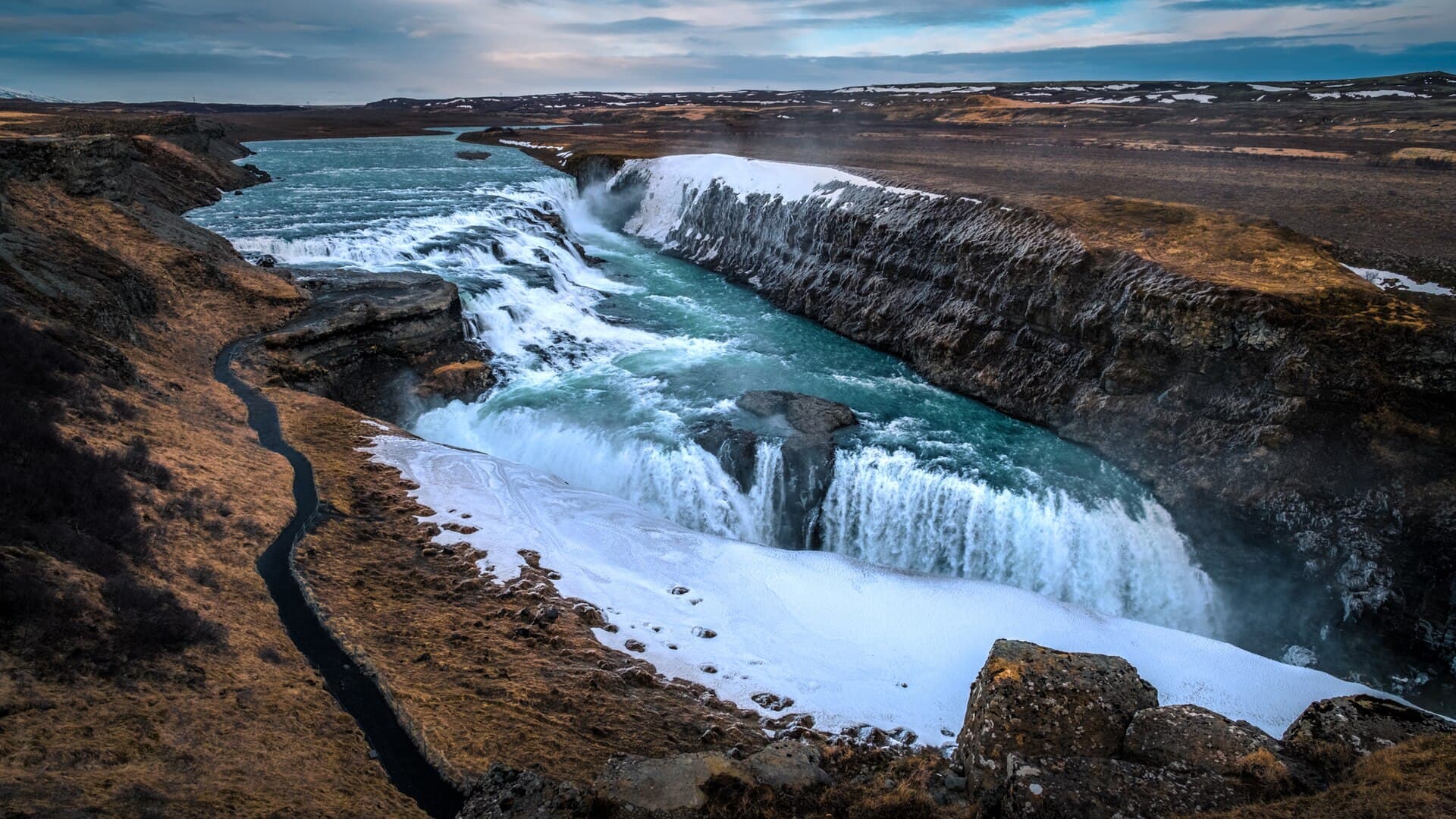
The Golden Circle is a sightseeing route that forms a loop from Reykjavik into the southern uplands of Iceland and back. The route has three main stops: Thingvellir National Park, the Geysir geothermal area in the Haukadalur valley, and Gullfoss waterfall. The Golden Circle can be explored either on a guided day tour from Reykjavik or by self-drive rental car.
What the golden circle route is and where it goes
The three main Golden Circle stops lie relatively close together in southwest Iceland. The main Golden Circle roads are paved, which allows the loop to be driven throughout the year. Use the Driving Distance Calculator to help plan your trip.
Thingvellir national park, where two continents meet
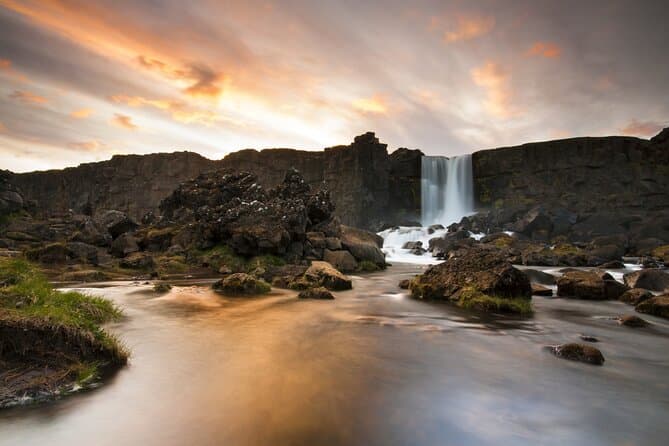
Thingvellir National Park became a UNESCO World Heritage Site in 2004. Iceland's Althing, one of the world's oldest parliaments, was founded at Thingvellir in 930. Thingvellir lies in a rift valley that marks the crest of the Mid-Atlantic Ridge and the boundary between the North American and Eurasian tectonic plates. The Silfra fissure at Thingvellir, on the northern shore of the lake, is a popular diving and snorkelling location. The Almannagja gorge at Thingvellir runs along the edge of the North American plate. Oxararfoss is a waterfall that flows within the Thingvellir rift valley. Thingvellir sits beside Thingvallavatn, the largest natural lake in Iceland.
The geysir geothermal area and the Strokkur eruptions
The Geysir geothermal area is located in the Haukadalur valley and contains the geysers Geysir and Strokkur. Strokkur typically erupts every 6 to 10 minutes. The usual eruption height of Strokkur is 15 to 20 metres. Strokkur can sometimes erupt up to 30 metres high. The Great Geysir, which gives the English word geyser its name, is now only rarely active.
Gullfoss waterfall on the Hvita river
Gullfoss waterfall is located on the Hvita river. Gullfoss descends in two drops. The upper drop at Gullfoss is 11 metres and the lower drop is about 20 metres. The total height of the Gullfoss falls is about 30 metres. The name Gullfoss means golden falls in Icelandic. The Hvita river that feeds Gullfoss is fed by meltwater from the Langjokull glacier.
Popular extra stops travellers add along the way
Kerid is a volcanic crater lake often added to Golden Circle trips. The Kerid crater is about 270 metres across and 55 metres deep. The water in the Kerid crater is fairly shallow, ranging from 6 to 14 metres depending on the level of groundwater. The Kerid crater is estimated to be more than 6000 years old. Faxi and Bruarfoss are waterfalls that travellers add to the Golden Circle route. Skalholt was historically one of Iceland's most important religious and cultural centres and has a cathedral near the route. Fridheimar is a tomato-growing greenhouse farm commonly visited on the Golden Circle. Laugarvatn Fontana is a geothermal spa on the shore of the Laugarvatn lake.
Choosing between guided golden circle tours and self-driving
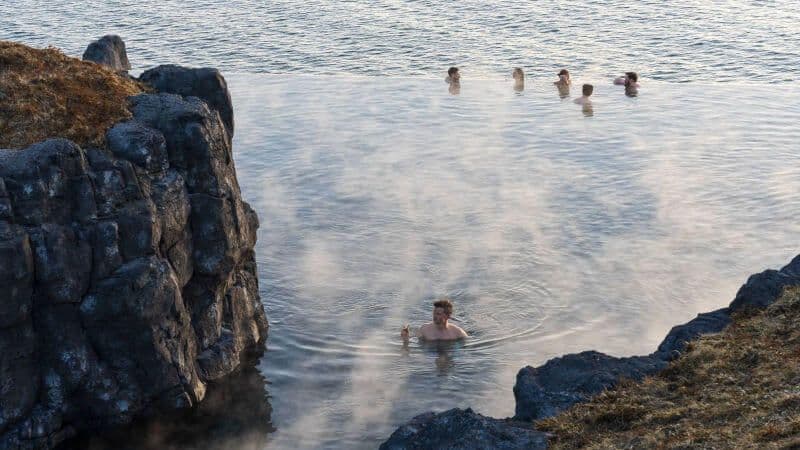
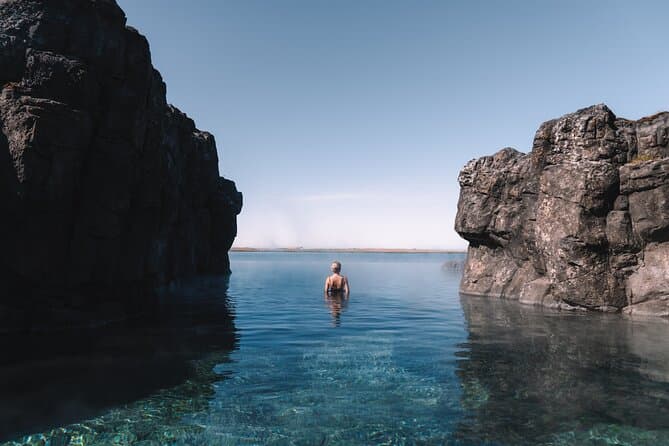
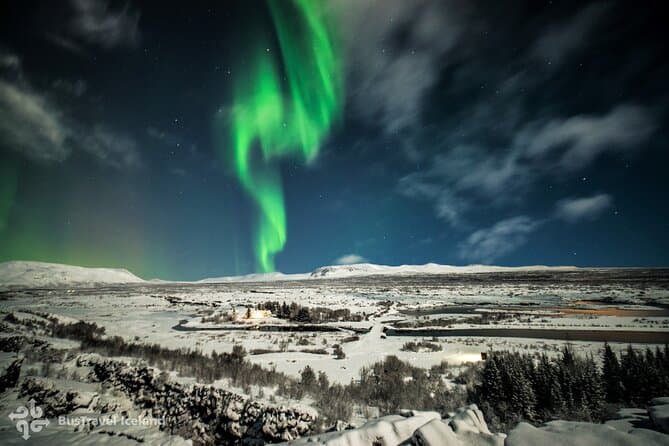
Guided versions differ mainly in what they add to the three classic stops, as a Golden Circle tour with the Secret Lagoon and northern lights does. You can compare Golden Circle tours to see the current options.