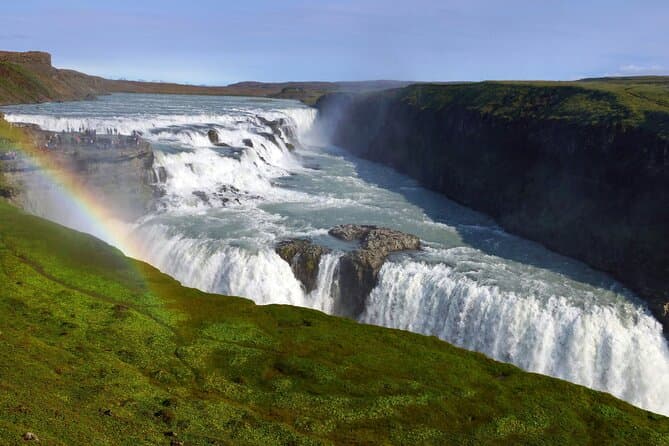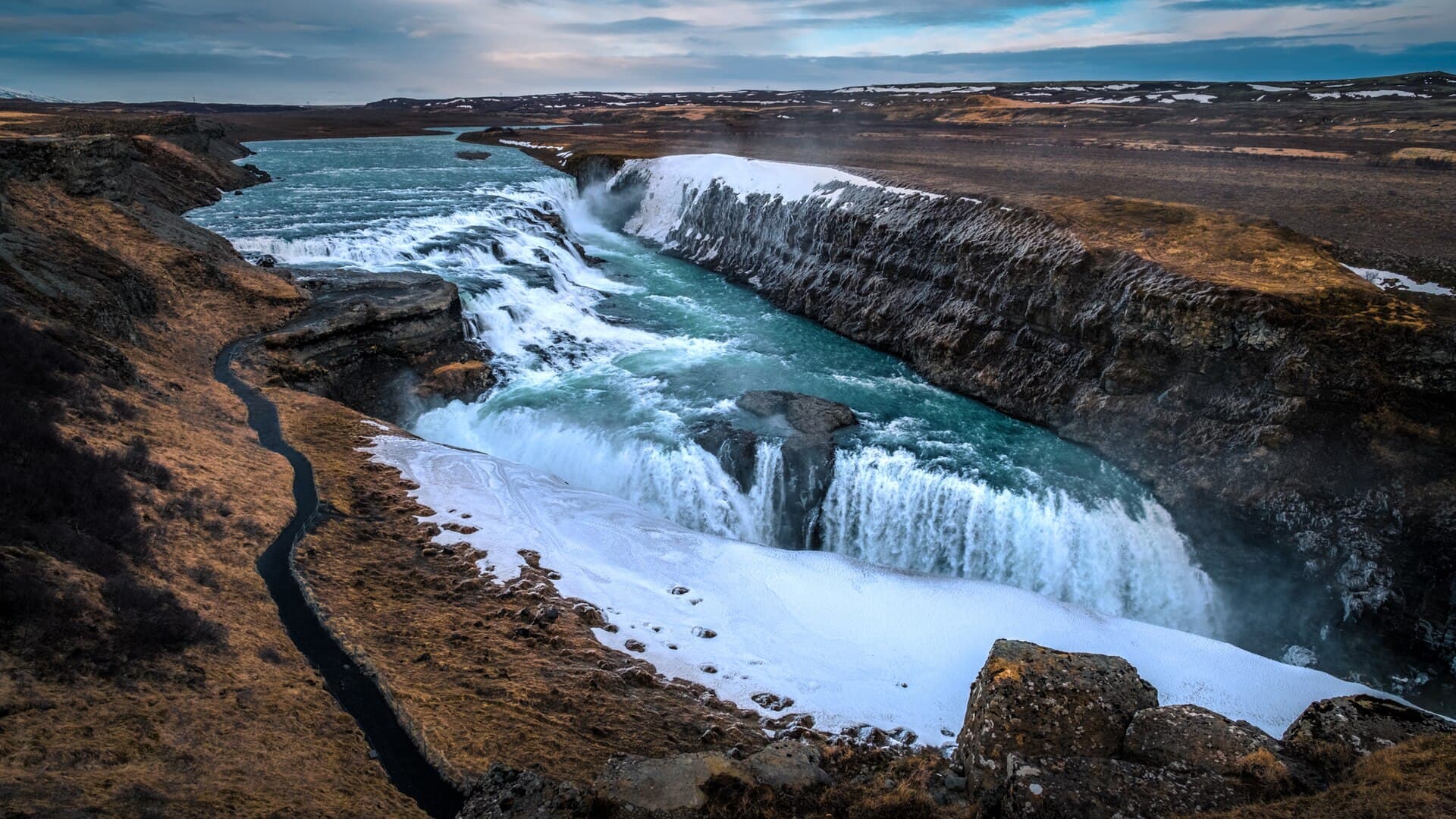
Gullfoss, which means "Golden Falls," is the best known Golden Circle waterfall in Iceland and a two-stage drop on the Hvítá river in the southwest of the country. The river carries glacial meltwater from Langjökull, Iceland's second-largest glacier, and the water drops 11 metres and then 20 metres, a total of about 31 metres, into a canyon. Gullfoss is one of the three main stops on the Golden Circle, alongside Þingvellir National Park and the Geysir geothermal field in Haukadalur.
Gullfoss at a glance
| Feature | Detail |
|---|---|
| Name | Gullfoss, meaning "Golden Falls" |
| River | Hvítá, fed by Langjökull glacier |
| Drop | Two stages, 11 m and about 20 m (total about 30 m) |
| Protected | 1979, Umhverfisstofnun |
| Location | Golden Circle, about 123 km from Reykjavík |
| Access | Open year-round |
What makes Gullfoss distinctive
The waterfall falls in two stages set at an angle to each other. The lower stage plunges into a narrow crevice, so from some viewpoints the river appears to disappear into the ground rather than continue downstream. On bright days, spray rising from the canyon often catches the light and produces rainbows, and the golden-brown glacial sediment carried by the Hvítá is one common explanation for the name.
Where Gullfoss sits on the Golden Circle
Gullfoss lies about 123 km northeast of Reykjavík, near the far point of the Golden Circle loop. The route links three main sites: Þingvellir National Park, the Geysir geothermal field in Haukadalur, and Gullfoss itself. Most people reach the falls in under two hours by road, either self-driving or on an organised day tour. Guided loops that take in all three stops, such as this Golden Circle journey through Thingvellir, Gullfoss and Geysir, are the usual way to see the falls without driving.
Viewing paths and what to expect
There are viewpoints at two levels. An upper platform gives the wide view across both stages and the canyon, while a lower path brings you closer to the water, where the spray and noise are strongest. The lower path can be wet, windy, and slippery, so sturdy footwear and a waterproof layer are sensible. Allow time to walk between the levels rather than rushing a single stop.
Visiting across the seasons
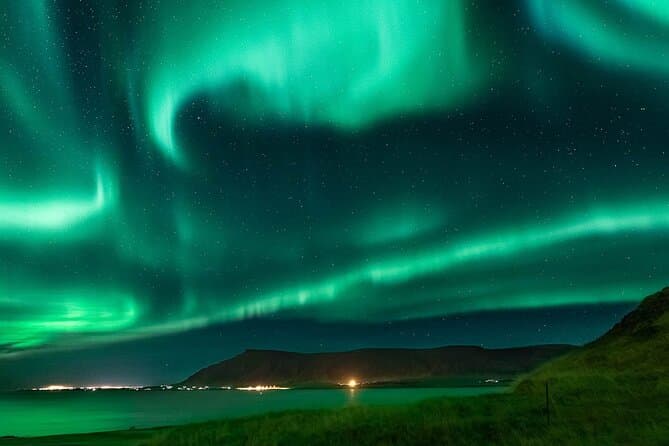
Gullfoss is open year-round. In summer the glacial flow is at its highest and daylight is long, which suits an unhurried visit. In winter the surrounding paths can be icy and are sometimes closed for safety, and roads on the Golden Circle need extra care, so it is worth checking conditions before you travel. Clear winter nights near the falls can also bring a chance of northern lights.
How the falls were protected
There were once plans to harness the Hvítá for power, which would have altered the falls. Sigríður Tómasdóttir, daughter of a landowner at the site, campaigned against foreign control of the waterfall and is remembered for her role in its preservation. Gullfoss was later transferred to the Icelandic state and was made a permanent conservation site in 1979.
Planning your visit and comparing tours
You can reach Gullfoss on your own by car or join a guided trip from Reykjavík that bundles Þingvellir, Geysir, and Gullfoss into one day. Guided options remove the driving and often include commentary, while self-driving gives you more control over timing. To weigh the choices, you can compare Golden Circle tours that include a stop at Gullfoss.
Allow time for the road
Check the Driving Distance Calculator when deciding how Gullfoss waterfall belongs in the rest of your itinerary.