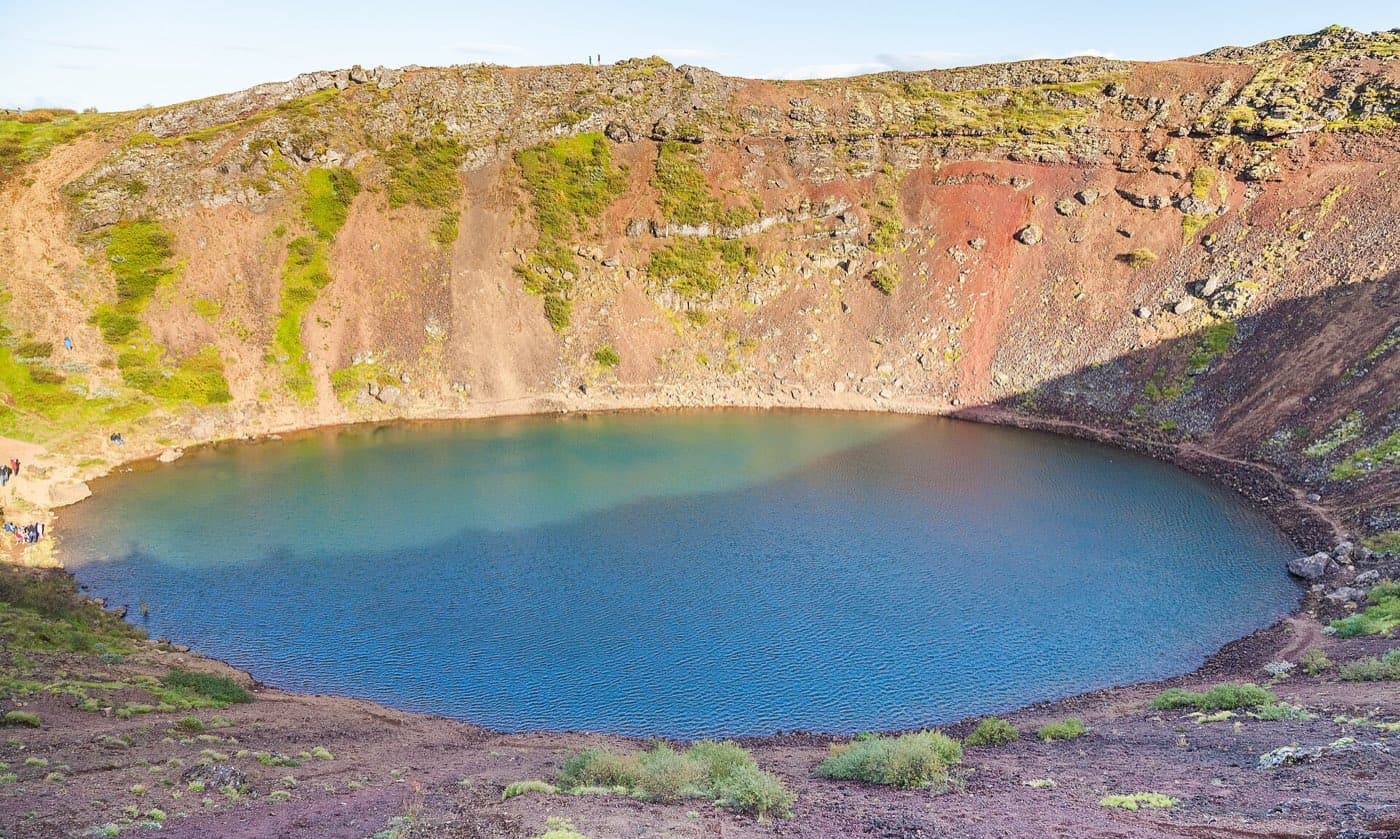
Kerið is a volcanic crater in the Grímsnes area of south Iceland, sitting in a caldera that is commonly described as around 6,500 years old. The crater is about 55 metres deep and 270 metres across, with steep red, iron-rich walls and a shallow blue-green lake at the bottom. It lies just off the Golden Circle and is a common add-on to the main route.
Kerið crater at a glance
| Feature | Detail |
|---|---|
| Location | Grímsnes area, south Iceland |
| Age | Commonly given as around 6,500 years |
| Depth | About 55 m |
| Width and length | About 170 m by 270 m |
| Lake depth | About 6 to 14 m |
| Access | Just off the Golden Circle, small admission fee |
What Kerið looks like
The draw here is colour and contrast. The crater walls are made of red, iron-rich volcanic rock that stays vivid against the surrounding moss and grass, and at the bottom sits a still lake in shades of blue-green. The bowl is about 55 metres deep and 270 metres across, large enough to feel like a natural amphitheatre but small enough to walk around in a short visit. On calm days the water mirrors the red walls, which is why the site draws so many photographers.
How the crater formed
Kerið is younger than it looks and is commonly described as around 6,500 years old, though age estimates vary between sources. The official account is that it was not a single explosive blast: a cone volcano erupted, emptied its magma reserve, and the weight of the cone then collapsed into the empty chamber below. That left the deep, steep-sided bowl you see today. Groundwater later filled the base to form the lake.
The lake
The lake at the bottom is shallow, roughly 6 to 14 metres deep, and its level rises and falls with the local groundwater table rather than with rainfall. Its aquamarine colour comes from dissolved minerals in the water and rock. Because the depth changes, the shoreline and the exact shade of the water look a little different from one visit to the next. It is a striking feature but not one for swimming, and staying on the paths protects both you and the slopes.
Where it sits on the Golden Circle
The three main Golden Circle stops are Þingvellir, Geysir, and Gullfoss, and Kerið is not one of them. It does sit close to the route in the Grímsnes area, so it is easy to fold into the loop as an extra stop, often at the start or end of the day. A small admission fee is charged at the site, which goes toward maintaining the paths. Many organised tours include it as an optional addition, and a few name it on the itinerary, such as a Golden Circle and Kerid crater afternoon tour from Reykjavik.
Visiting Kerið
A path runs around the rim, and a stairway leads down to the water's edge for those who want a closer look. Walking the full rim takes only a short while, and the views change as you move around the bowl. Footing can be loose on the red gravel, so wear shoes with grip and keep back from the unfenced edges. Allow perhaps half an hour, which is enough to walk the top and go down to the lake.
Comparing Golden Circle tours
If you would rather not drive, many guided trips add Kerið to the standard Golden Circle route, and they differ in pace and which extra stops they include. Comparing them helps you find one that covers the sites you care about. You can compare Golden Circle tours that add a stop at Kerið.
Map the drive
Use the Driving Distance Calculator to see how Kerið crater fits with the other places on your route.