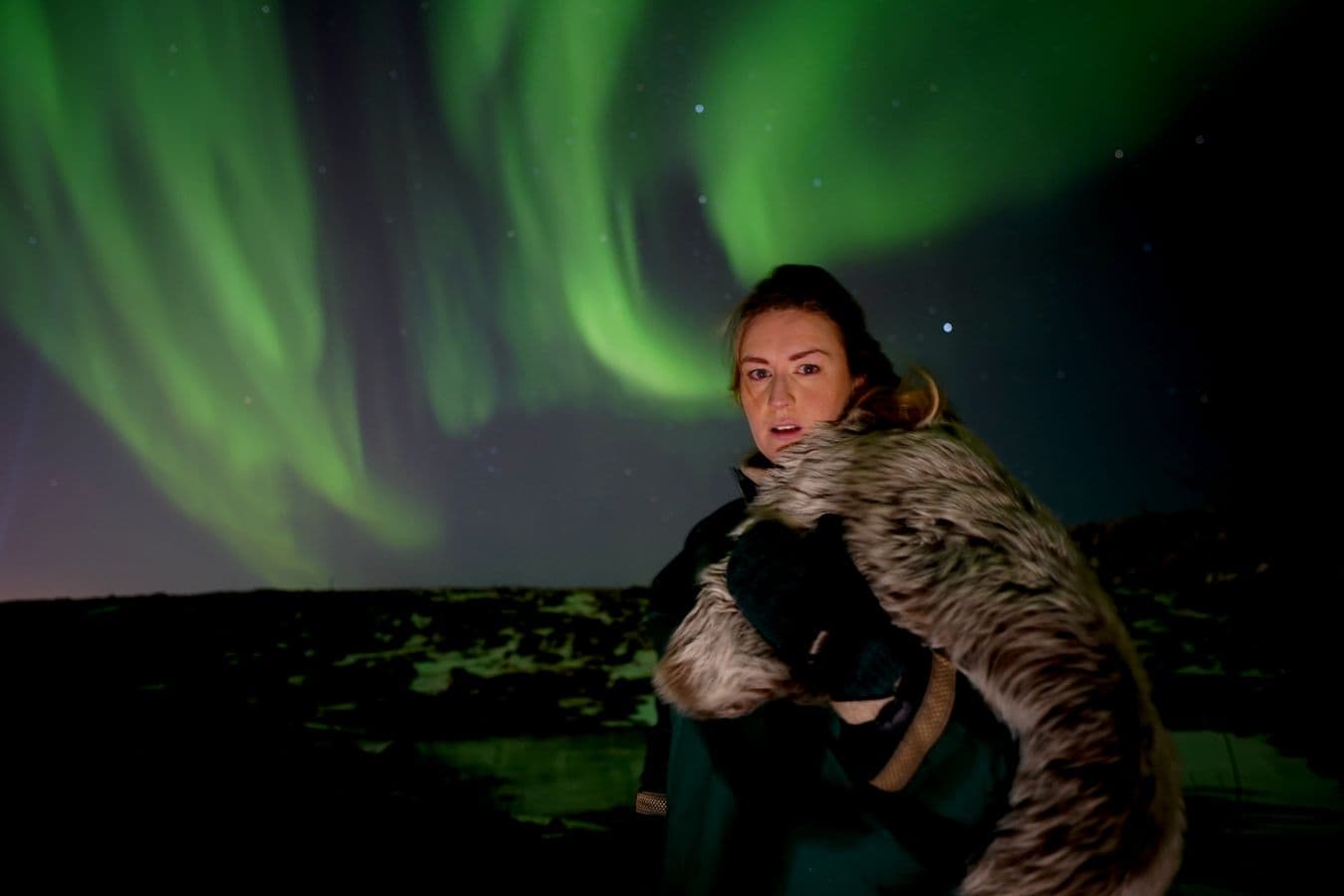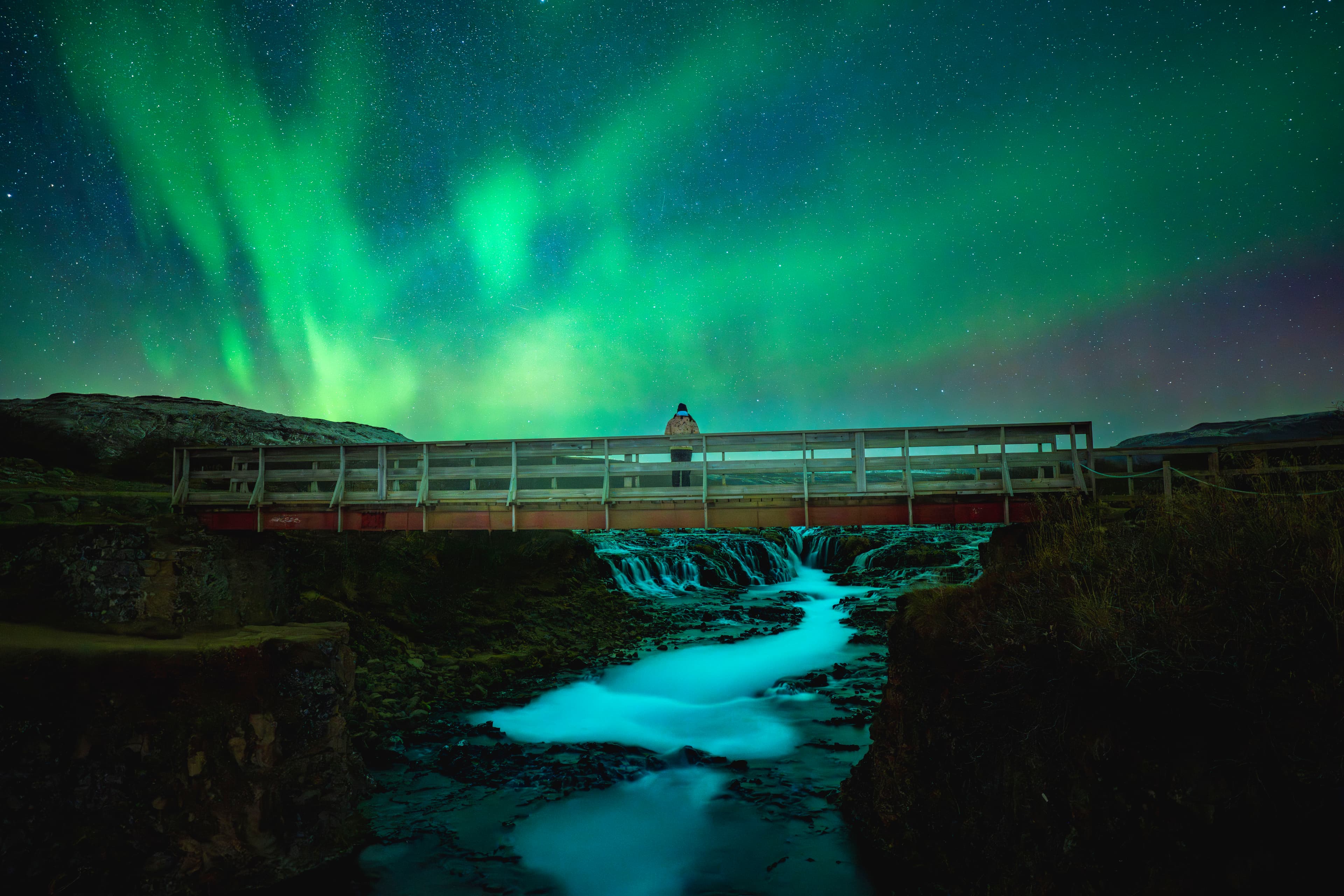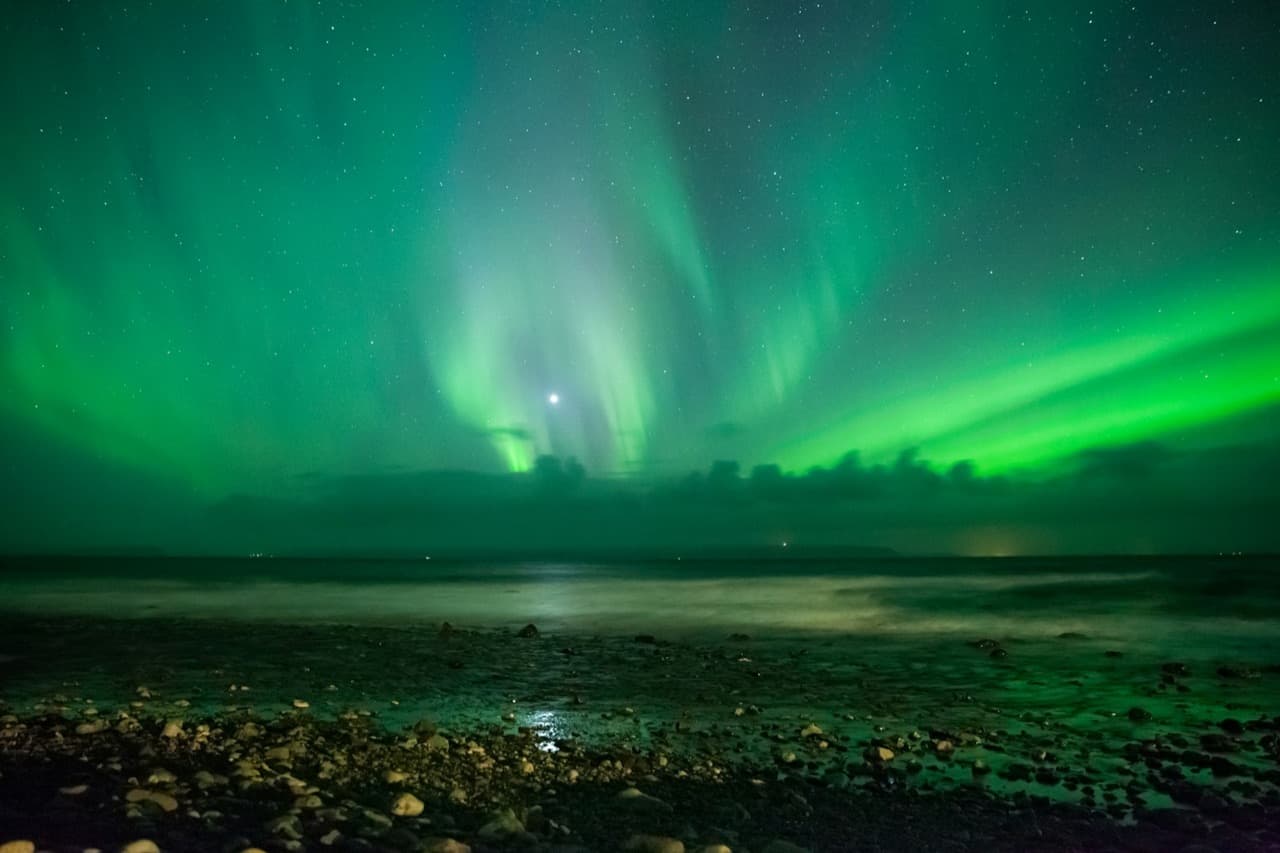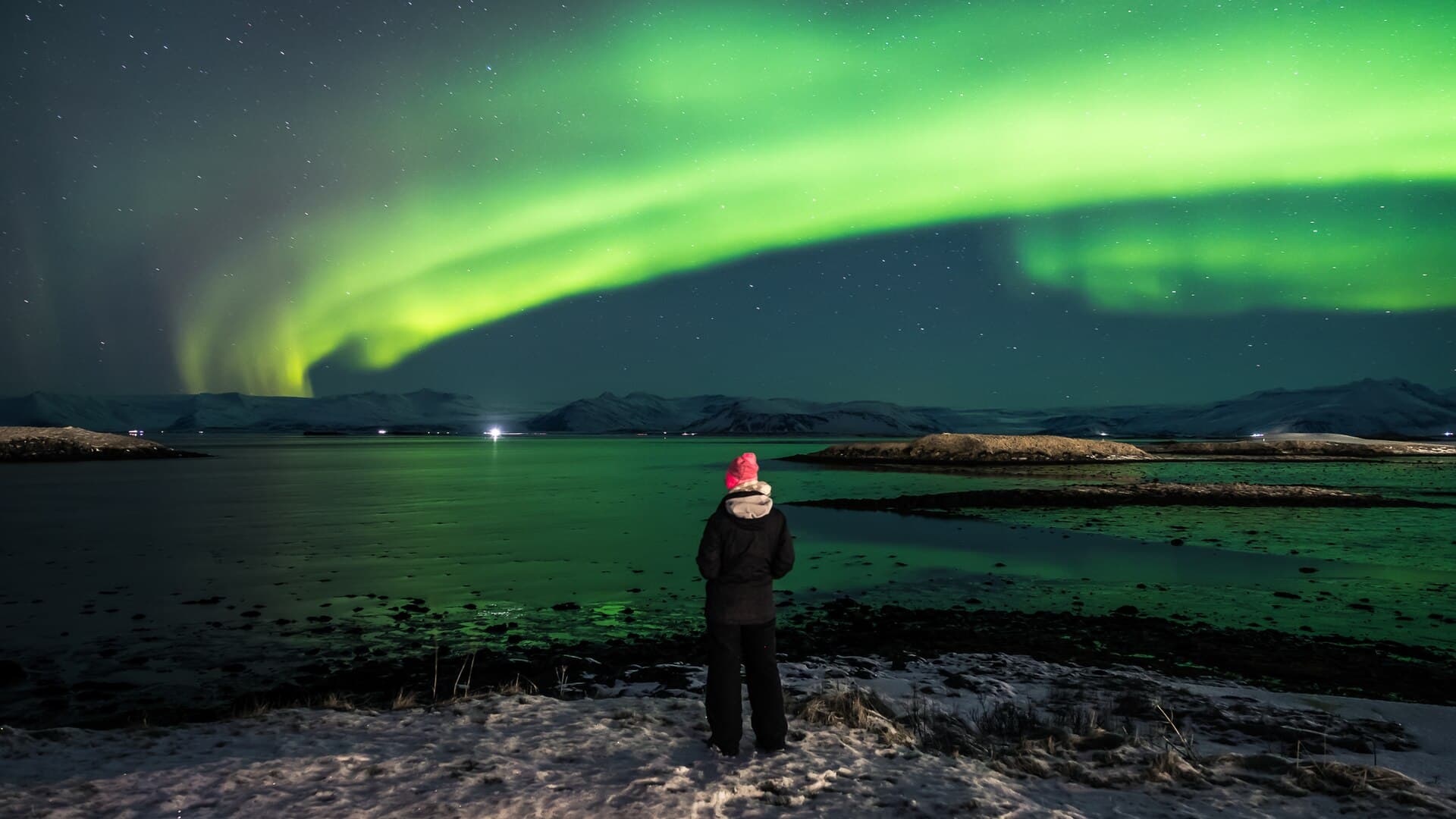
The Sun follows a cycle of activity that lasts about 11 years. That cycle can vary from 8 to 14 years, and its more active phase is tied to how often and how strongly the aurora appears. In Iceland, that matters in the background, but it does not change everything over a short trip.
The Sun's 11-year cycle
The Sun goes through a cycle of activity that lasts about 11 years. This is sometimes called the sunspot cycle.
That length is not fixed. It can vary from as little as 8 to as much as 14 years.
Sunspots and solar maximum
The peak of the cycle is called solar maximum. At that point, the Sun has the most sunspots, solar flares and solar activity.
Why the cycle matters for the aurora
The link to the aurora is straightforward: the number of sunspots is closely tied to how often and how strongly the aurora appears.
More solar activity sends more energy and particles toward Earth. That can make auroras brighter and more widespread.
What this means over a trip's timescale
The solar cycle is a long pattern, measured in about 11 years rather than in the length of a single trip.
Because the cycle itself can run from 8 to 14 years, it is useful as a broad explanation for why aurora activity rises and falls over time. It does not work like a day to day forecast.
Seeing the northern lights in Iceland
In Iceland, the solar cycle is part of the bigger picture behind aurora activity; for the practical question of when to go, see the best time to see the northern lights. If you want to compare options for heading out under dark skies, see northern lights tours.
Watch the conditions
Use the Aurora Forecast alongside this guide to the solar cycle when deciding whether the night looks promising.