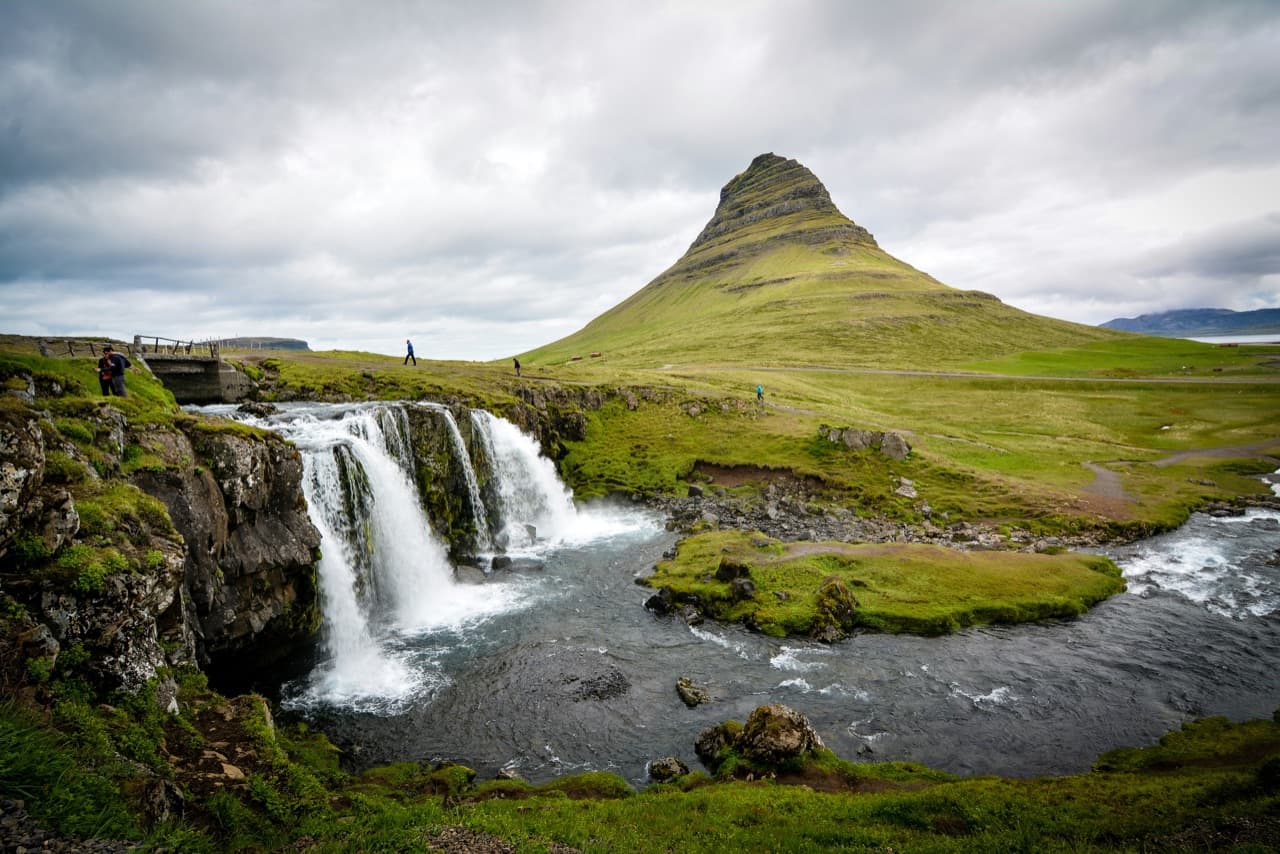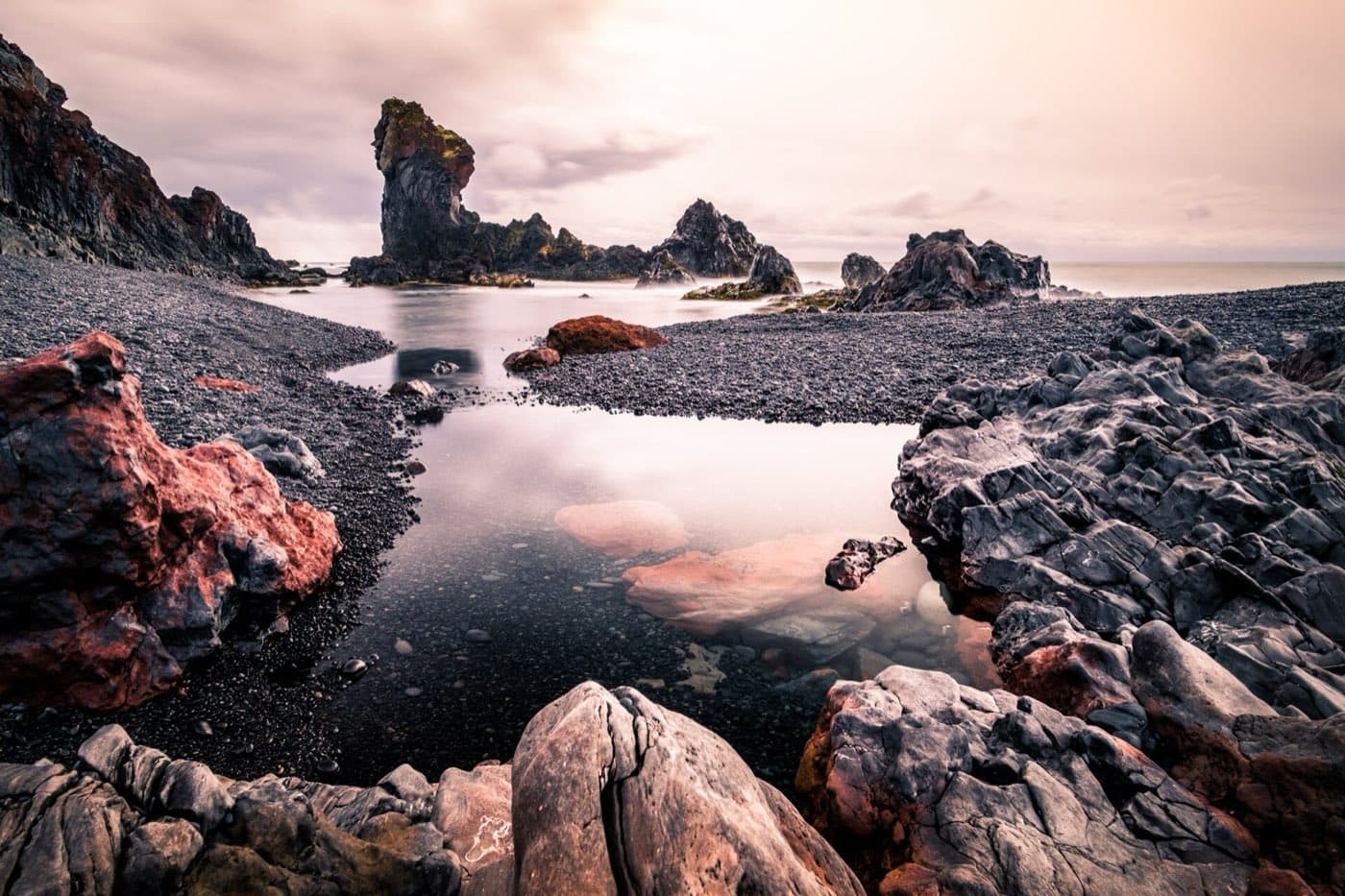
Arnarstapi is a small fishing village on the south coast of the Snæfellsnes peninsula in West Iceland, inside Snæfellsjökull National Park and about 194 kilometres from Reykjavik. It is known for its basalt sea cliffs and arches, a large stone statue of the saga figure Bárður Snæfellsás, and an easy 2.5-kilometre coastal walk to the neighbouring village of Hellnar. This guide covers how to get there, the coastal walk, the cliffs and harbour, the statue and its legend, and when to visit.
Arnarstapi at a glance
The essentials before you plan a stop.
| Feature | Detail |
|---|---|
| Location | South coast of the Snæfellsnes peninsula, West Iceland |
| Within | Snæfellsjökull National Park |
| From Reykjavik | About 194 km, about 2 hours 55 minutes |
| Known for | Basalt cliffs, the Gatklettur arch, the Bárður statue |
| Coastal walk | About 2.5 km to Hellnar |
| Best season | Late spring to early autumn for the walk and seabirds |
Getting to Arnarstapi
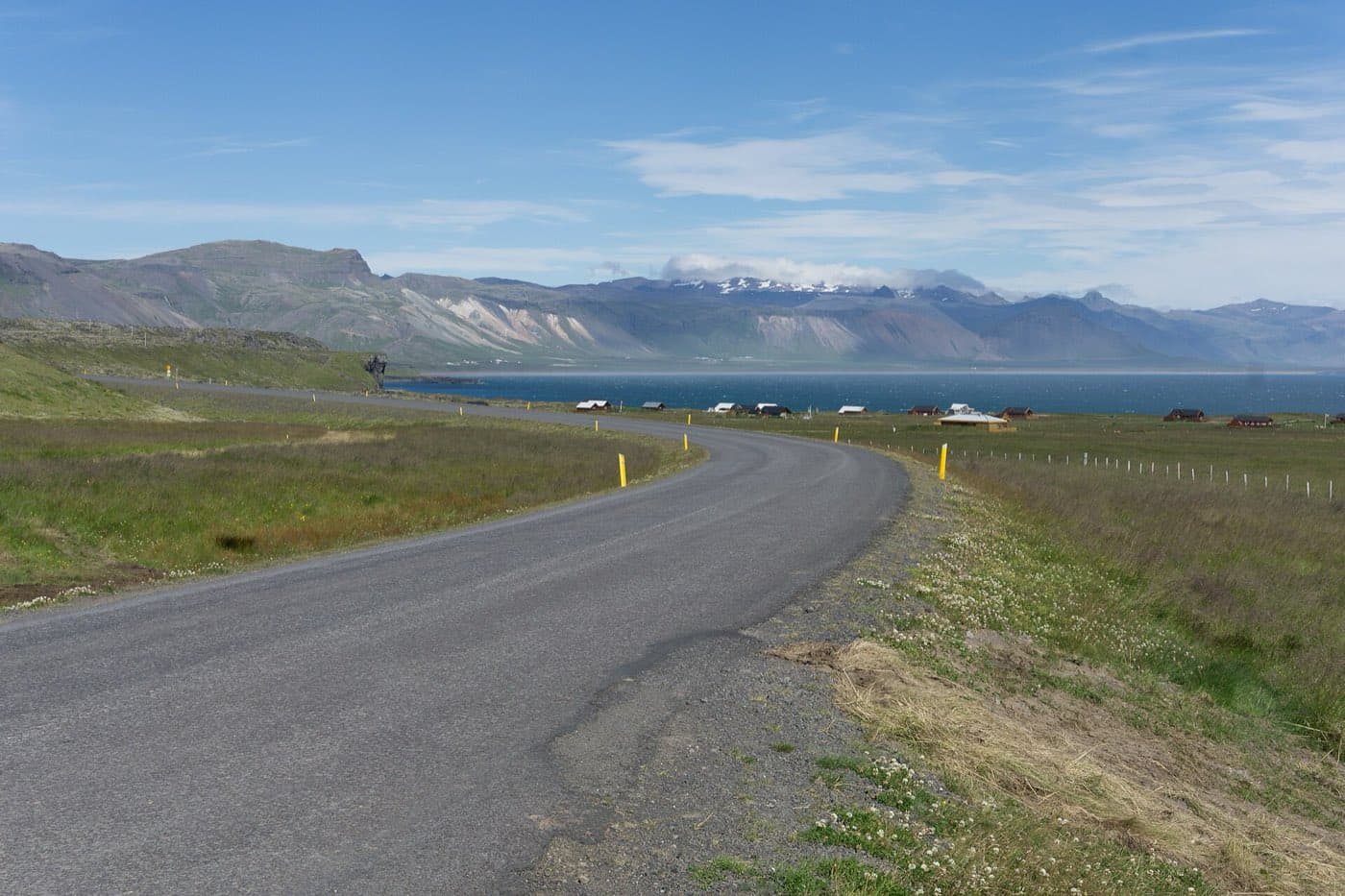
Arnarstapi is about 194 km from Reykjavik, about a 2 hour 55 minute drive. The route runs north on Route 1, the Ring Road, then onto Route 54, which carries you out along the Snæfellsnes peninsula toward its western tip, with Arnarstapi on the south side near the foot of Snæfellsjökull. The roads are paved, though winter weather can slow the drive, so it is worth checking conditions first. There is a car park by the harbour, which is the usual starting point for the coastal walk.
The coastal walk to Hellnar
The best-known thing to do at Arnarstapi is the coastal path to Hellnar, the next village along the shore. It runs about 2.5 kilometres one way, is mostly flat and well worn, and follows the top of the sea cliffs across an old lava field, so it suits most walkers. Along the way you pass rock arches, blowholes, and small coves where the surf breaks against columnar basalt. Many people walk one direction and return along the same path, or arrange to be collected at the far end. There is a café near the shore at Hellnar that makes a natural turning point.
Sea cliffs, arches, and the harbour
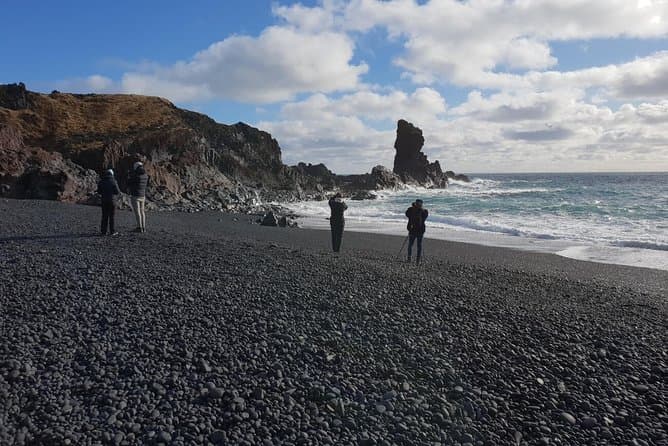
The coast at Arnarstapi is a wall of columnar basalt worn into arches, stacks, and narrow inlets by the Atlantic. The best-known formation is Gatklettur, a basalt arch shaped over a long time by wind and waves, with a viewing platform close by. Below the village lies a small natural harbour that has been used by fishing boats for centuries and still shelters a few today. Marked paths and platforms keep you back from the cliff edges, which are undercut in places and can crumble, so it matters to stay behind the barriers and keep children close.
The Bárður Snæfellsás statue
On the seafront stands a large stone statue of Bárður Snæfellsás, the figure the local saga is named after. In the story Bárður is half man and half troll, a settler who came from Norway, farmed at nearby Laugarbrekka, and in legend walked into the Snæfellsjökull glacier to become the guardian spirit of the peninsula. The statue, a blocky figure built from stacked stone, was made by the artist Ragnar Kjartansson and unveiled on 17 June 1985. It is one of the most recognisable landmarks in the village and stands near the start of the cliff-top path.
When to visit and how to see it
Arnarstapi is at its best from late spring to early autumn, when the coastal path is clear of snow and seabirds crowd the cliffs. Arctic terns, kittiwakes, fulmars, and gulls nest here through the summer, and puffins are sometimes seen offshore, so the walk doubles as a birdwatching route in season. The village is an easy stop on a self-drive loop of Snæfellsnes, and it also features on many guided day trips from Reykjavik that take on the long highway drive for you. Operators set their own prices and popular trips fill up in summer, so it is worth comparing current Snæfellsnes tours before booking.
Check the timing
The Driving Distance Calculator helps turn a visit to Arnarstapi into a realistic self-drive day.