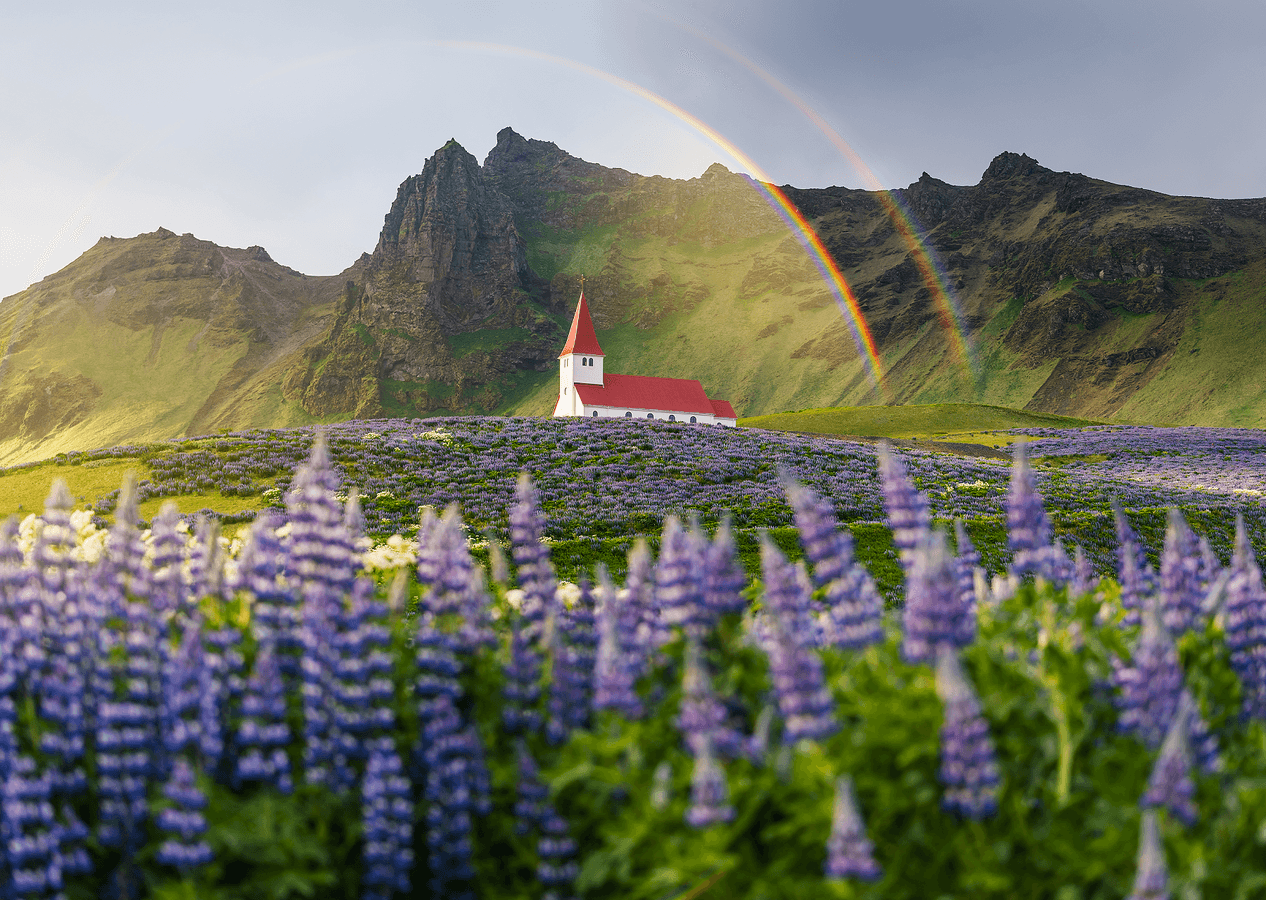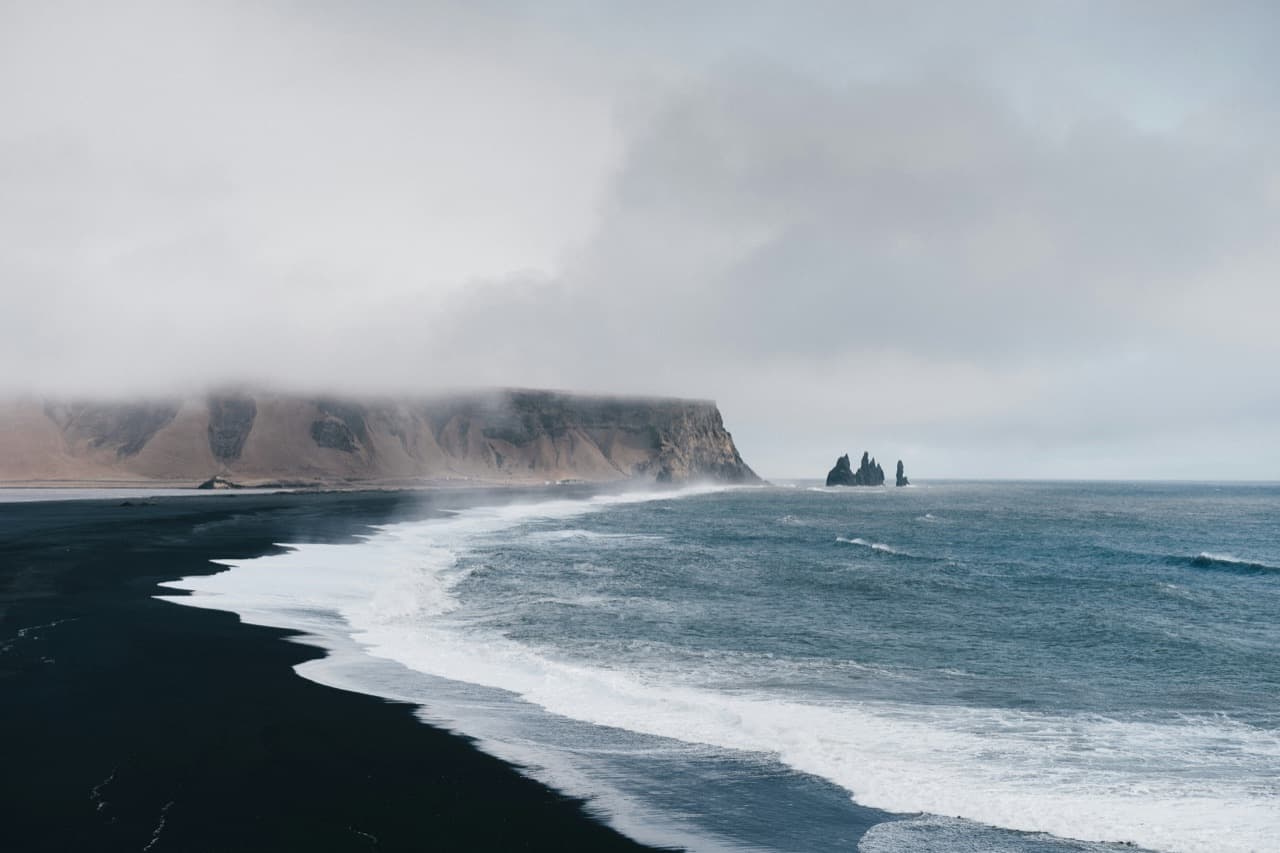
Iceland's black sand beaches form from basalt, the volcanic rock produced when hot lava meets cold ocean water. Reynisfjara lies about 180 km east of Reykjavik, roughly a 2.5 hour drive along Route 1. Diamond Beach lies about 370 km southeast of Reykjavik, right off Route 1 and across from Jokulsarlon.
Why Iceland's beaches are black
The rapid cooling of lava in seawater causes it to solidify quickly and shatter into tiny fragments, creating black sand. Iceland's black beaches are large deposits of ground-down volcanic rock, and get their dark colour from the dominant basalt.
Reynisfjara and the black shores around Vik
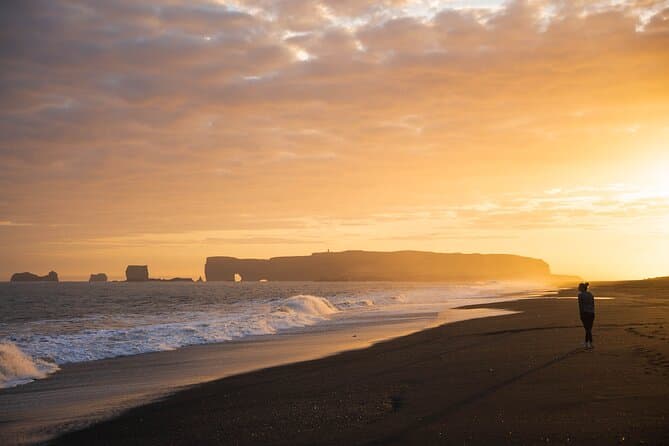
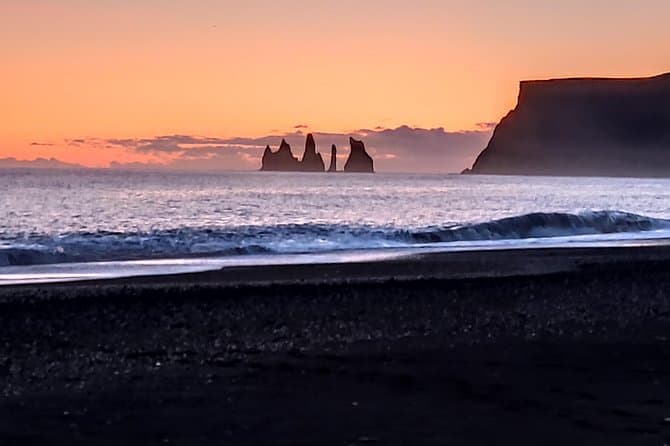
Reynisfjara is a black volcanic beach a short distance from the town of Vik on Iceland's South Coast. Reynisfjara is framed by basalt columns, known as Gardar, formed from cooling lava that contracted into hexagonal shapes. The Reynisdrangar sea stacks stand in the sea off Reynisfjara, and the tallest pillar rises 66 meters above sea level. Icelandic folklore says the Reynisdrangar stacks are two trolls that were caught by daylight and turned to stone while dragging a ship to shore. Dyrholaey, meaning door hill island, is a volcanic sea cliff near Vik that rises about 120 meters and has a large natural arch at its base. Dyrholaey was formed around 100000 years ago and was once an island. Vik i Myrdal, the village beside Reynisfjara, is the southernmost settlement on the Icelandic mainland. Reynisfjara lies about 188 km east of Reykjavik, roughly a 2 hour 50 minute drive along Route 1, turning onto Route 215 about 5 km before Vik.
Diamond Beach and the glacial black sands of the southeast
Glacier ice from Jokulsarlon often ends up on the black beach at Fellsfjara, which visitors call Diamond Beach. The ice on Diamond Beach breaks off Breidamerkurjokull, an outlet glacier of the Vatnajokull ice cap, drifts through Jokulsarlon glacier lagoon, and strands on the sand. On Diamond Beach some ice pieces are clear like glass, others milky white, and a few show deep blue tones against the black grains. Jokulsarlon, the lagoon that feeds Diamond Beach, is the deepest lake in Iceland and formed as Breidamerkurjokull retreated from the early 20th century onward. Visiting Diamond Beach at low tide gives the best chance of seeing stranded icebergs on the sand.
Black beaches beyond the South Coast
Djupalonssandur is a black sand and pebble beach on the Snaefellsnes Peninsula in West Iceland, within Snaefellsjokull National Park. Djupalonssandur has four lifting stones once used to test fishermen: Amlodi at 23 kg, Halfdraettingur at 54 kg, Halfsterkur at 100 kg, and Fullsterkur at 154 kg. In 1948 the English trawler Epine GY 7 from Grimsby was wrecked at Djupalonssandur, with 14 dead and 5 survivors, and its rusted iron remains are preserved on the beach as a monument.
Staying safe and planning a black-beach road trip
Reynisfjara is known for dangerous sneaker waves that surge unpredictably far up the shore, caused by the steep drop-off of the ocean floor near the coast combined with strong currents. A traffic light warning system operates at Reynisfjara: red means stay off the beach, amber means proceed with caution, and green means the main beach is safe to visit. Solheimasandur is a black sand plain near Vik whose sand comes from eruptions of the subglacial volcano Katla to its north. The US navy plane that crashed on Solheimasandur went down in 1973, and all crew survived. Use the Driving Distance Calculator to help plan your trip.
Comparing South Coast tours to reach the black beaches
Most South Coast day trips from Reykjavik stop at Reynisfjara, and some name it on the itinerary, such as a small-group South Coast trip taking in Reynisfjara and the waterfalls. Several operators run the same stretch as a combined outing, and our comparison of South Coast ice cave, glacier and black sand group tours lines those up side by side. You can compare South Coast tours to see the current options.