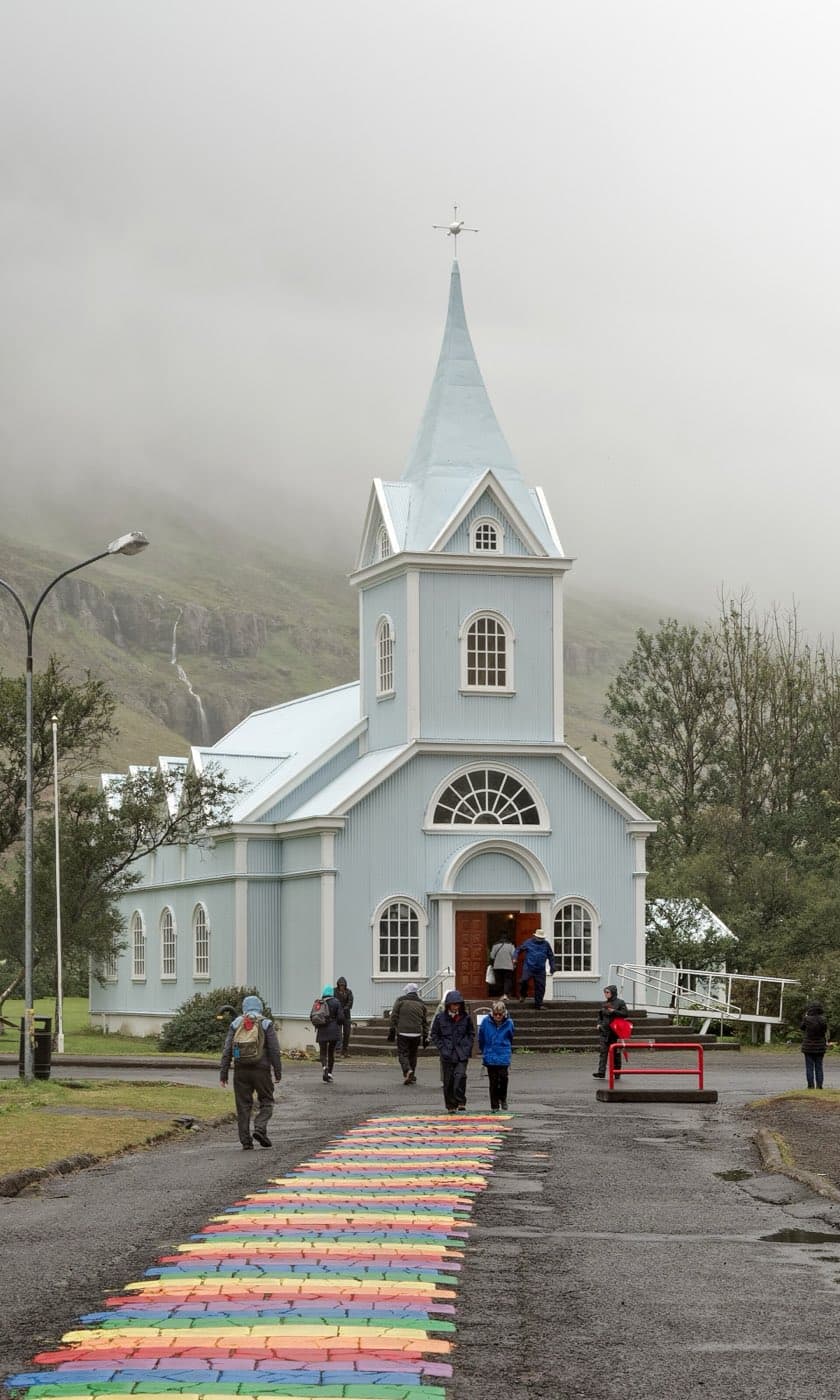
Gufufoss sits beside road 93 on the Seydisfjordur side of Fjardarheidi, with very good access from the roadside. It lies low enough on the descent that deep snow is rarely a problem there, except when snow is heavy and conditions are generally impassable. The waterfall here is the one in the river Fjardara, not the unrelated falls on the Egilsstadir side of the pass.
Where Gufufoss sits on the descent
The falls are well in along Seydisfjordur, on the Seydisfjordur side of the Fjardarheidi pass. The river continues up the valley above the waterfall.
The road to Seydisfjordur is Seydisfjardarvegur, road 93. Vegagerdin's road register lists it leaving the Ring Road at Egilsstadir, crossing Fjardarheidi, and running down through the town to the ferry pier.
For the town at the foot of the pass, its street, its church and its ferry link, see Seydisfjordur.
The river Fjardara and what the name means
This waterfall is in the river Fjardara. Its name comes from the heavy steam or mist the waterfall gives off, and it can be read as steam waterfall.
Do not confuse it with the unrelated Gufufoss in the river Midhusaa on the Egilsstadir side of the pass. That waterfall sits in the same gorge as Fardagafoss and Folaldafoss, and it belongs to a different place entirely.
Stopping at the waterfall
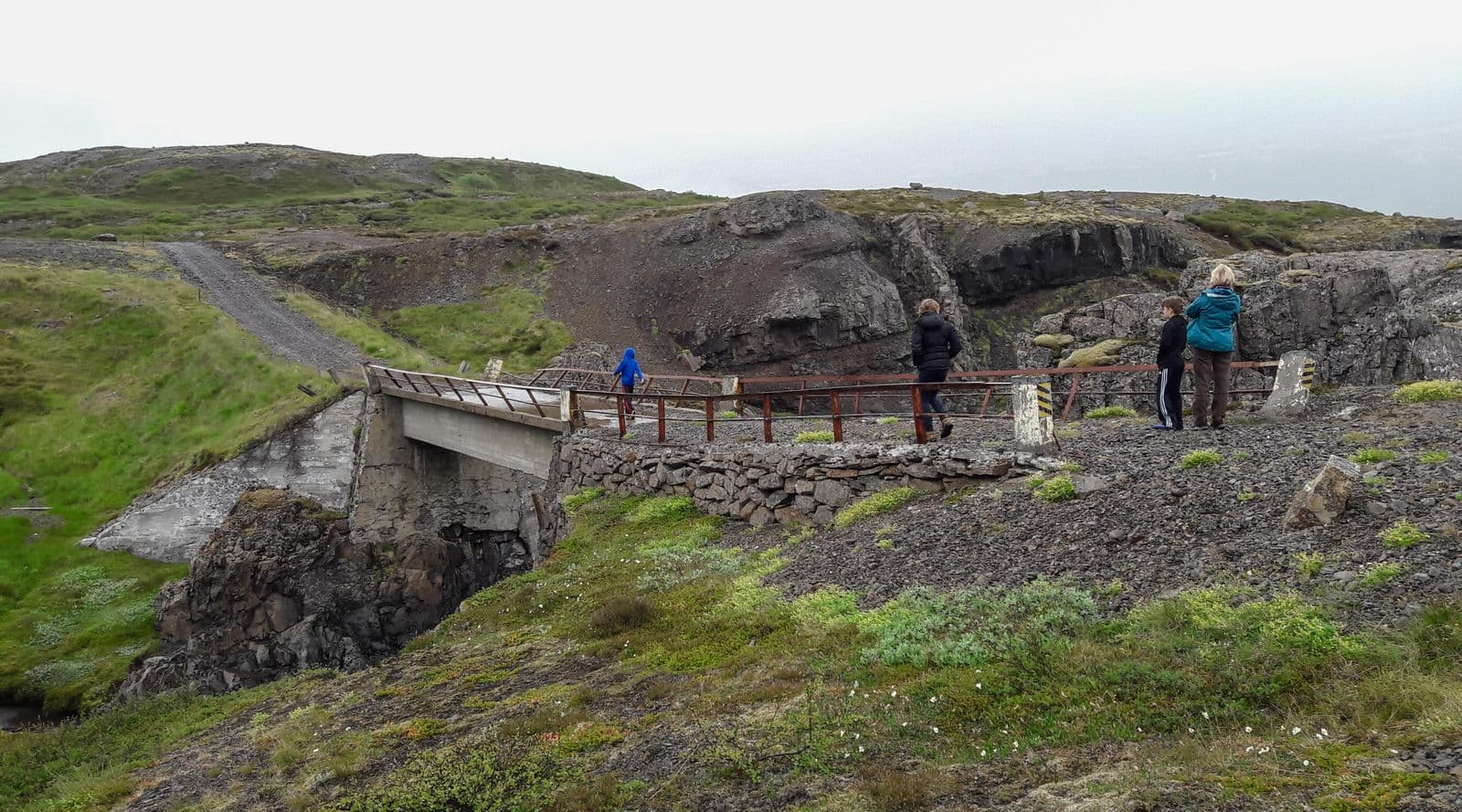
The road over Fjardarheidi lies right beside the waterfall, and access to it is very good.
Vegagerdin's environmental assessment for the planned Fjardarheidi tunnel treats the existing roadside stopping place here as one the works would disturb. The assessment says it would be replaced by a new stopping place looking toward the falls.
The pass over Fjardarheidi
Fjardarheidi carries the highest mountain road in Iceland serving a town that has only one road connection.
Because the road over the heath is so high, little wind is needed in winter for conditions on it to become difficult. That state can last for days and hold up travel over the pass. The steep hills on both sides of the heath are often a serious obstacle for lorries and for ordinary cars, not least in winter, including for travellers arriving on the Norrona ferry.
On the days the Norrona ferry arrives or departs, traffic over Fjardarheidi is very heavy. Snow accumulation is known to increase noticeably in an easterly wind at Myrarbrekka, a short way above the waterfall.
Checking the pass before you drive
The opening of Iceland's mountain roads depends on the weather in spring and early summer, and snow cover has the greatest effect on when they open. Winter conditions can occur in spring and autumn as well as in winter, and driving on icy roads can be very challenging.
Map apps including Google Maps may not always reflect closed or impassable roads accurately, so conditions should be checked against official sources before setting out. Road conditions for the whole country are published by Vegagerdin on umferdin.is, and the agency also runs a road information telephone service.
You can also check live conditions at road conditions in Iceland.
Comparing East Iceland tours
If you want to compare options, see East Iceland tours.