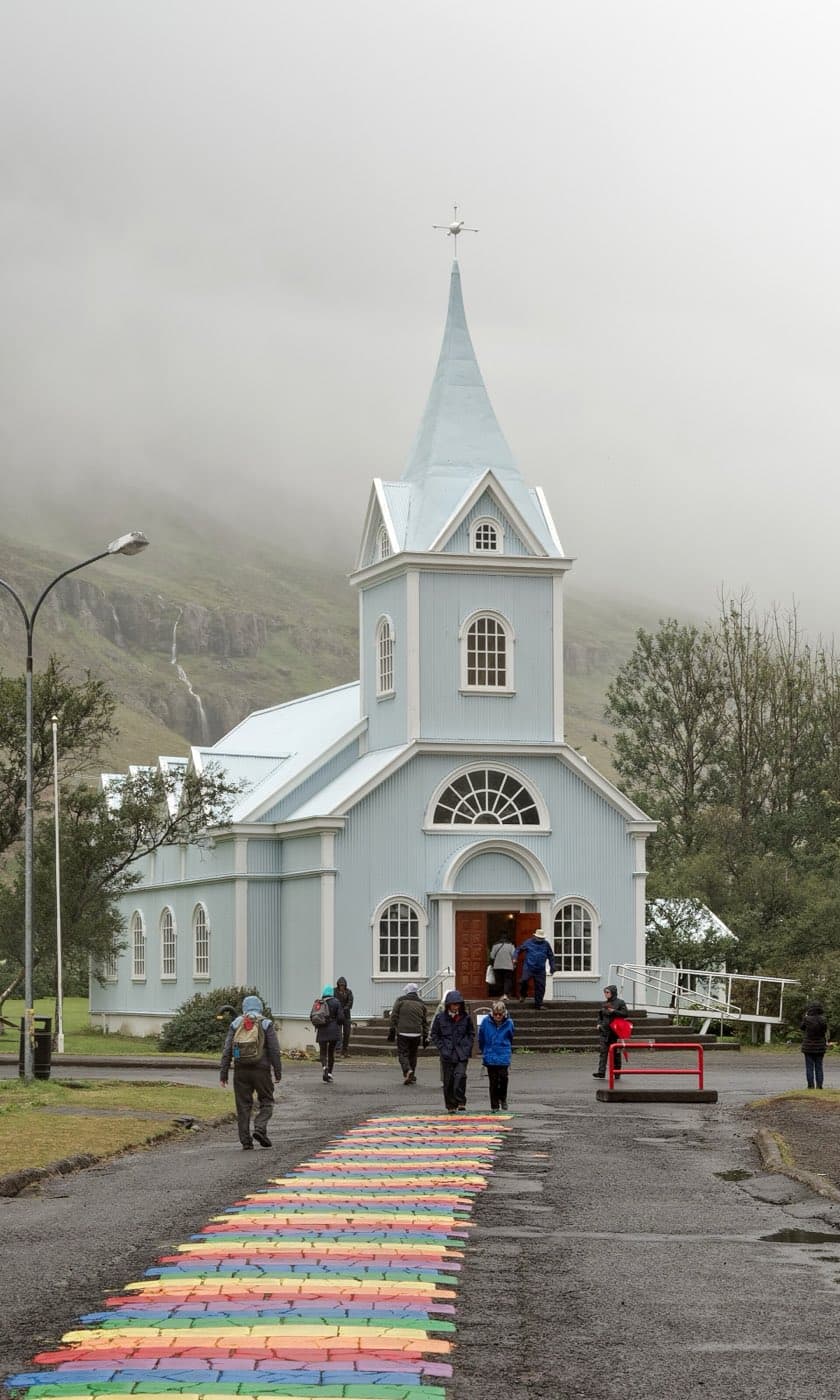
1816 is the key date tied to the old commercial building that now houses the maritime museum, and 985 metres is the height of Holmatindur across the fjord. The village sits on the fjord of the same name in East Iceland, with a working harbour, a fishing-based economy, and protected natural sites close by.
Where Eskifjordur sits on the fjord
The village stands on the fjord of the same name in East Iceland. It is part of the Fjardabyggd municipality, along with Neskaupstadur and Reydarfjordur.
Across the water, Holmatindur rises on the east side of the fjord, facing the settlement. Between Eskifjordur and Reydarfjordur lies the headland of Holmanes. For a wider route through this part of the country, see this East Fjords itinerary.
A fishing village with a trading past
The village became an official trading post and has been a commercial centre ever since. Its harbour is central to local life, and the economy centres on the fishing industry, with one of Iceland's larger fishing companies based there.
On the Mjoeyri peninsula near the village, red-coloured fishing sheds of Norwegian origin still stand. In the older built-up area, the Maritime Museum of Austurland is housed in Gamla bud, a commercial building built in 1816.
The museum presents objects and utensils connected to fishing and seafaring. It also holds reminders of local trade, industry and medicine from earlier times.
Randulff's sea house adds another layer to that history. It was built by the Norwegian Peter Randulff as a station for landing and processing herring caught inside the fjord, and it was used in that role until there was no longer enough herring coming into the fjord to sustain the fishery. The East Iceland Maritime Museum later became part owner, then sole owner, and the exterior and the jetty beside it were restored. The building now works as an extension of the museum.
Helgustadanama and Iceland spar
Helgustadanama is an old Iceland spar mine on the land of Helgustadir at Eskifjordur. It is protected as a natural monument, a natturuvaetti, and classed in IUCN category III.
The protected site covers 0.9 hectares. Iceland spar, silfurberg in Icelandic, is a particularly clear crystal of the rock calcite.
Silfurberg was dug out of the ground at Helgustadir from the seventeenth century until the first half of the twentieth century. Most of the Iceland spar held in museums around the world came from this mine, and some of the largest and purest pieces found anywhere came from here. The crystal also mattered to scientific work on the properties of light, which is part of why the site was protected to conserve its geology, especially the silfurberg.
The mine lies on the way from the village towards Vodlavik, reached from route 954. There is a parking area, and a footpath leads from there up to the mine. The spar at the site is protected, and it is strictly forbidden to remove any of it.
Holmatindur and the headland of Holmanes
Holmatindur is 985 metres high. It stands on the east side of the fjord, facing the village.
Holmanes is protected both as a folkvangur, a public recreation area, and as a nature reserve. The protected area covers 318 hectares.
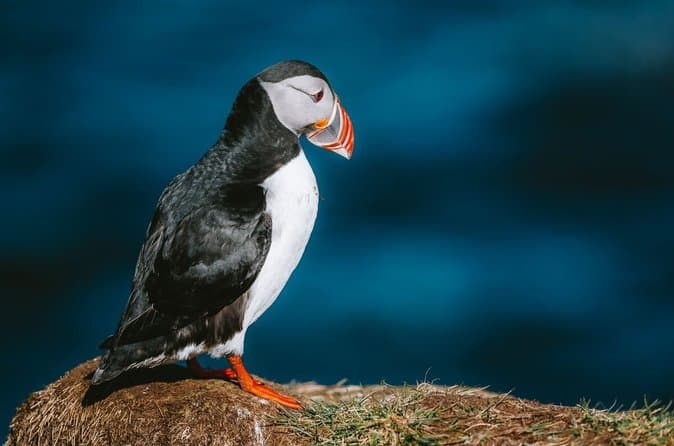
Within Holmanes, the landscape includes steep rocky knolls rising out of the ground in places. The area also has varied birdlife and walking routes that lead either down to the sea or up into the hills.
Driving to Eskifjordur and on to Nordfjordur
Route 92 carries the road between Eskifjordur and Nordfjordur through the Nordfjardargong road tunnel. For working out the route in advance, use the driving distance calculator.
Comparing East Iceland tours
If you want to compare options in the region, see East Iceland tours.