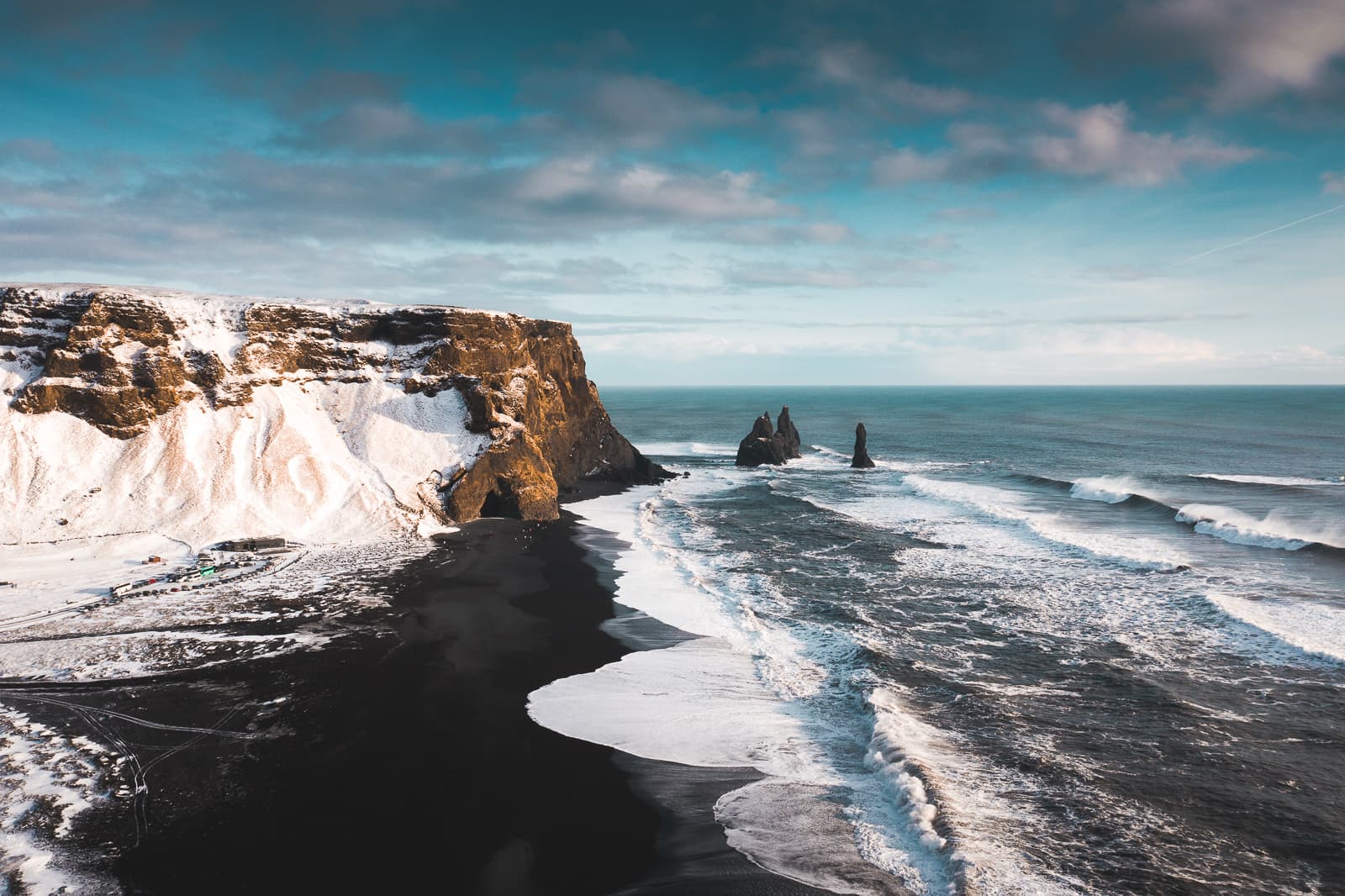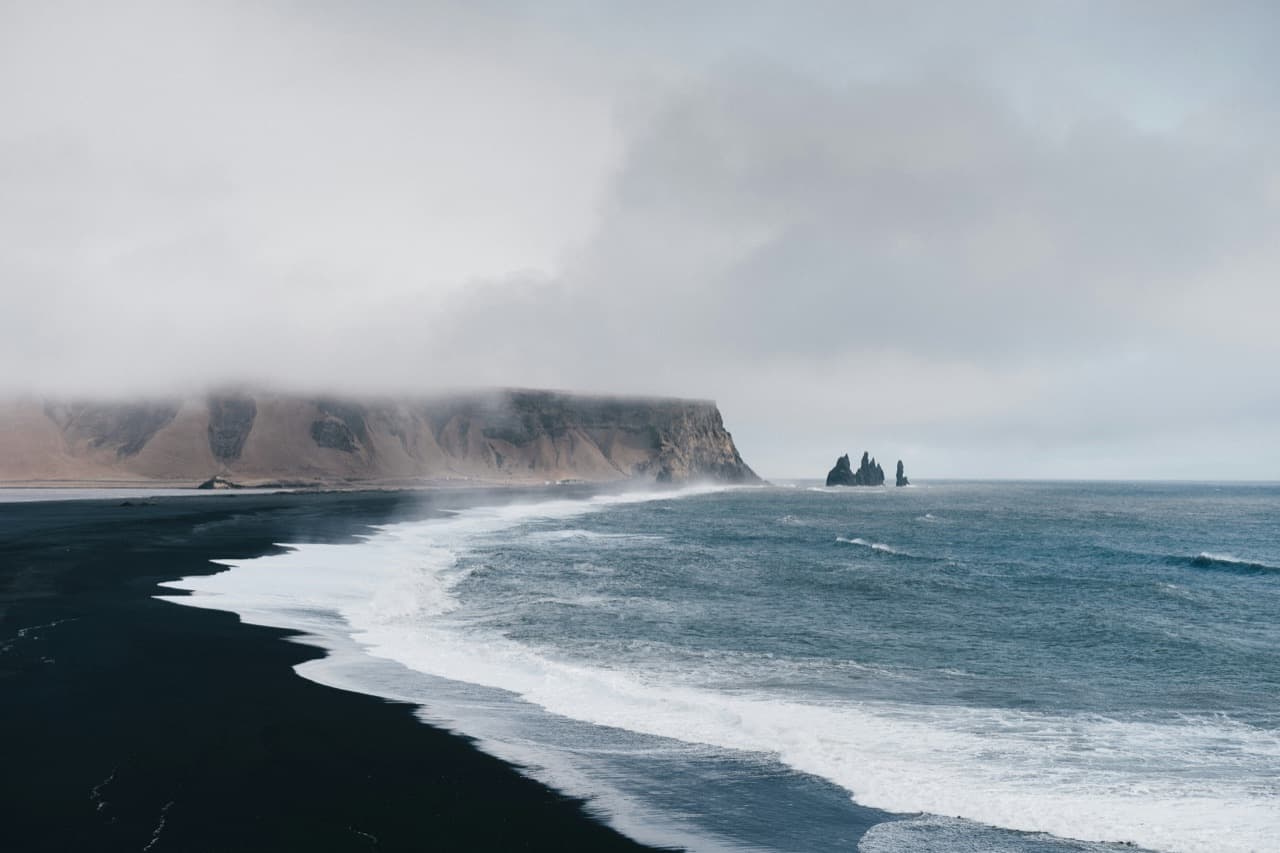
Reynisfjara is a black sand beach on Iceland's South Coast, about 188 km from Reykjavík and about 12 km by road from the village of Vík. It is known for its hexagonal basalt columns, the Reynisdrangar sea stacks standing offshore, and powerful North Atlantic surf. It is also among Iceland's most dangerous beaches, so understanding its sneaker waves matters before you arrive.
Reynisfjara at a glance
| Feature | Detail |
|---|---|
| Location | South Coast of Iceland, near Vík |
| Distance from Reykjavík | About 188 km (117 miles) |
| Drive time | About 2 hours 50 minutes via Route 1, the Ring Road |
| Distance from Vík | About 12 km by road |
| Known for | Black sand, basalt columns, Reynisdrangar sea stacks |
| Tallest sea stack | About 66 meters (217 feet) |
| Main hazard | Sneaker waves; obey the warning-light system |
Getting there from Reykjavík
Reynisfjara lies along Route 1, the Ring Road, about a 2 hour 50 minute drive east of Reykjavík covering about 188 km. The beach has its own turnoff and car park a short distance before Vík, which is about 12 km away by road. Many visitors combine it with other South Coast stops such as the Dyrhólaey promontory, which offers an elevated view over the coastline and the sea stacks.
Reynisfjara is included on most South Coast tours from Reykjavík, and self-drive is also straightforward on the paved Ring Road. Costs vary by operator and season, so check current prices before you book.
The basalt columns and Hálsanefshellir cave
The cliff behind the beach is made of tall, hexagonal basalt columns formed when lava cooled and contracted into regular shapes. At one end sits Hálsanefshellir, a sea cave framed by these columns and carved by the ocean over a long span of time. The columns are a natural draw for photographs, but the cave sits close to the surf line, so the same wave rules apply here as everywhere on the beach.
Reynisdrangar sea stacks and the troll legend
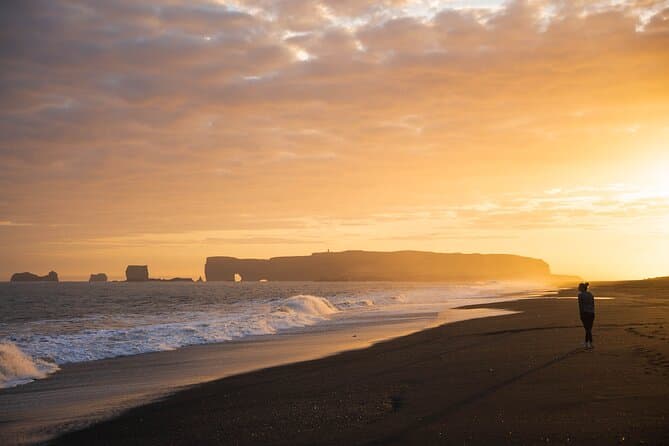
Offshore stand the Reynisdrangar, dark basalt sea stacks rising straight from the water, the tallest about 66 meters (217 feet). In Icelandic folklore they are trolls who tried to haul a ship to land and were caught by the dawn, turning to stone where they stood. On a clear day they are visible both from the beach and from the Dyrhólaey viewpoint to the west.
Other sea stacks around Iceland
Reynisfjara lies between the Dyrhólaey peninsula and Mount Reynisfjall, and Dyrhólaey takes its name from the sea arch that looks like a great door in the cliff when the headland is approached from the west or east. Lóndrangar are a pair of basalt pinnacles on the southern coast of the Snæfellsnes peninsula, the remains of a crater, where seabirds nest. Hvítserkur is a basalt sea stack on the Vatnsnes peninsula in northwest Iceland.
Sneaker waves: how to stay safe
Reynisfjara is beautiful, and it is genuinely dangerous. Its main hazard is the sneaker wave, a surge that arrives with no warning, reaches far higher up the sand than the waves before it, and can sweep an adult off their feet and out to sea in seconds. Lives have been lost here, and there are no lifeguards on the beach.
Treat the water with respect and follow a few simple rules:
- Stay well back from the water's edge, and keep children close at all times.
- Never turn your back on the sea, including for photographs.
- Do not assume calm water is safe; a sneaker wave can follow a long quiet spell.
- Watch for falling rock near the base of the cliff.
The beach uses a colour-coded warning light. A yellow light signals moderate hazard and calls for extra caution. An orange light means considerable hazard, and you should stay at least 25 meters (82 feet) from the sea. A red light means severe hazard and the beach is closed, though you can still enjoy the view from the designated viewing area. For current conditions and detailed guidance, consult safetravel.is before you set out.
When to visit and what to bring
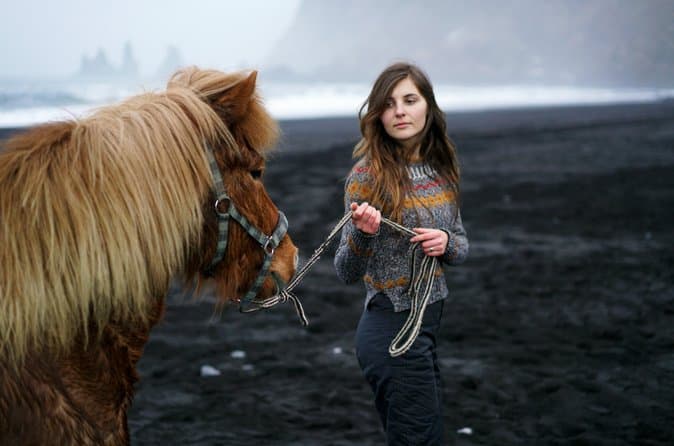
Reynisfjara is open year round, and the surf can be dramatic in any season. Winter brings shorter daylight and icy paths, while summer offers long hours of light and steadier footing. In February 2026, winter storms and a landslide reshaped part of the shoreline, though the black sand, basalt columns, and sea stacks remain. Bring warm, waterproof layers and sturdy footwear, and plan your time around daylight and weather rather than a tight schedule. Guided horse riding is one way to see more of the shore than the walk from the car park reaches, and a ride along Reynisfjara's black sand covers the beach at a distance from the main viewing area.
Plan the journey
The Driving Distance Calculator can help you sequence Reynisfjara black sand beach with nearby sights without overfilling the day.