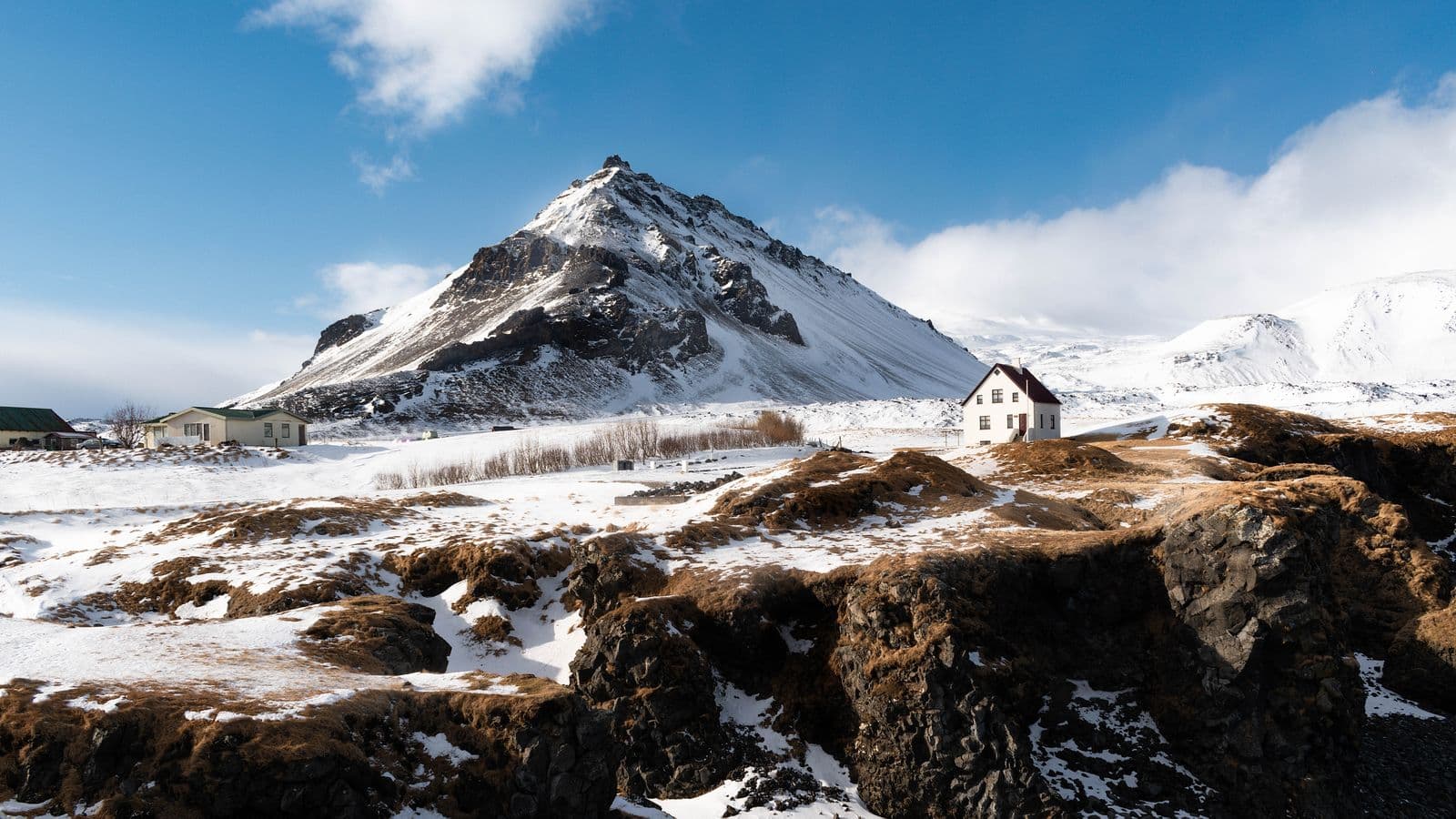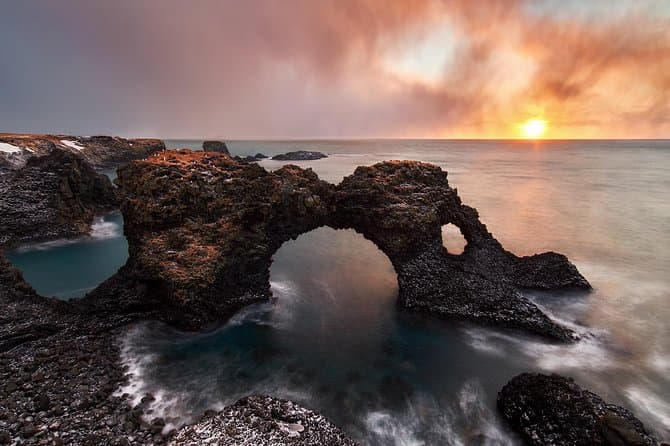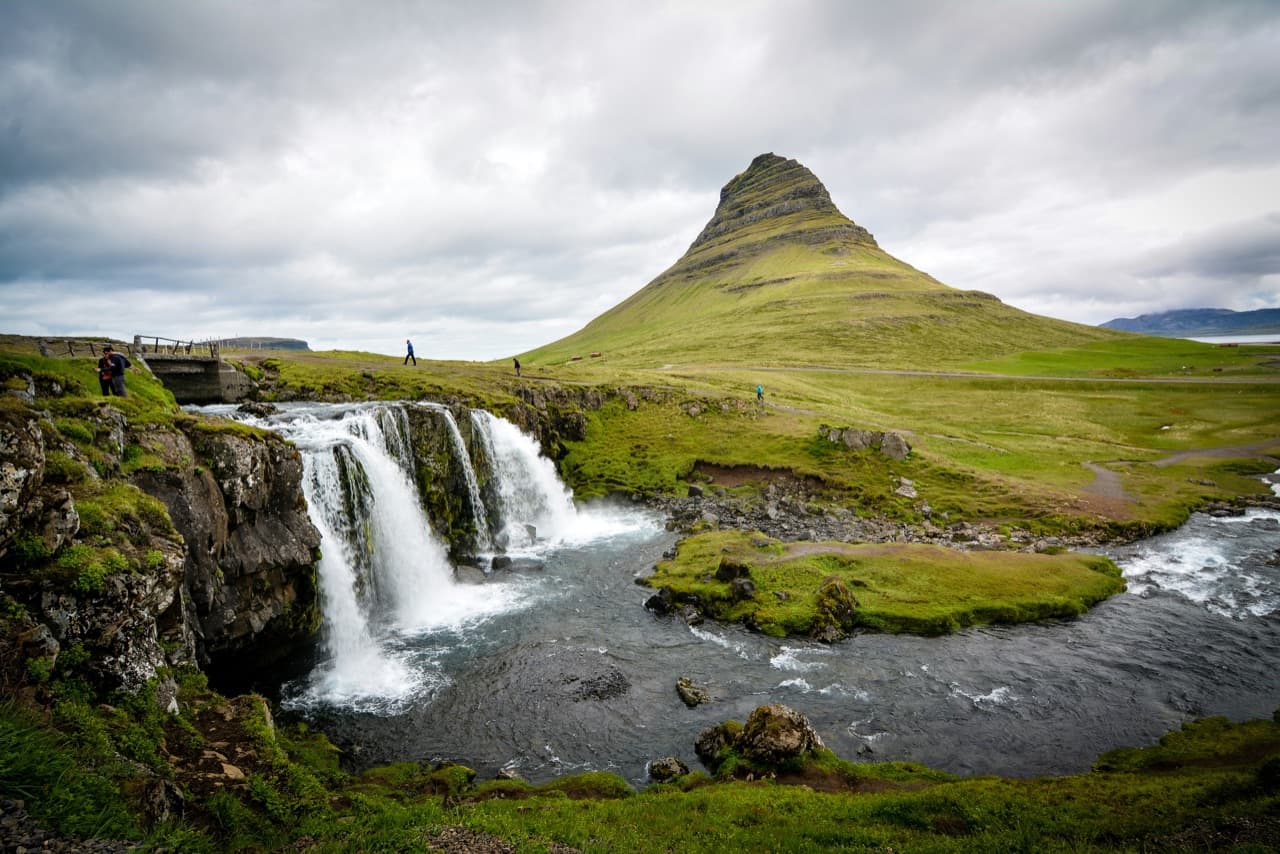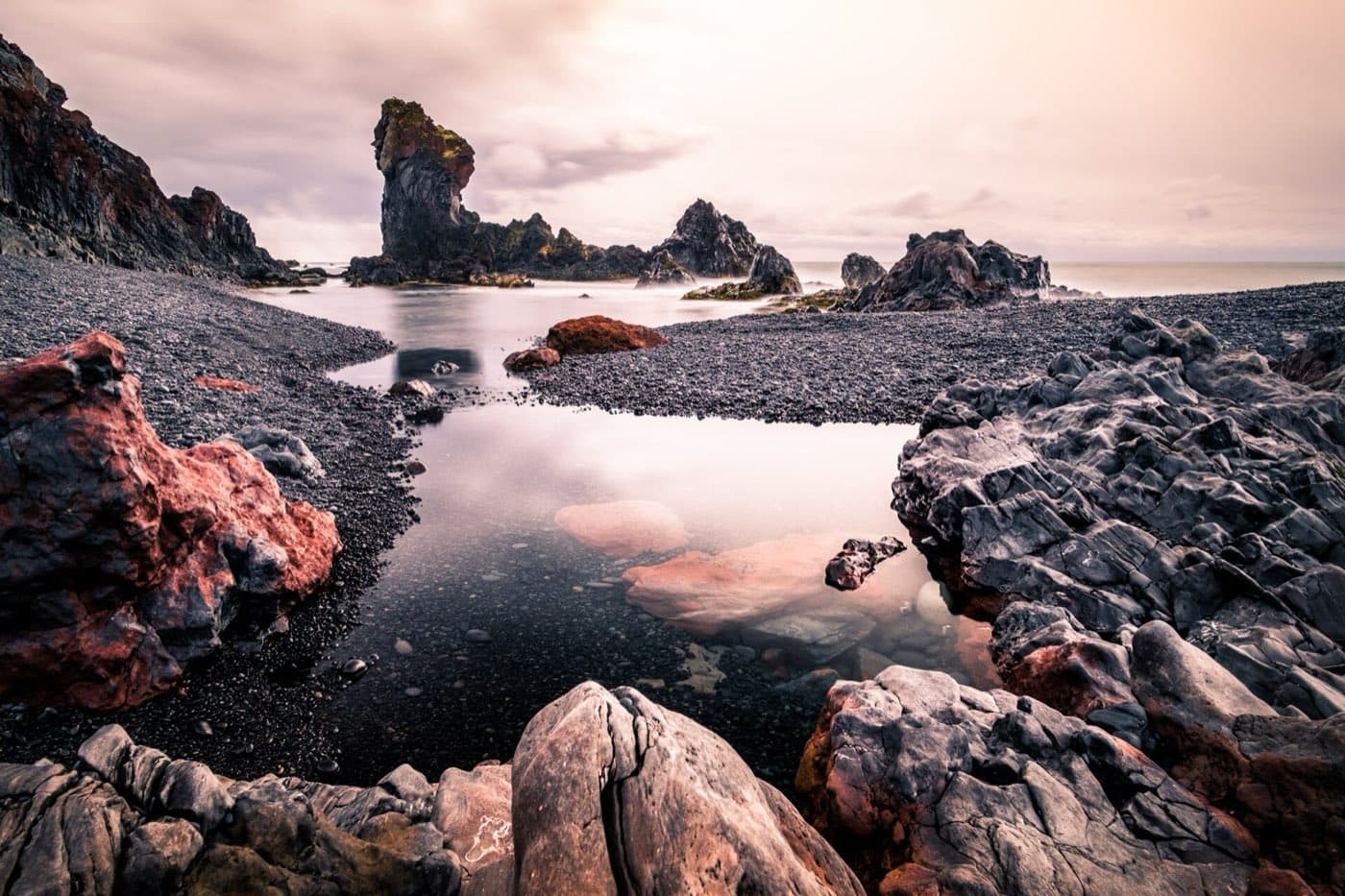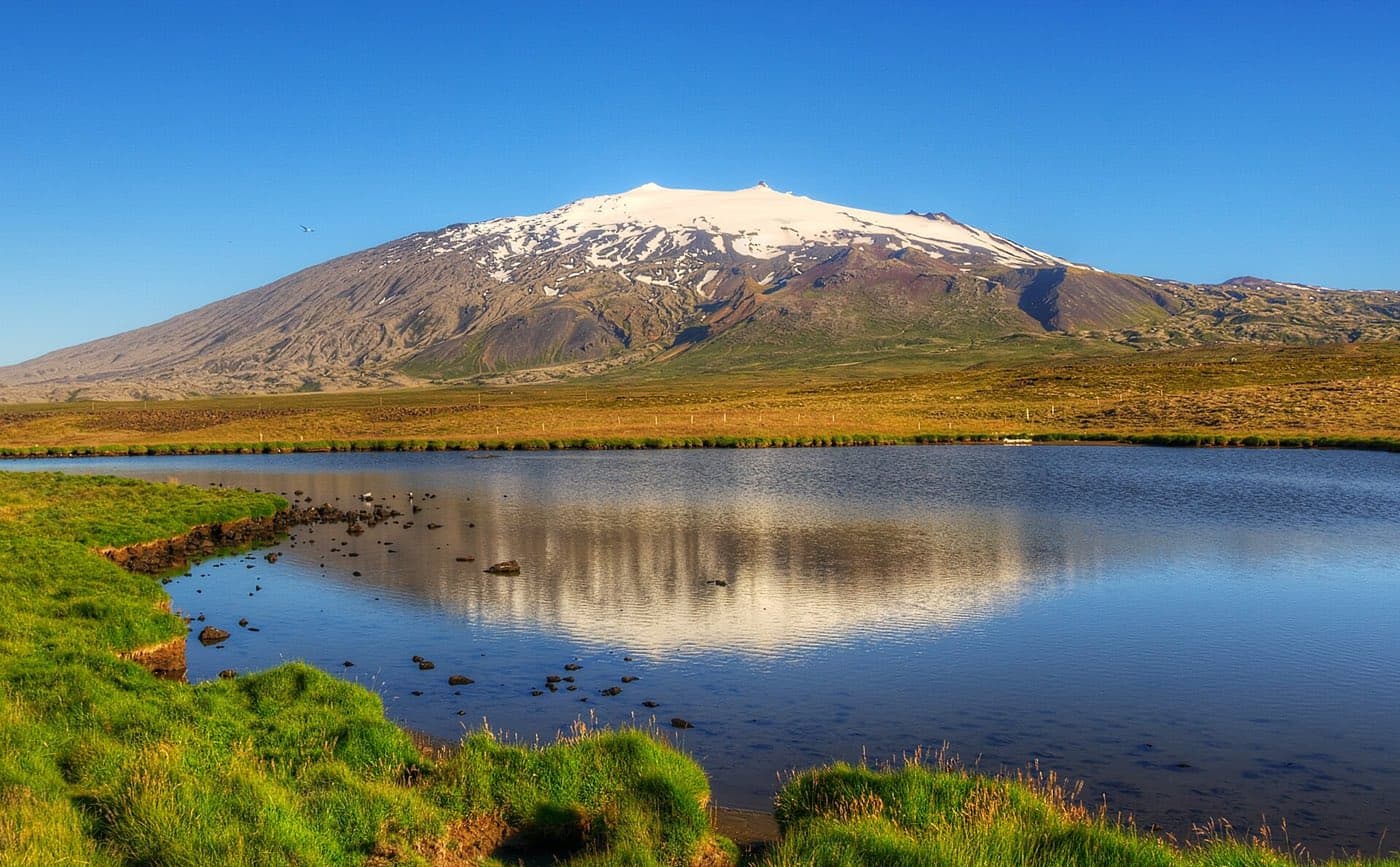
Saxholl is a volcanic scoria, or cinder, crater on the Snaefellsnes peninsula in West Iceland, within Snaefellsjokull National Park near the peninsula's western tip. It rises roughly 100 metres above the surrounding lava field, and some sources give its height as about 109 metres. A metal staircase leads to the rim, and the climb takes only a few minutes.
What Saxholl crater is
Saxholl is a classic small scoria cone formed by a lava-throwing eruption. In simple terms, that means loose volcanic material built up into a crater-shaped cone during an eruption.
How Saxholl formed and its volcanic history
The crater erupted several thousand years ago, estimated at around 3,000 to 4,000 years. Its reddish rock comes from iron oxides in the volcanic material, which gives Saxholl its distinctive colour.
Climbing the staircase to the crater rim
A metal staircase leads from the base to the rim of the crater. The stair won the Rosa Barba International Landscape Prize in 2018.
The climb is considered easy and takes only a few minutes.
Views over the lava fields and coastline
From the rim, there are wide views over the surrounding lava fields and coastline. On clear days, the panorama includes the ocean and the Snaefellsjokull glacier.
Saxholl within Snaefellsjokull National Park
Saxholl sits within Snaefellsjokull National Park, near the western tip of the Snaefellsnes peninsula. Its setting places the crater among protected volcanic landscapes on this part of the coast.
Visiting Saxholl on a Snaefellsnes tour
If you want to compare options, see Snaefellsnes tours.
Build a sensible route
Before setting off, use the Driving Distance Calculator to compare Saxholl Crater with the other places you plan to visit.