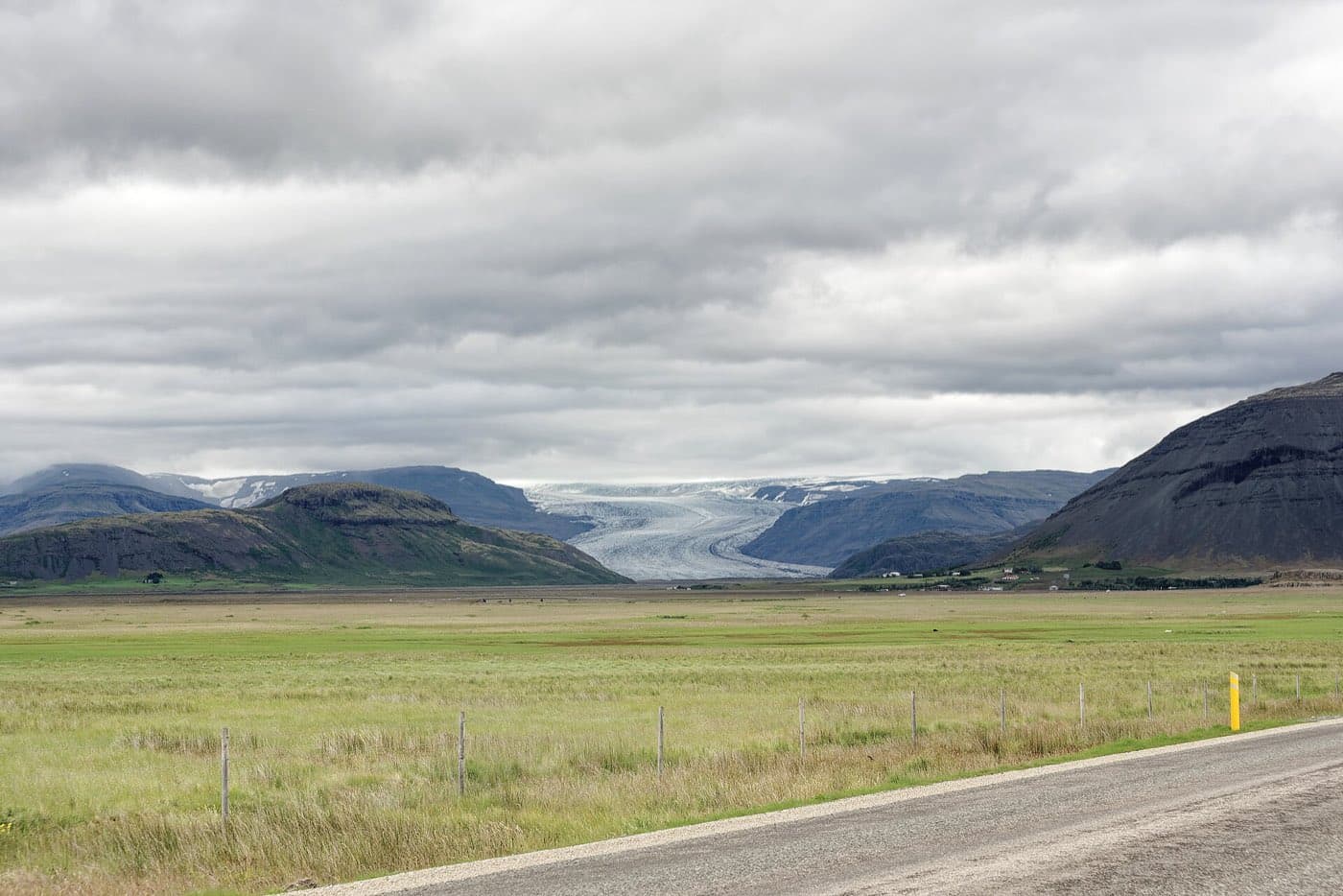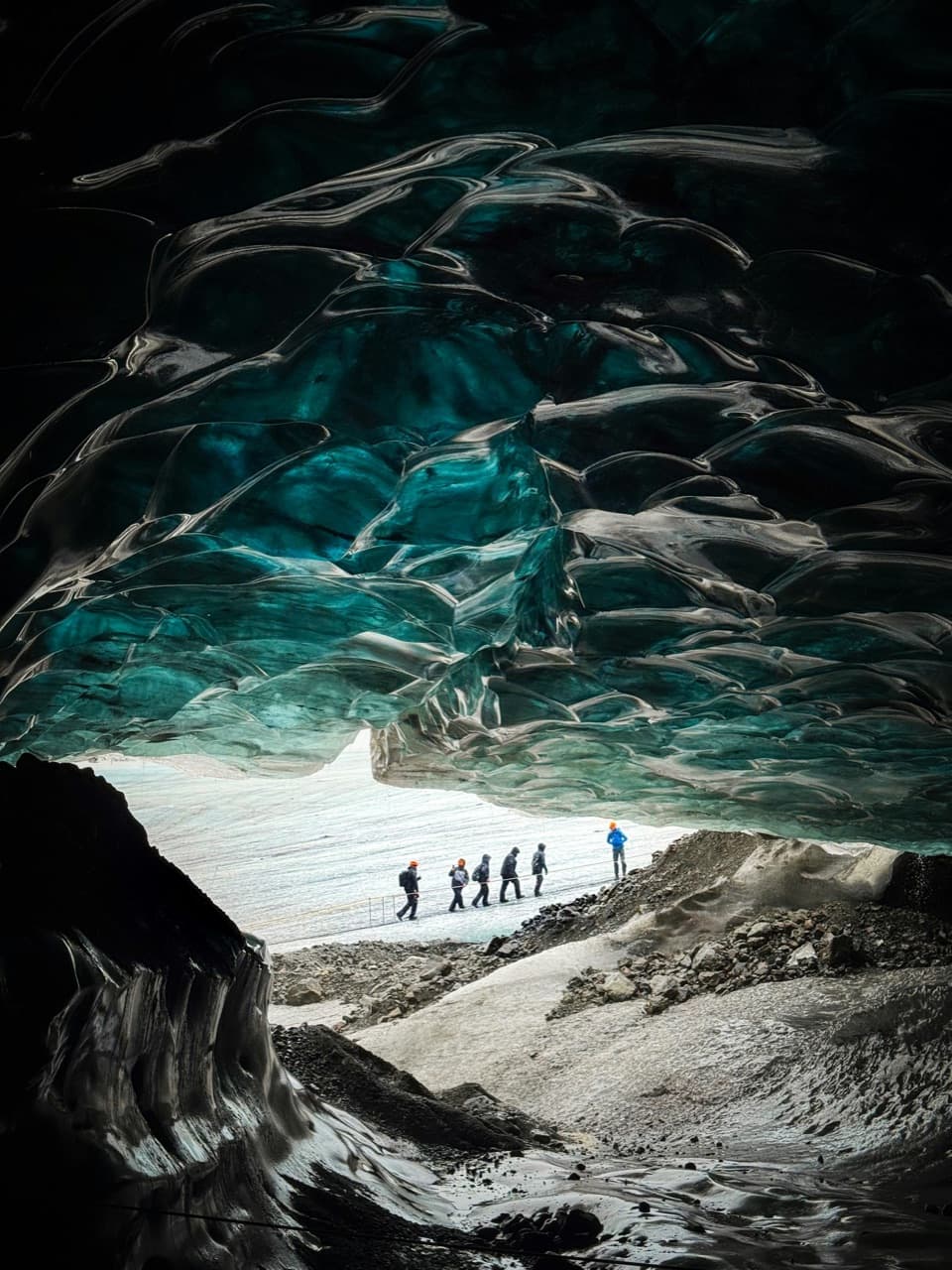
The Katla ice cave sits in Kötlujökull, an outlet glacier of the Mýrdalsjökull ice cap above the Katla volcano, less than an hour from the village of Vík on Iceland's south coast. It is known for layers of black volcanic ash frozen into blue glacier ice, and unlike the winter-only caves in Vatnajökull it can often be visited year-round. Access is on guided tours only, with a certified glacier guide who checks conditions before anyone enters.
Katla ice cave at a glance
| Feature | Detail |
|---|---|
| Location | Kötlujökull, an outlet of Mýrdalsjökull, near Vík |
| Season | Often visited year-round, with a guide |
| Meeting point | The village of Vík, then super jeep to the glacier |
| Distance | Less than an hour from Vík |
| Final approach | Short walk of about 1 to 2 km to the cave |
| Access | Guided tours with a certified glacier guide only |
Where the Katla ice cave is
The cave lies inside Kötlujökull, one of the outlet glaciers that flow down from the Mýrdalsjökull ice cap. Mýrdalsjökull in turn covers the Katla volcano, which gives the cave its name. All of this sits close to Vík, Iceland's southernmost village, on the south coast, so the cave is reachable as part of a South Coast trip rather than a long detour. Because the ice is always moving, the cave is never quite the same twice, and its exact shape and entrance change through the year.
Why it can often be visited year-round
Most natural ice caves in Iceland form only in the cold months, when low temperatures keep the ice stable enough to enter. The Katla cave is the main exception, and tours run to it across all seasons rather than just in winter. That does not make it fixed or guaranteed: guides still assess each visit, and any given cave can close or shift as the glacier melts and refreezes. Treat year-round access as a general pattern set by operators and the glacier, not a promise for a particular day, and confirm before you travel. Katla is still a natural cave, which is not the same thing as a carved ice tunnel even though both are open outside winter.
The black-and-blue ice
What sets the Katla cave apart is the colour. When the Katla volcano has erupted in the past, ash settled on the glacier and later became trapped inside the ice, leaving dark bands running through it. Against the deep blue of dense, old glacier ice, those black ash layers stand out sharply, a record of the volcano written into the glacier. The mix of blue ice and black ash is the reason many visitors seek out this cave in particular.
What a guided tour involves
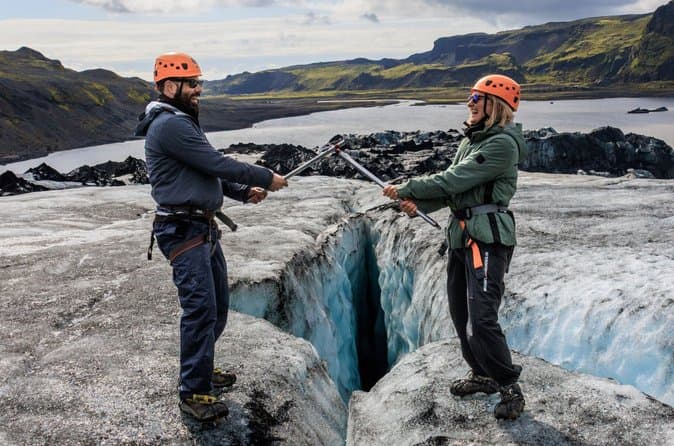
Tours usually gather in Vík, where you meet your guide and board a modified super jeep for the drive across the volcanic plains to the edge of Kötlujökull. From the glacier edge it is a short walk, about 1 to 2 kilometres over uneven ground, to reach the cave. Guides hand out safety gear such as helmets and crampons and set the pace. A Katla ice-cave tour from Vík starts locally, while some tours add a transfer from Reykjavík along the South Coast. To compare guided ice cave tours and their meeting points in one place, use the compare page rather than booking blind.
Safety and conditions
A glacier is not a place to explore alone, which is why the Katla cave is entered on guided tours only. A certified glacier guide reads the weather and ice, picks a safe route, and will change plans or cancel when rain or thaw raises the risk. Dress for cold and wet, with warm layers and waterproofs, and follow the guide's instructions throughout. Before you set out, check travel alerts on safetravel.is, the forecast on vedur.is, and road conditions on road.is, all official Icelandic services. Conditions on the glacier can shift quickly, so build flexibility into your plans.
Look at the roads first
Use Iceland road conditions alongside this guide to Katla ice cave, particularly when weather may affect access.